
Loading
Welcome to the Barometers.info Shop.
Here you will find a carefully curated selection of books, exclusive merchandise, and unusual barometer-related curiosities inspired by the history of weather instruments. Some items have been created especially for collectors and enthusiasts, while others are simply meant to bring a smile to those who share a passion for scientific heritage.
Every purchase directly supports Art of Weather Instruments Foundation. All proceeds are transferred to the Foundation and are used to preserve, restore, research, document, and share the history of weather instruments with the public.
Thank you for helping to preserve this remarkable scientific and cultural heritage.
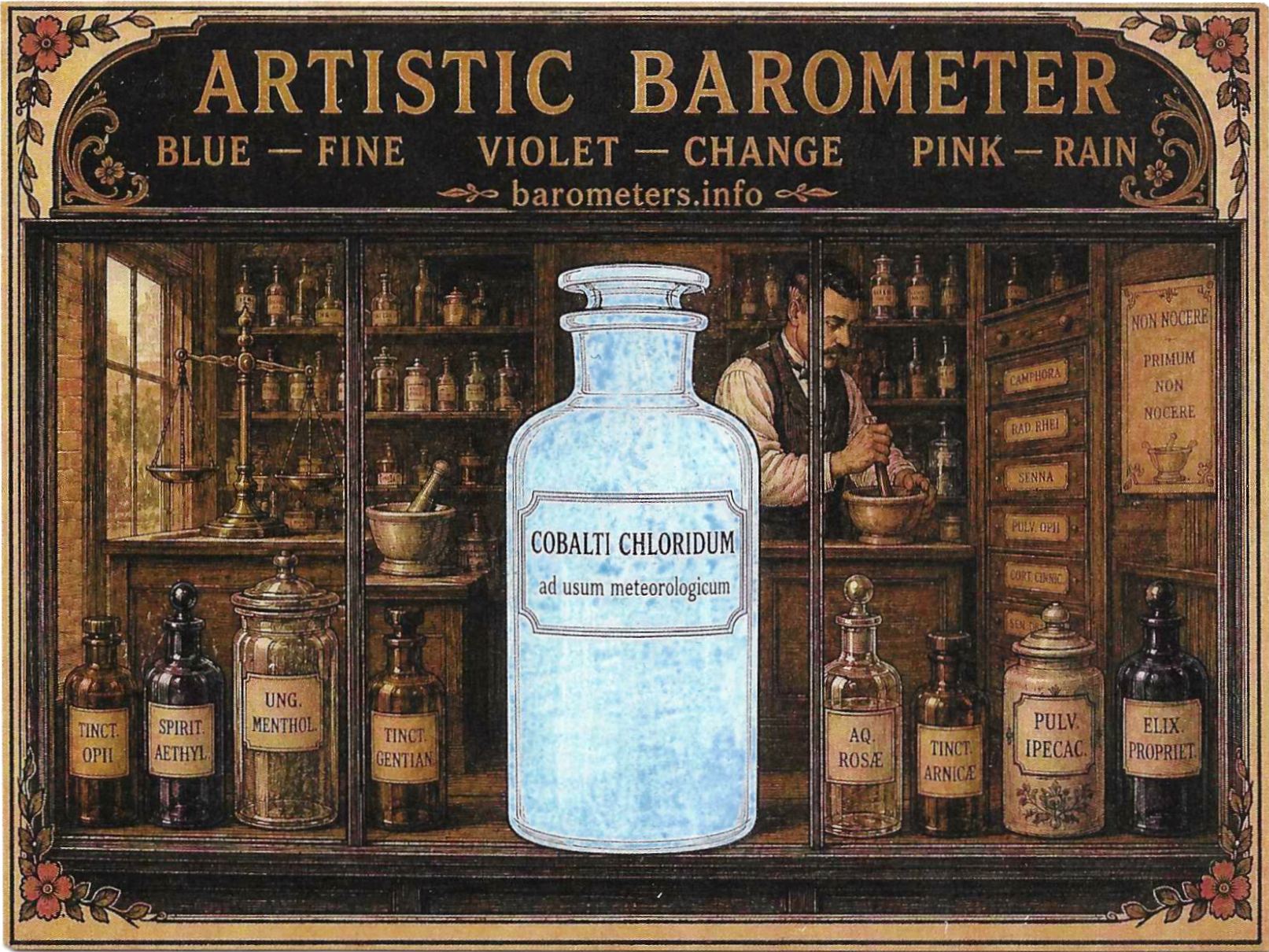
A decorative cobalt hygrometer postcard that indicates changes in atmospheric humidity by changing colour. The large apothecary bottle in the centre of the illustration acts as the humidity-sensitive element. Its colour changes gradually according to the moisture content of the air, from blue (dry) to pink (humid). There is a pleasing bit of honesty here: the bottle carries a real label — COBALTI CHLORIDUM, ad usum meteorologicum — which is precisely what makes the card work. Cobalt chloride "for meteorological use" is not a decorative flourish; it is the substance itself, named on the jar that contains it. The chemist grinding away behind the counter would have recognised his own stock. The hygrometric coating contains cobalt salts, whose colour responds reversibly to changes in humidity. In drier air the bottle becomes blue, while increasing humidity shifts the colour through violet towards pink. The postcard therefore works as a simple traditional chemical hygrometer, while also serving as an unusual decorative reproduction inspired by historical weather-indicating cards. Best kept out of direct sunlight and away from steam; the colour change is fully reversible.
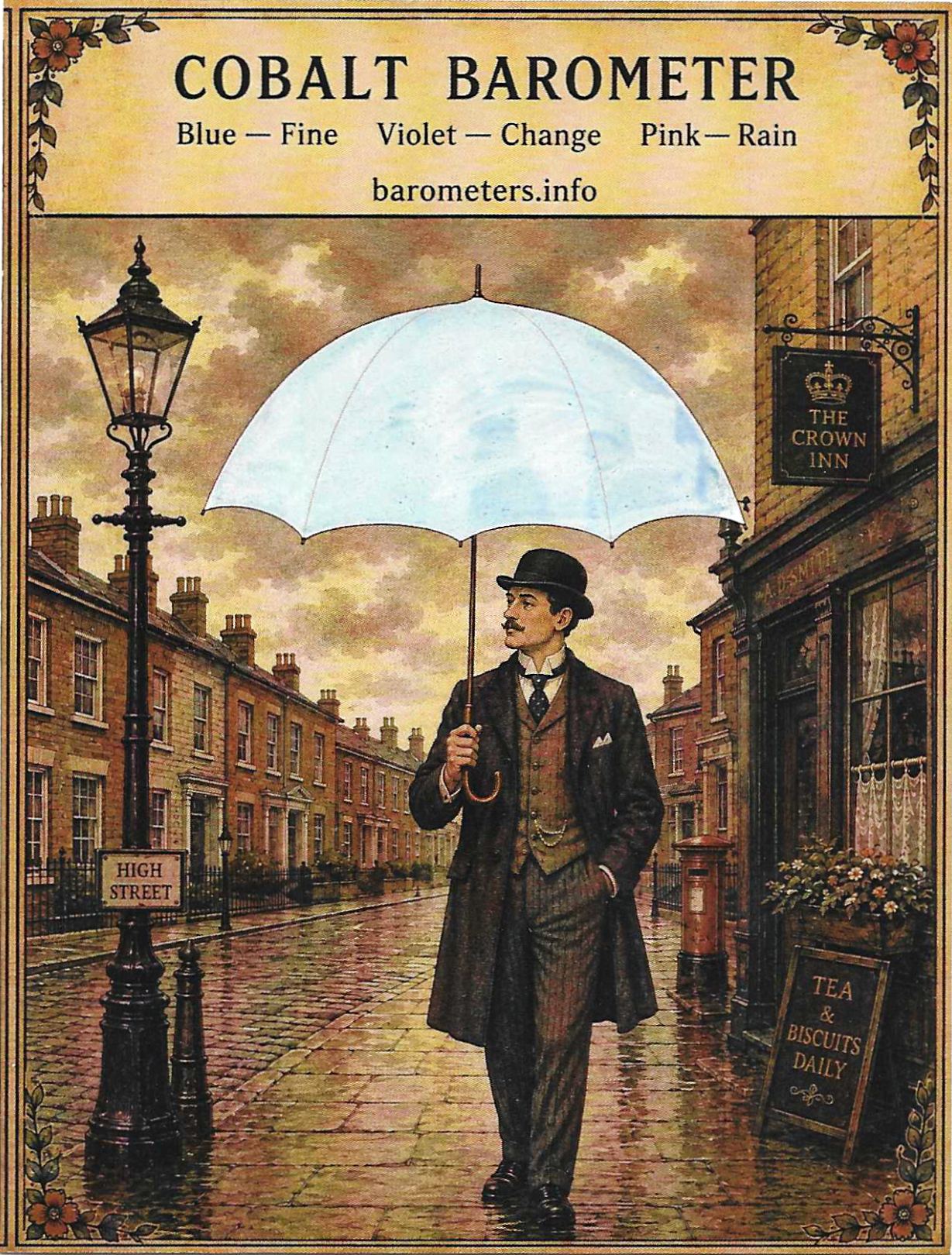
A weather card in the best English tradition: a wet High Street, a gas lamp, the Crown Inn, and a gentleman in a bowler hat who plainly knows something about the sky that we don't. The umbrella is the working part. Its canopy is treated with cobalt salts — cobalt chloride — which bind and release water from the air and change colour as they do. Dry air keeps the crystals blue: fine weather. As humidity rises the tint drifts through violet — change. In damp air it turns pink, and the gentleman's umbrella is about to earn its keep. Strictly speaking the card reads humidity rather than pressure, so "barometer" is a traditional name rather than a technical one. On a British street it still gets the forecast right more often than one might expect. No batteries, no calibration, no opinions of its own. Best hung away from direct sunlight and well clear of kitchen steam. The colour is fully reversible: as the air dries, the umbrella comes back to blue.
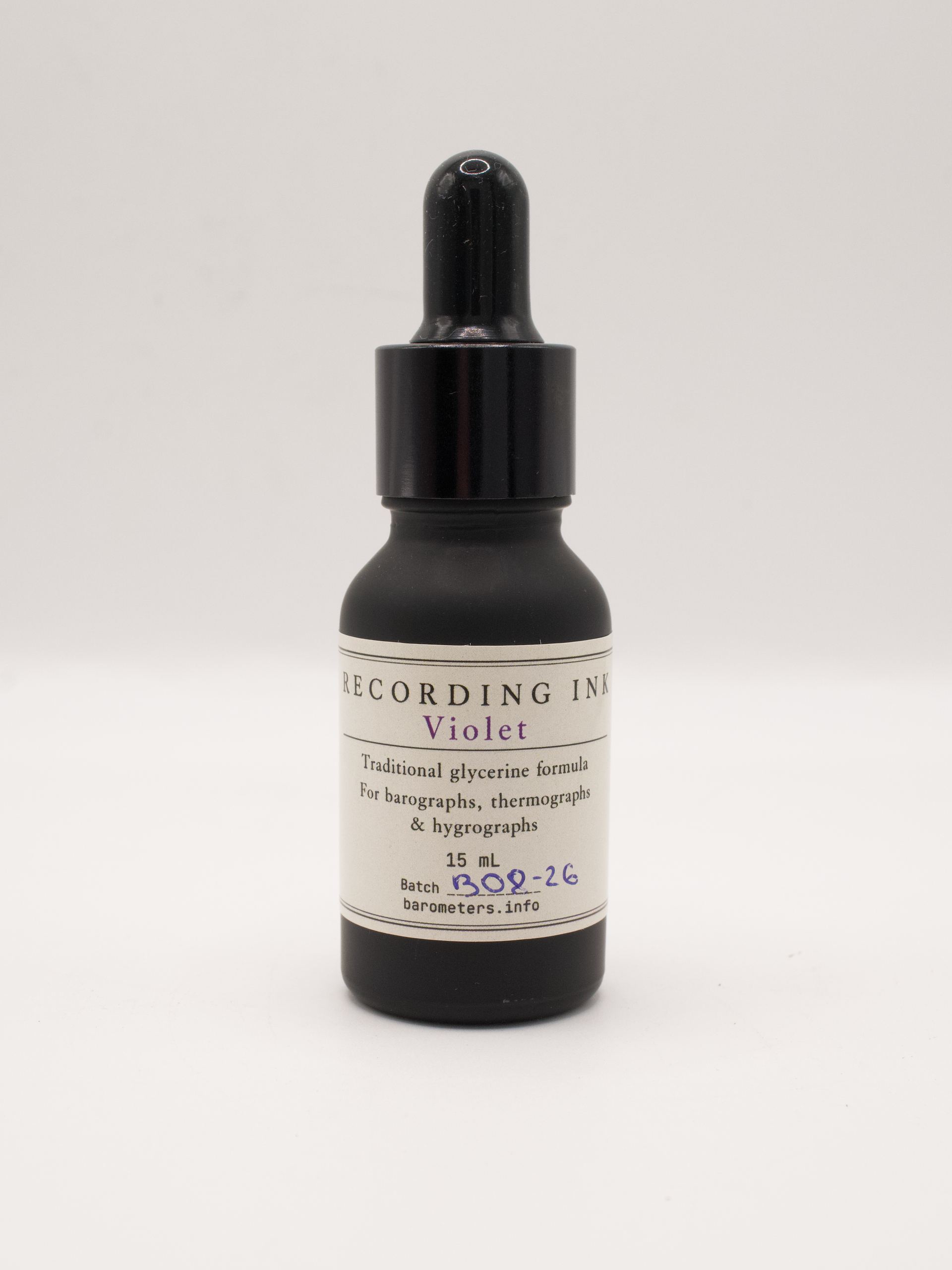
Violet ink for barographs, thermographs, hygrographs and other self-recording instruments with a pen nib. Made to a traditional glycerine formula: it dries slowly in the pen, won't clog the capillary, and lays down a clear, saturated trace on paper charts. It won't dry out during long storage in the instrument's pen. The 15 ml matte black glass bottle blocks light completely and extends the ink's shelf life. The included dropper makes dosing — and, above all, filling the pen — precise and clean: a single drop goes exactly where you want it, with no overflow or splatter. Instructions: Before first use, clean the pen with alcohol to remove any previous ink. Use the dropper to place a drop of ink into the pen; run a thin object or the edge of a sheet of paper between the tips of the pen to draw the ink down to the point.
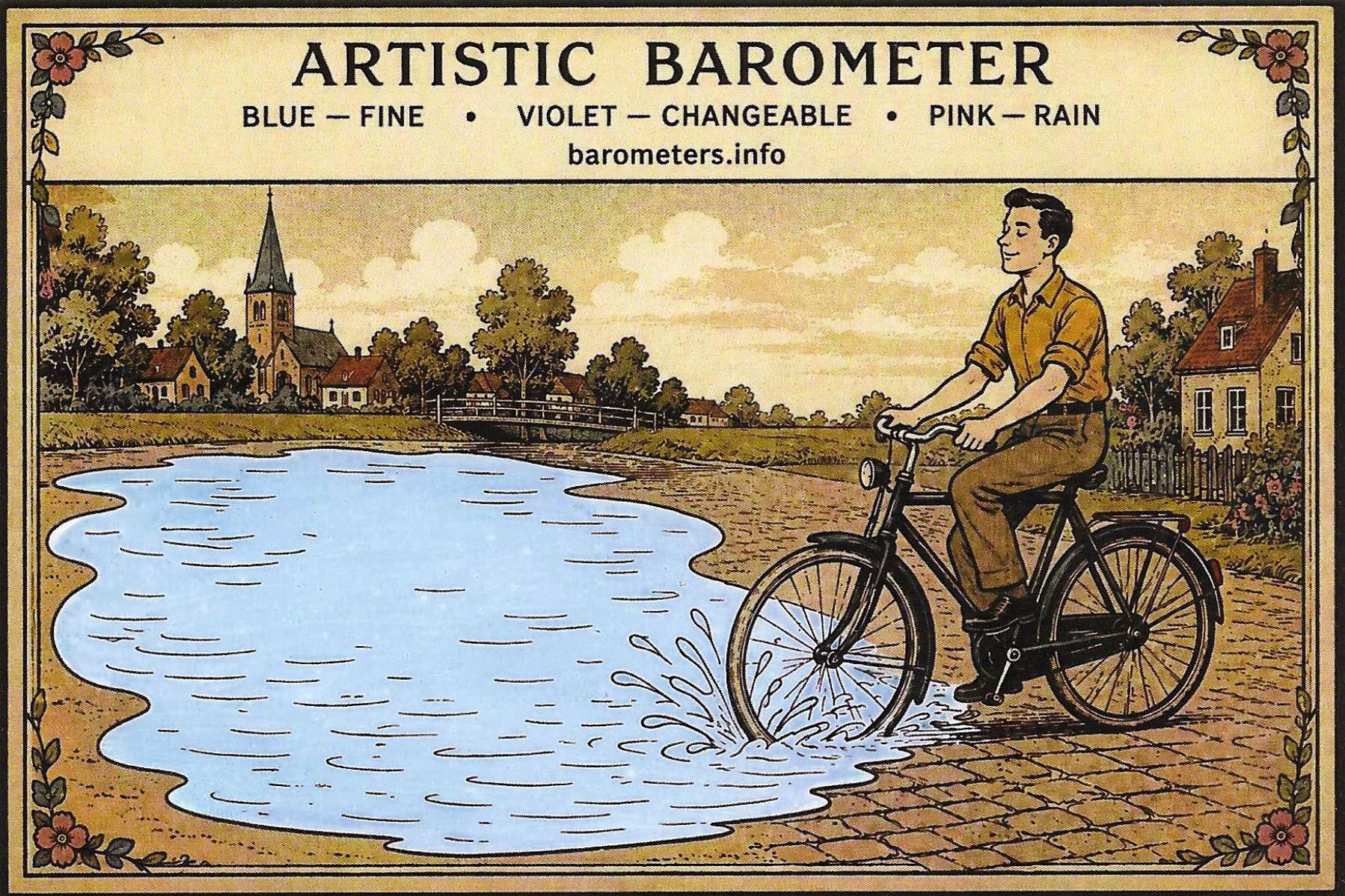
A decorative cobalt hygrometer postcard that indicates changes in atmospheric humidity by changing colour. The large crystal ball in the illustration acts as the humidity-sensitive element. Its colour changes gradually according to the moisture content of the air, from blue (dry) to pink (humid). The hygrometric coating contains cobalt salts, whose colour responds reversibly to changes in humidity. In drier air the ball becomes blue, while increasing humidity shifts the colour through violet towards pink. The postcard therefore works as a simple traditional chemical hygrometer, while also serving as an unusual decorative reproduction inspired by historical weather-indicating cards. The reverse side of the postcard is completely blank, leaving it suitable for a personal message, display, framing or collection. Size: 10 x 14 cm. Shipping note: If your order contains only one or more postcards, they will be sent by regular mail without tracking.
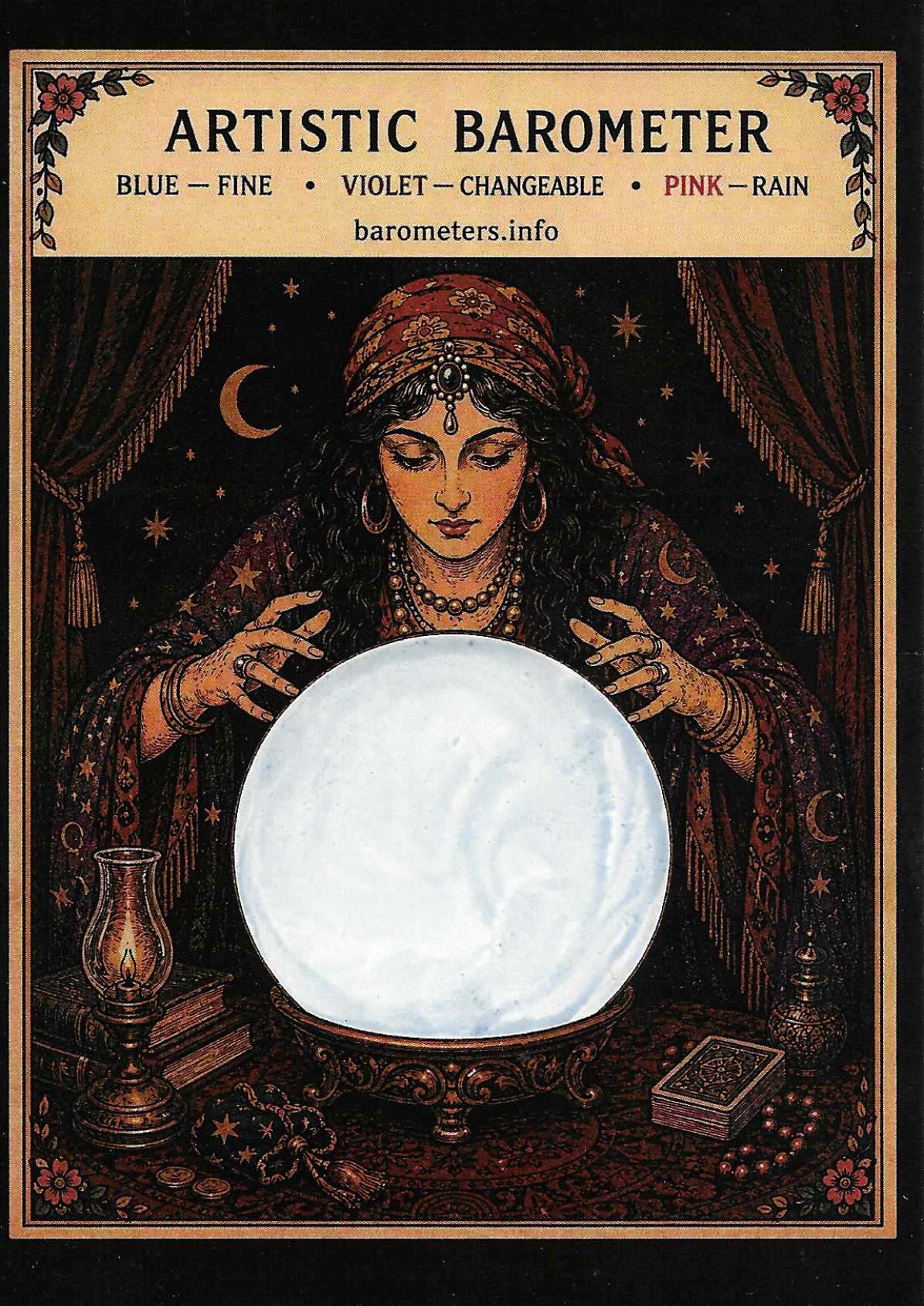
A decorative cobalt hygrometer postcard that indicates changes in atmospheric humidity by changing colour. The large crystal ball in the illustration acts as the humidity-sensitive element. Its colour changes gradually according to the moisture content of the air, from blue (dry) to pink (humid). The hygrometric coating contains cobalt salts, whose colour responds reversibly to changes in humidity. In drier air the ball becomes blue, while increasing humidity shifts the colour through violet towards pink. The postcard therefore works as a simple traditional chemical hygrometer, while also serving as an unusual decorative reproduction inspired by historical weather-indicating cards. The reverse side of the postcard is completely blank, leaving it suitable for a personal message, display, framing or collection. Size: 10 x 14 cm. Shipping note: If your order contains only one or more postcards, they will be sent by regular mail without tracking.
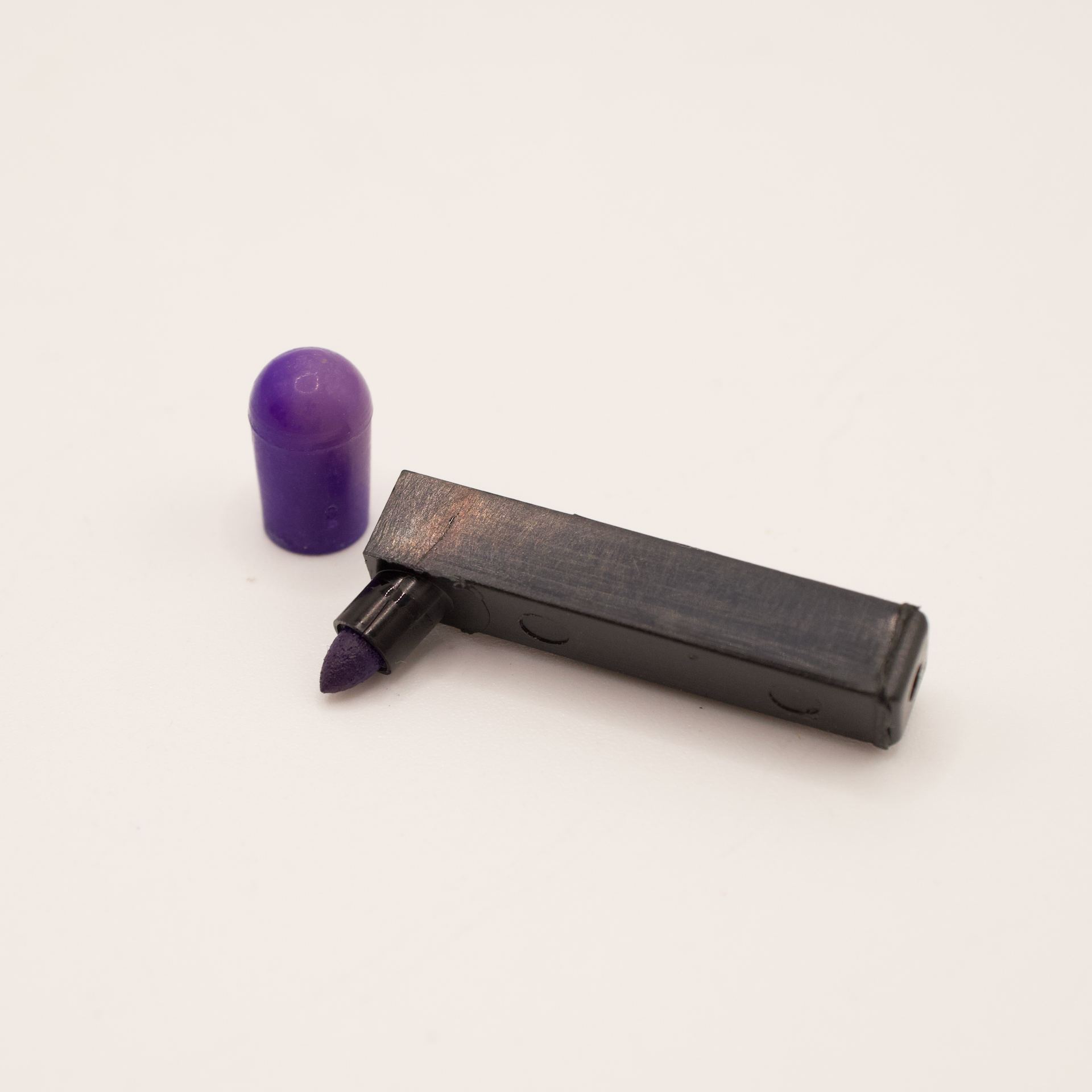
Replacement recording pen for barographs and other drum-chart recording instruments. Filled with high-quality violet ink, it produces clear, long-lasting traces on recording charts. Designed to fit virtually all self-recording instruments with a rotating chart drum, making it an ideal replacement for worn or dried-out original pens.
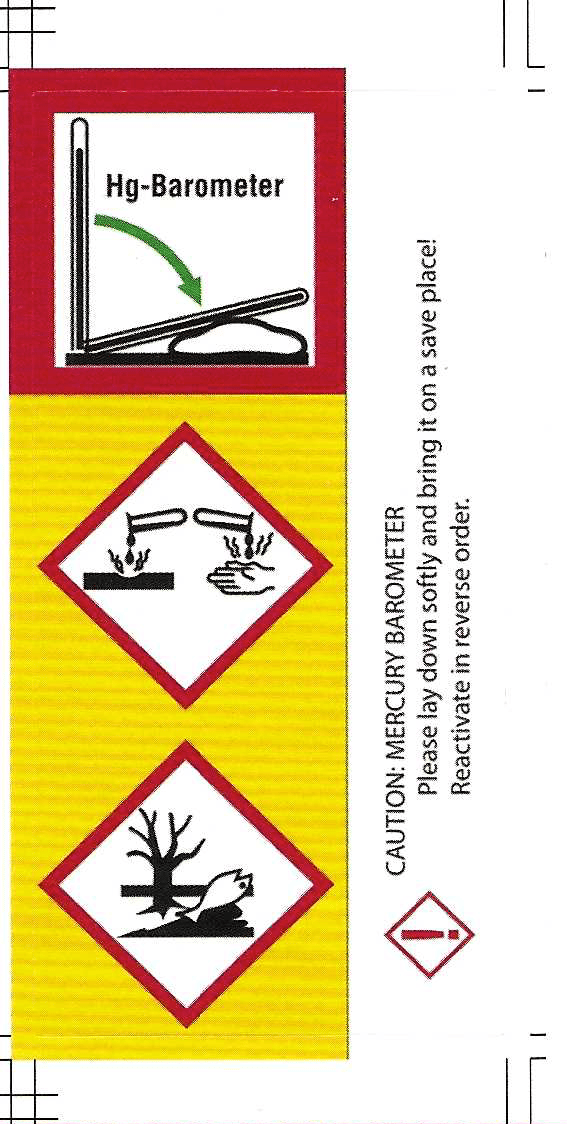
A compact safety label designed specifically for mercury barometers. It provides clear handling instructions and hazard information, ensuring that anyone other than the owner—such as movers, restorers, auction staff, or repair technicians—immediately recognizes that the instrument contains mercury and knows how to handle it safely. The label also illustrates the correct transport position to help prevent damage during relocation. Self-adhesive, durable, and ideal for both antique and modern mercury barometers.
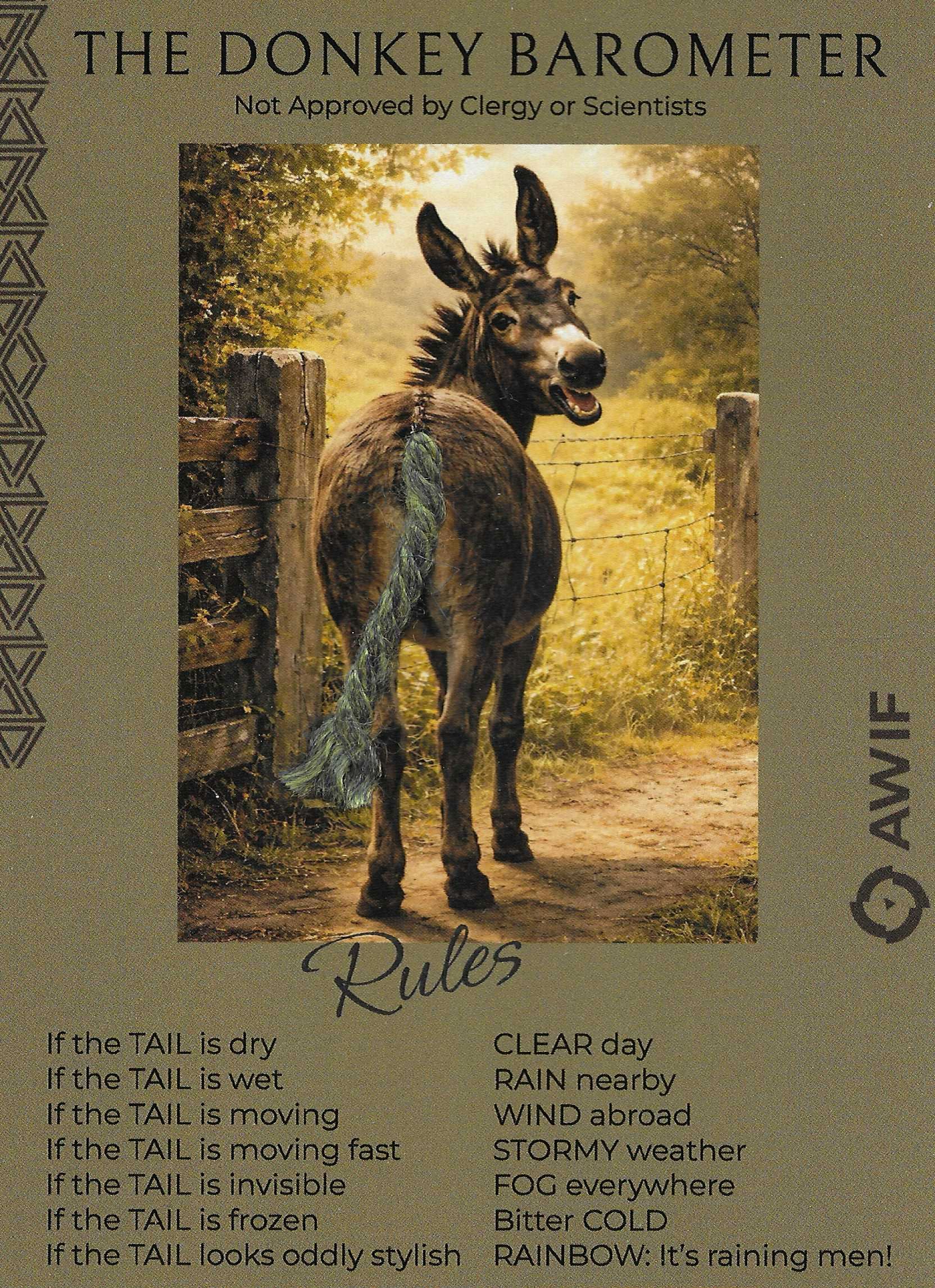
A humorous take on one of the oldest traditions of weather forecasting. Instead of mercury, capsules, or electronics, this “barometer” relies on the tail of a remarkably cooperative donkey. Dry tail? Fine weather. Wet tail? Rain. No tail in sight? Fog. The remaining forecasts are equally reliable. Printed on high-quality cardstock, this postcard is fully mailable yet charming enough to keep as a collectible or display alongside a real barometer. A perfect gift for weather enthusiasts, collectors, and anyone who appreciates scientific humor. Standard postcard size. Shipping note: If your order contains only one or more postcards, they will be sent by regular mail without tracking.
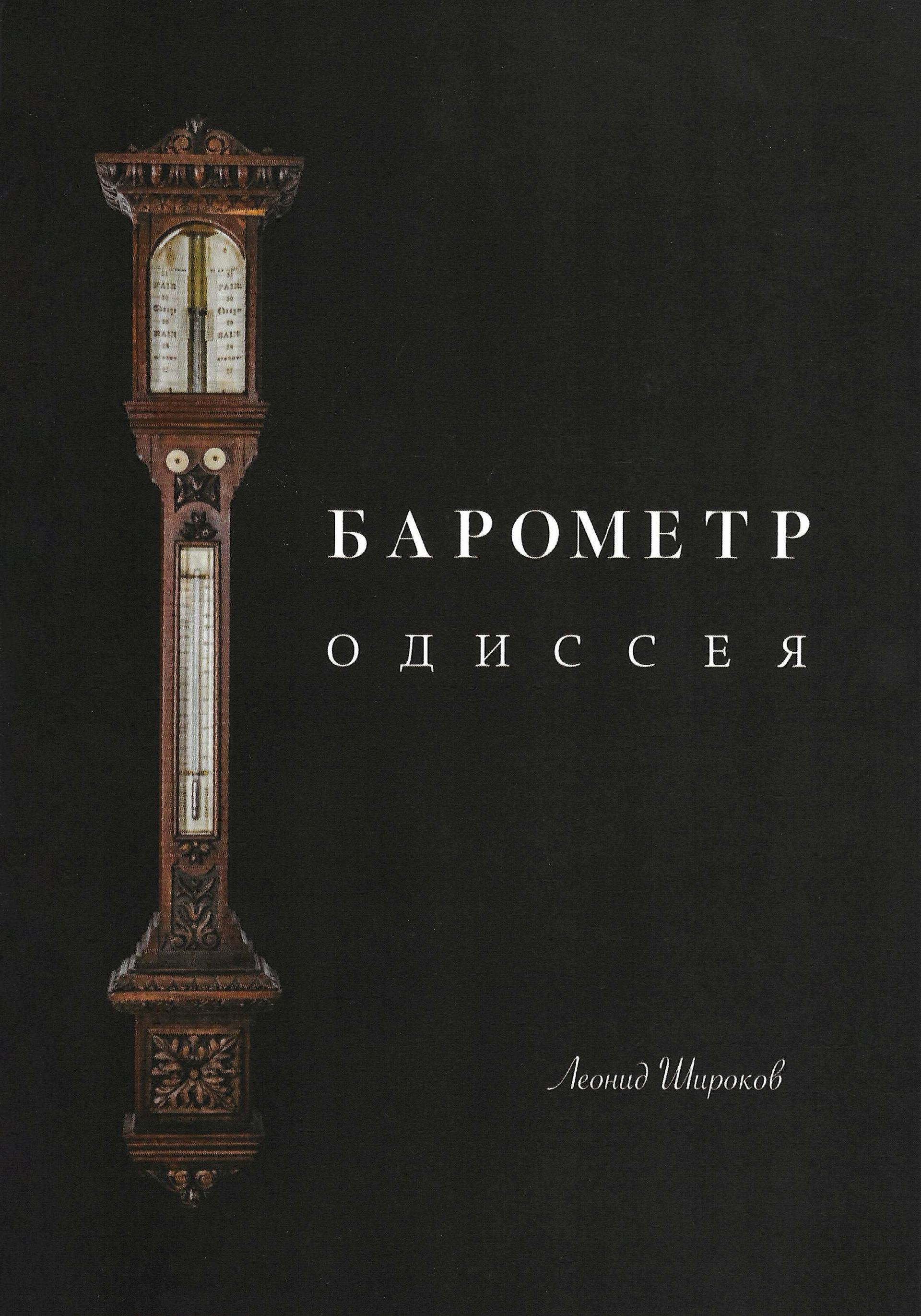
A richly illustrated 300-page book exploring the history, science, and evolution of weather instruments. From Torricelli’s pioneering experiments and the invention of the barometer to aneroid mechanisms, barographs, storm glasses, and the masterpieces of Fabergé, the book combines scientific history, engineering, and the art of instrument making. Featuring hundreds of illustrations, historical engravings, and photographs of rare instruments from the author’s collection. Language: Russian. Signed by the author.
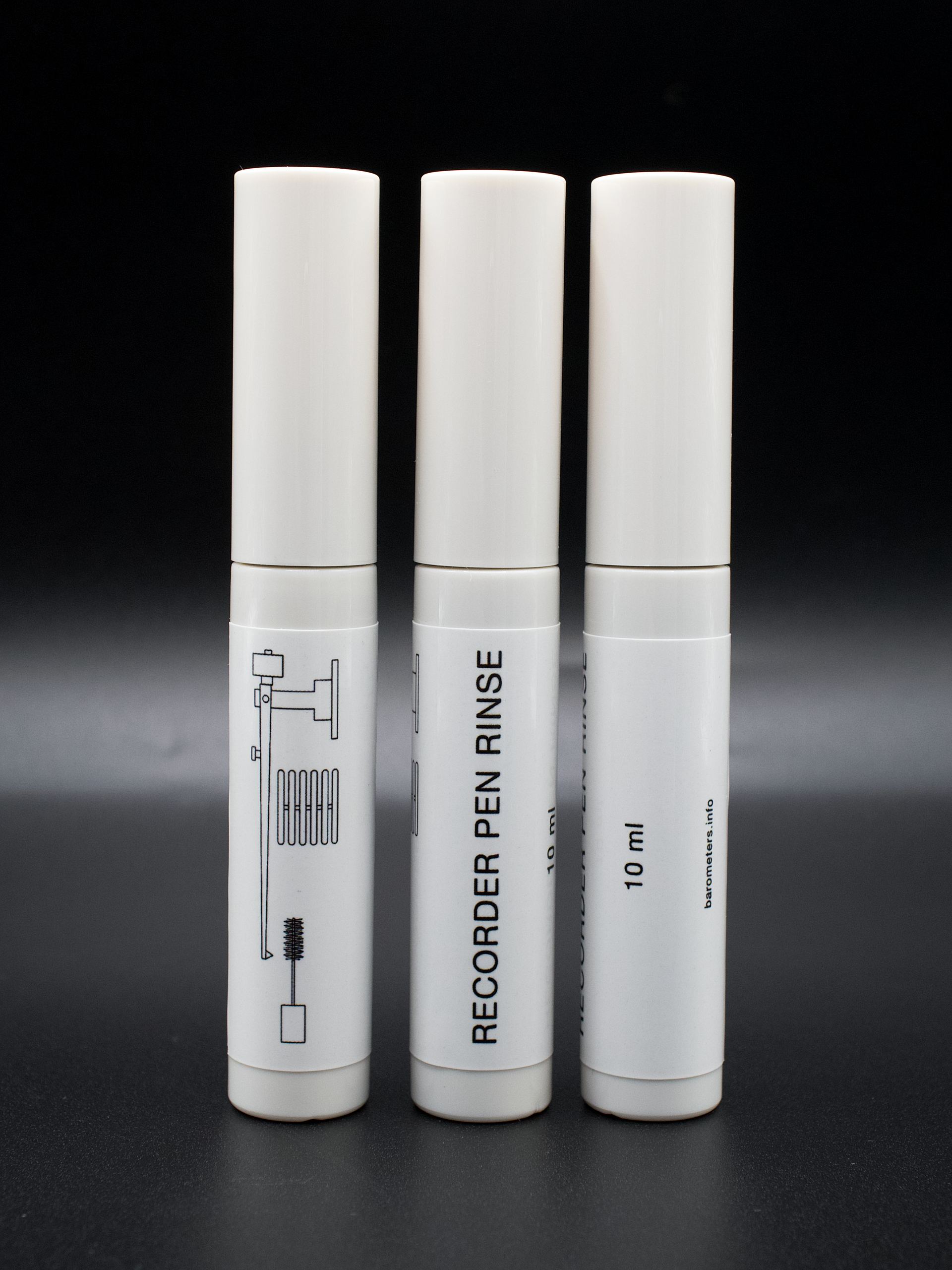
A small bottle for a small job: keeping the pen of your barograph, thermograph or hygrograph writing the way it should. 10 ml, with brush applicator What it is Recording ink is glycerine based. It never quite dries — that is exactly why it works, and also why it slowly clogs the fine slit of the pen. First the trace goes pale, then it starts to skip, and one fine morning there is nothing on the chart at all. This is the fluid that keeps that from happening. It dissolves old ink and dust, wicks out of the slit, and dries leaving nothing behind. The brush and the narrow neck are there for dosing: the wiper in the neck puts exactly as much fluid on the pen as is needed and not a drop more. That matters more than it sounds — splashes are unavoidable when cleaning, and the whole technique comes down to making sure they land somewhere other than the chart and the clockwork. How to use Take the pen off if the mount allows it without force. Cleaning off the instrument is the better way: splashes and smears end up on a tissue rather than on the barograph. If the pen is seized, or the mount looks fragile, don't fight it — clean it in place. Cover everything around it with tissues: chart, drum, base. A violet ink stain on chart paper does not come out, and the week's record is gone. Put on gloves. Aniline ink comes off skin slowly, reluctantly, and never completely. Draw the brush out slowly — the wiper in the neck will strip off the excess. Brush along the pen, from the arm towards the tip, the way the ink flows out. If the pen is badly fouled, work across it with brisk strokes instead — but remember those unavoidable splashes. N.B. If the pen is still on the instrument, support the arm with a finger: sideways pressure bends it and shifts the trace. Blot the tip with a corner of blotting paper. A strip drawn through the slit reaches what the brush cannot. Give it twenty seconds for the fluid to go, then re-ink and set the pen back on the drum. Do this every time you change the chart, and the pen will never need anything stronger. Please note Not for plastic or fibre-tip pens. It will not rescue a pen that has stood dry for forty years; that one has to come off and soak. It is here to make sure yours never gets to that state. Flammable liquid Flammable liquid. Keep away from heat and open flame.
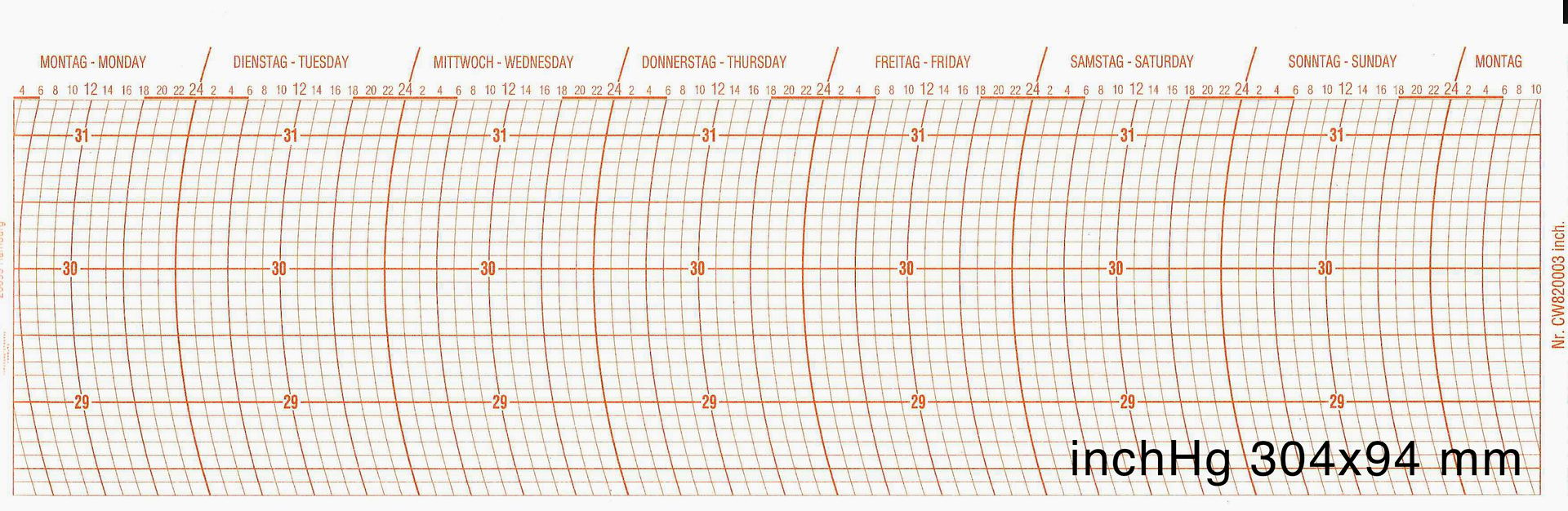
High-quality replacement recording charts for self-recording meteorological instruments, including barographs, thermographs, and hygrographs. Printed on durable chart paper with clear, high-contrast grids for accurate and easy reading. Available in a variety of sizes and measurement scales to fit many classic and modern recording instruments. Unlike most suppliers, who typically sell chart paper only in packs of 100 sheets or more, these charts are offered in convenient packs of 10 sheets. The listed price is for 10 charts. This is an ideal solution for collectors and restorers—most collectors are not professional meteorologists and simply want to return an instrument to its proper working appearance. For occasional use, ten charts are more than enough without the expense of purchasing a large commercial pack.