Loading
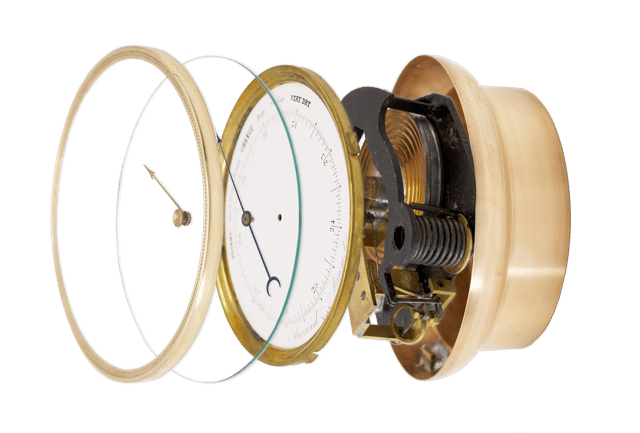
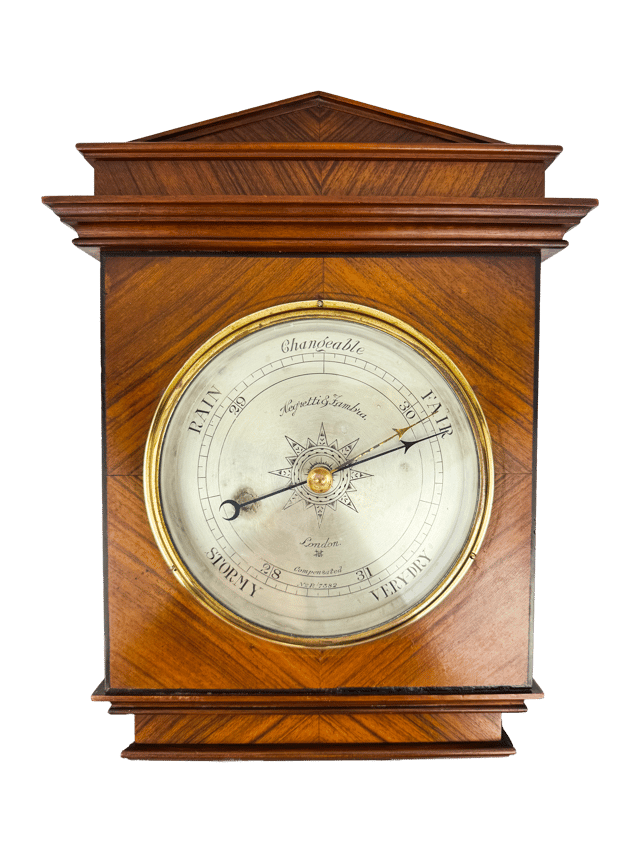
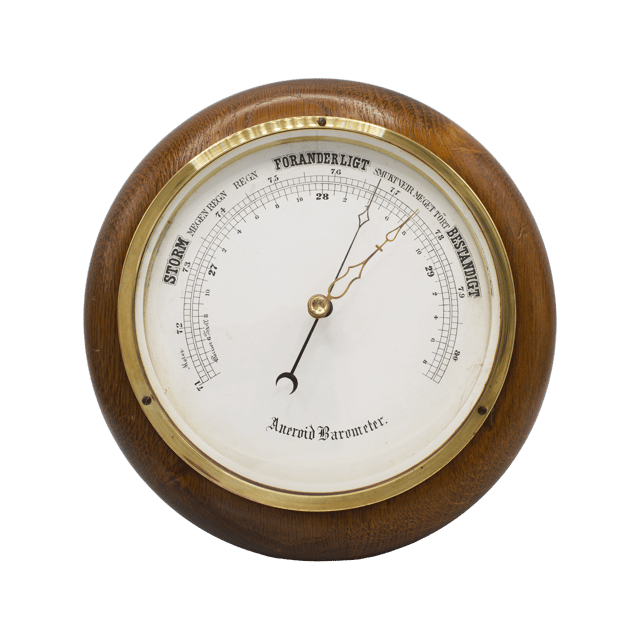
The aneroid barometer, invented in 1844 by the Frenchman Lucien Vidie, is a portable device for measuring atmospheric pressure that does not require mercury or other liquids to operate. The word “aneroid” comes from the Greek roots a- (without) and neron (water), meaning “without liquid”. The core of an aneroid barometer is a flat metal capsule from which the air has been evacuated. The walls of this capsule compress under air pressure. The degree of this compression and expansion is transmitted to the barometer’s hand through a system of levers that amplifies the movement.
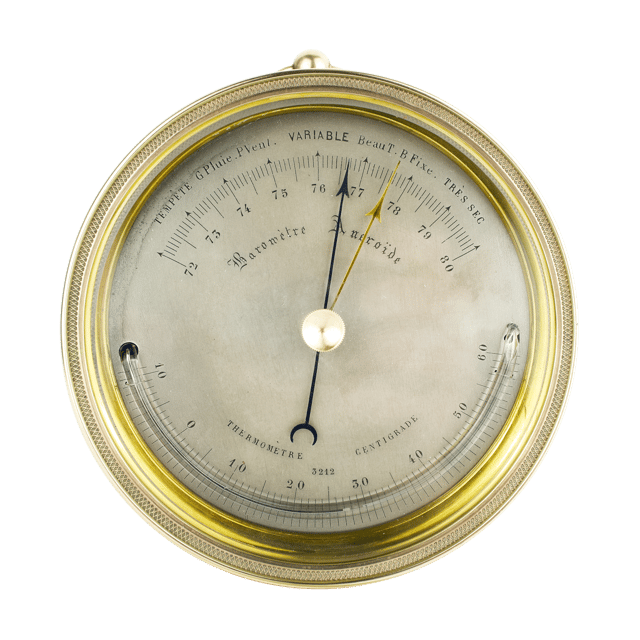
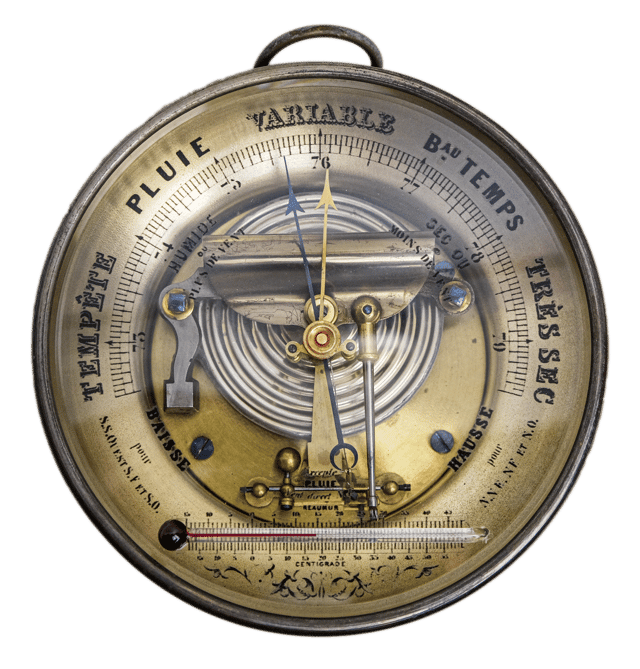
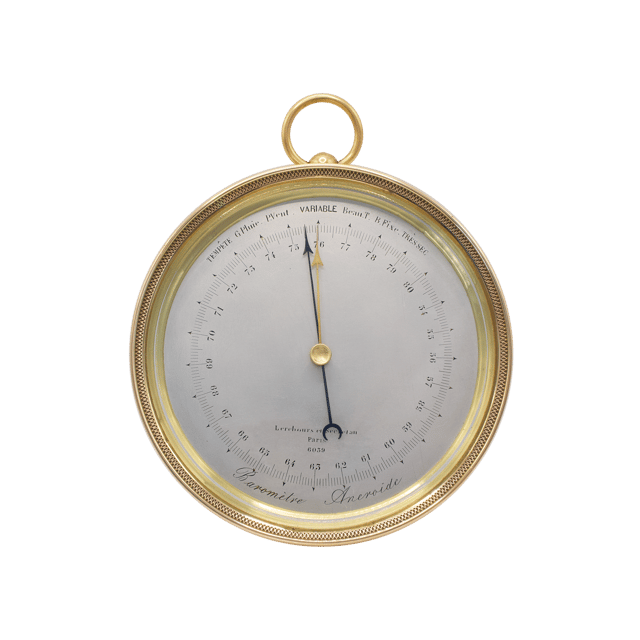
The earliest Vidie barometer
Lucien Vidie
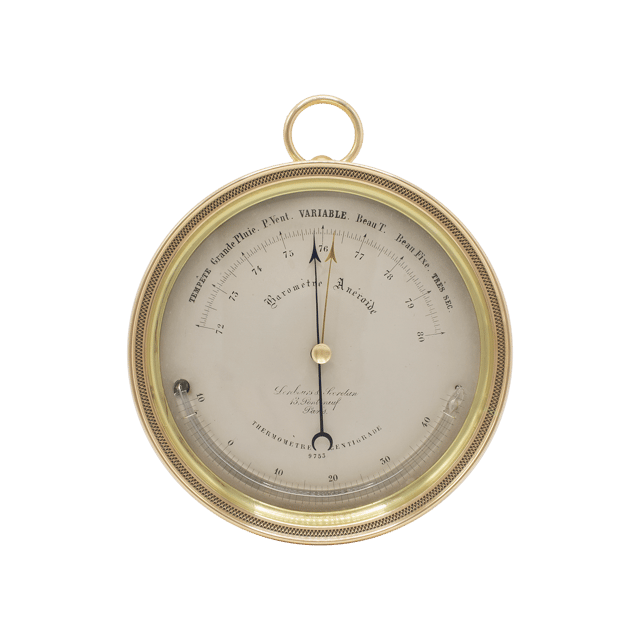
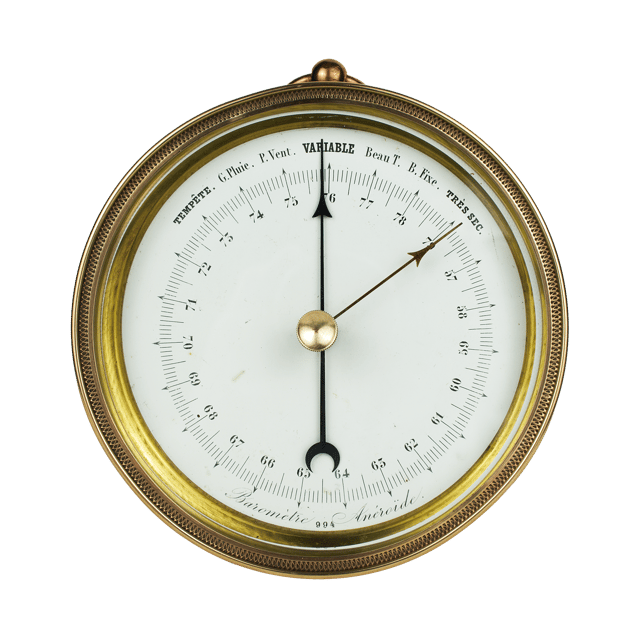
Very Early Vidie Aneroid
Lucien Vidie
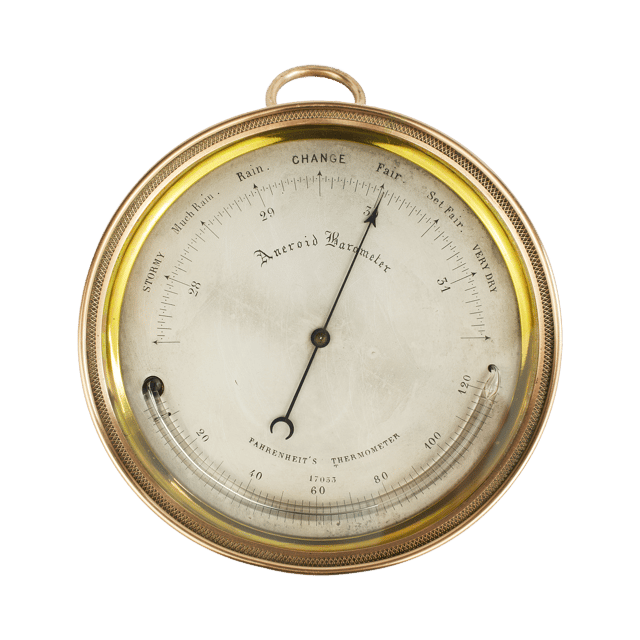
Very early aneroid barometer
Lucien Vidie
Lucien Vidie
Louis Clément Breguet
Maillechort cased aneroid barometer
Lion et Guichard
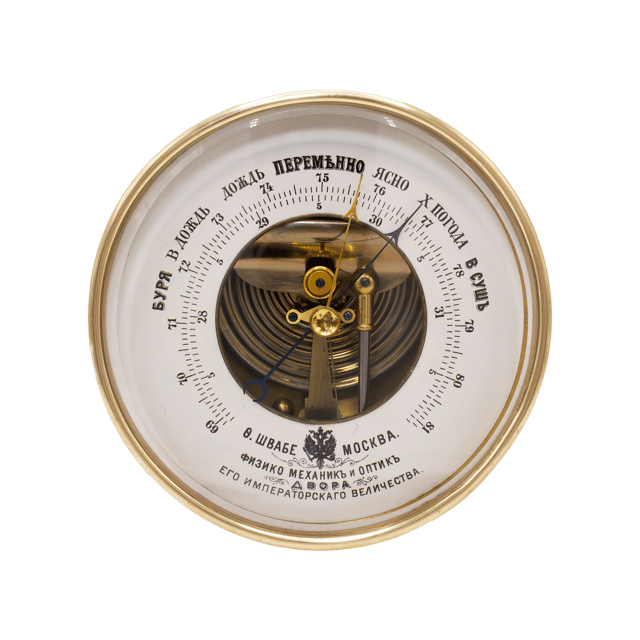
F. Schwaabe
Classical Style Mahogany Barometer
Negretti & Zambra
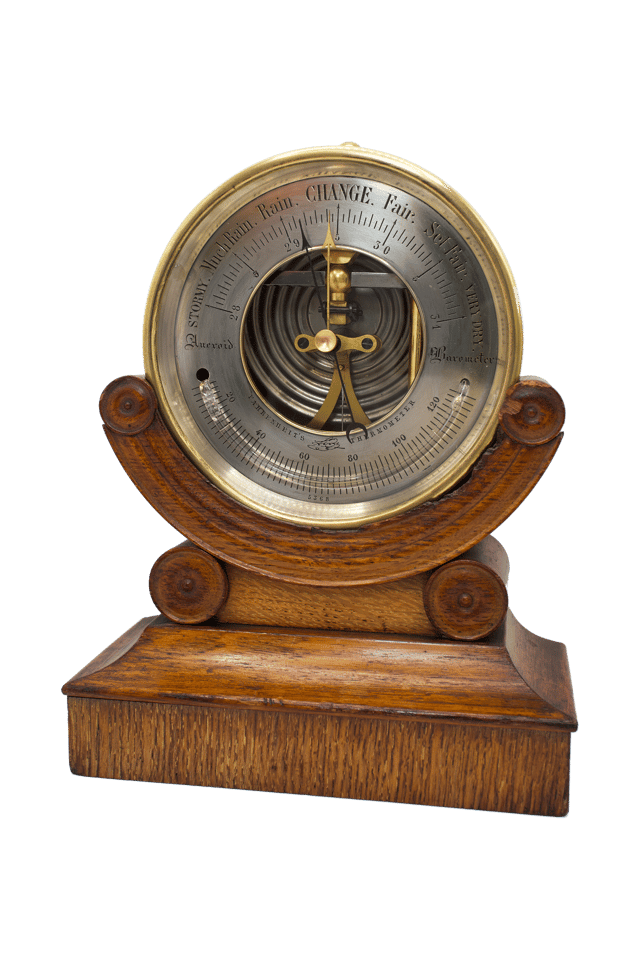
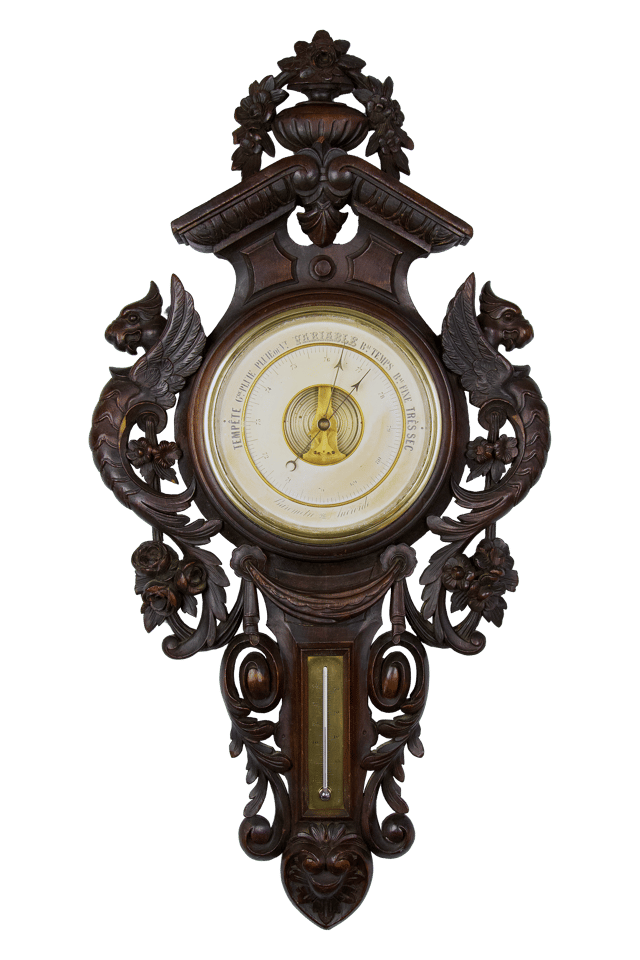
Very early oak case aneroid barometer
R. Deutschbein