Loading
Foundation of the Company and Composition of the Partnership (1860s)
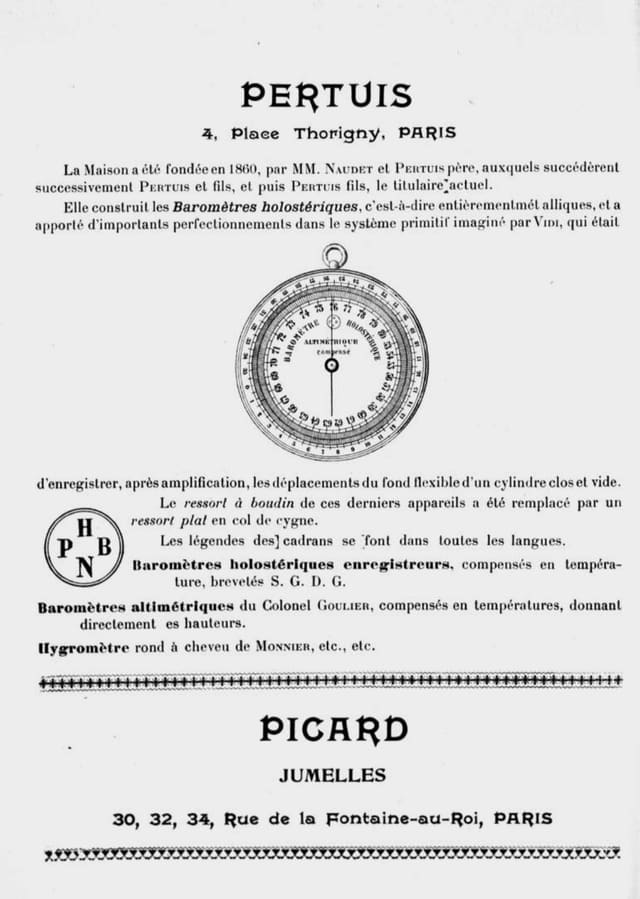
The firm was founded in Paris in 1860 by four partners: the instrument maker , members of the family (father and son), and Messrs and . The formation of this partnership coincided with the expiration of patent on the liquid-free (“aneroid”) barometer in 1859, which opened the way for other manufacturers to refine and mass-produce such instruments. The new company established itself in the Marais district of , and within its first years gained recognition as one of the world’s leading producers of aneroid barometers.
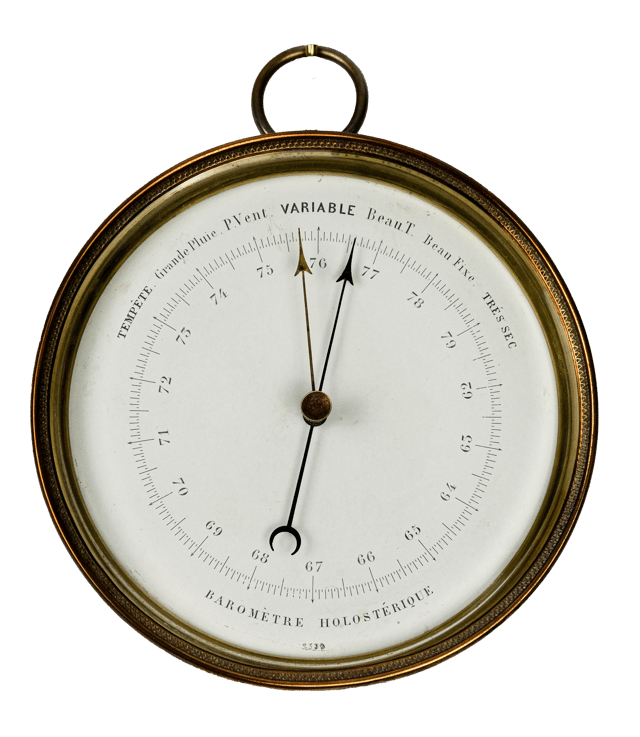
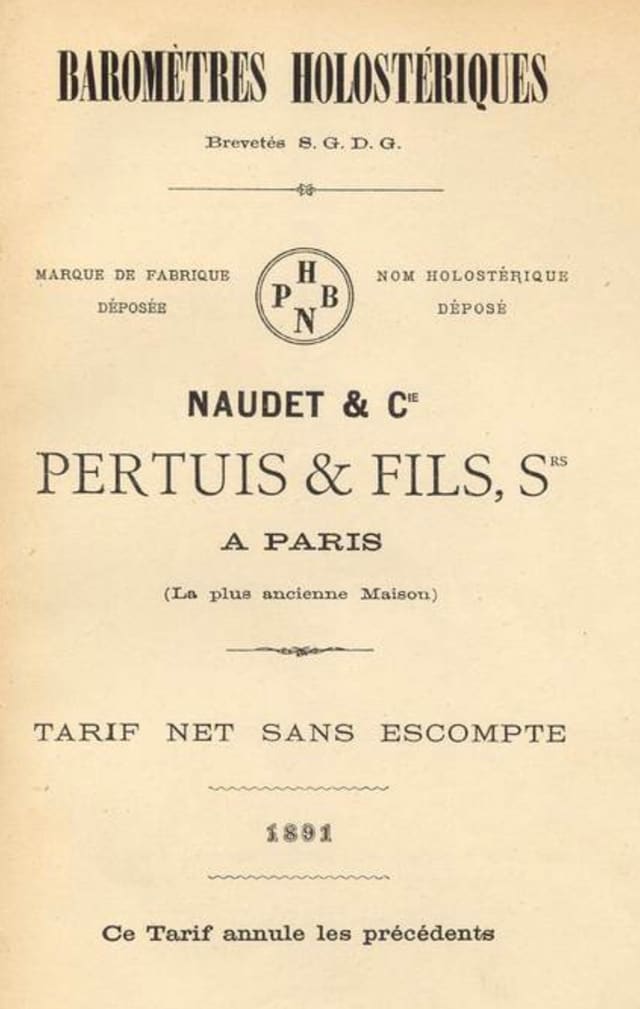
From the outset, the firm marked its instruments with an original trademark: an elegant circular emblem bearing the monogram “PNHB”, composed of the initials of the partners’ surnames (Pertuis, Naudet, Hulot, Bourgeois). On the dials of its barometers, this mark was usually accompanied by the inscription “Baromètre Holostérique”, emphasising the fundamental characteristic of the design: the complete absence of liquid. The term “holostérique” was introduced for the first time by PHBN itself (from the Greek holos, whole, and stereos, solid) and meant “solid-body,” that is, a barometer entirely based on a solid elastic element rather than a liquid column. This designation effectively became a trademark of the firm, much as the word “aneroid” (“without water”) became inseparably associated with Vidie’s invention. Thus, already by the early 1860s, PHBN was offering the market an innovative product: compact, robust, metal-constructed barometers of high precision, entirely free of mercury.
A central role in the establishment of the enterprise was played by Paul Naudet, who would later be recognised as one of the leading barometer makers of the second half of the nineteenth century. His name became closely associated with the firm’s products for decades to come. Nevertheless, the contributions of the other partners were also significant: the Pertuis family (father and son) specialised in fine mechanics and, according to some sources, continued to oversee production even after changes in the company’s structure; Hulot participated in improving barometer construction and business organisation; and Bourgeois, although he left the partnership relatively early, contributed to the firm’s initial establishment. Biographical information on the partners is scarce, but it is clear that all were experienced engineers and opticians of their time, united in developing a new direction in instrument making.
Early Successes and Inventions (1860–1868)
Almost immediately after its founding, PHBN began to gain recognition beyond France. Just two years later, in 1862, the company participated in the London International Exhibition, where it exhibited under the name “Naudet & Cie”. At the London exhibition, its aneroid barometers were awarded a First Class Medal, significantly enhancing the firm’s international prestige. This success enabled PHBN to establish export channels, and its products soon appeared in the catalogues of leading scientific and technical retailers worldwide. Notably, the well-known London firm Negretti & Zambra included French “holostérique” barometers in its range, selling them alongside its own instruments.
Naudet rapidly won the confidence of consumers; within five years their output reached 50,000 instruments, despite active competition. Their holosteric barometers are shipped to all parts of the globe; they may even be found with Chinese and Japanese scales. During the same period, Naudet also manufactured approximately 2,500 so-called “mountain” barometers, intended for engineers and travellers for the approximate determination of altitudes by means of atmospheric pressure.
A key competitive advantage of PHBN lay in its technical improvements to Vidie’s aneroid barometer. The firm introduced an original temperature-compensation system, adding a bimetallic element that counteracted temperature-induced variations and reduced measurement errors. This improvement was protected by French patent No. 45580 for an “improved metallic barometer,” granted in the 1860s. A significant contribution to this innovation was made by the German barometer maker Otto Bohn, who worked at the beginning of his career at PHBN. It was Bohn who introduced bimetallic temperature compensation into barometer technology. Around the same time, he founded his own firm (mid-1860s) and developed mechanisms using bimetallic components to compensate for the influence of temperature on the elasticity of the aneroid capsule. This innovation greatly improved the accuracy and stability of barometer readings across varying ambient temperatures.
In addition, Naudet and Hulot introduced several improvements to the vacuum capsules themselves and to the transmission mechanism linking capsule deformation to the pointer, achieving high sensitivity and repeatability of readings. In particular, the patenting of their own C-shaped spring provided the firm for many years with a distinctive mechanism characterised by a swan-neck-shaped C-spring, whereas other barometer makers continued to rely on external coil springs at the end of the lever. By the end of the decade, the “holostérique barometer” produced by PHBN was regarded as a benchmark of precision and reliability among portable barometers.
The aforementioned constructional features, which—together with the quality of workmanship—ensure the reliable operation of barometers manufactured by Naudet, are not the only conditions required for a high-quality instrument. There is one essential point that must be strictly observed: the creation of a vacuum as perfect as possible within the aneroid capsules and their airtight sealing.
These operations are carried out by Naudet with the greatest care. The capsules, evacuated of air and sealed, are left for a certain period at extreme positions; those in which no leakage is detected during this time are assembled, then placed in a thermostatic chamber, where observations of the changes caused by temperature fluctuations make it possible to judge whether any residual quantity of air remains sufficient to distort the instrument’s indications; in such cases, the capsule is rejected.
The firm’s achievements were highly regarded in France. In 1864, the Paris Observatory tested Naudet barometers and published a very favourable assessment of their accuracy and quality. On 26 December 1868, at a meeting of the Société d’encouragement pour l’industrie nationale, partners Naudet and Hulot were awarded the Platinum Medal, the Society’s highest distinction, for the development and implementation of their holostérique barometers. The Society’s report noted that PHBN’s liquid-free barometer significantly improved upon Vidie’s instrument and offered a full range of advantages: compactness, robustness, ease of transport, and satisfactory precision. Both the report and the award played a major role in strengthening the company’s reputation on the domestic market.
By the end of the 1860s, PHBN had secured a leading position in the field of barometry. The firm introduced the concept of the holostérique barometer into scientific discourse, demonstrated the superiority of its design through expert evaluations and exhibitions, protected its innovations with patents, and distributed its products from Paris and London to other major capitals. All of this laid a solid foundation for the company’s further development.
Development and Expansion (1870s–1890s)
During the 1870s and 1880s, the company, by then operating under the name , continued to expand its production and product range. Although the original four-partner structure gradually evolved (the PHBN partnership as a formal entity existed only briefly), continuity among the key figures was maintained. appears to have left the enterprise within its first years, but , the family, and remained involved until the end of the nineteenth century. Sources indicate that in 1867 the firm operated under the name , and by the 1890s simply as . At the same time, from 1891, the firm appears to have acted as the direct successor, as reflected, for example, on the cover of the 1891 catalogue, which bore the name alongside the more prominent designation , underscoring the complex reorganisation history of the company.
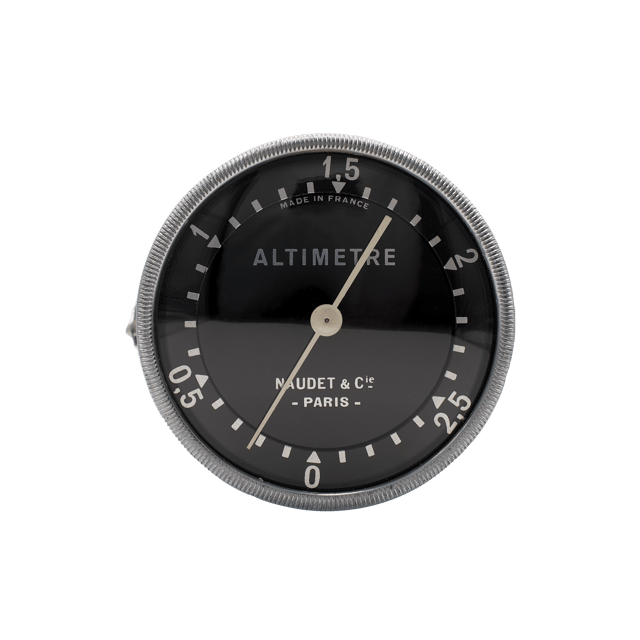
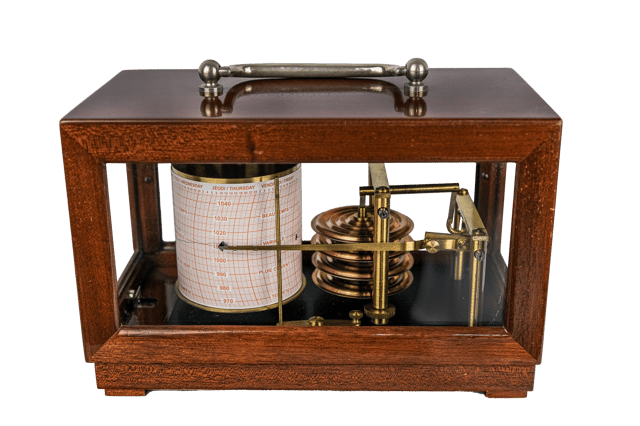
The product range expanded significantly during this period. The core products remained aneroid barometers of all types, from wall-mounted domestic instruments to pocket altimeter barometers for travellers and military use. These so-called barometer-altimeters by Naudet featured dual scales (atmospheric pressure and altitude above sea level) and a rotating setting scale for calculating elevation differences. The company was also among the first to manufacture barographs, self-recording barometers with clockwork mechanisms that traced pressure changes over time. Complementary instruments appeared as well, including hygrometers for humidity measurement and thermometers, often integrated into combined meteorological stations of the firm’s own production. Thus, the company evolved into a manufacturer of a full spectrum of meteorological instruments while retaining a strong focus on barometers.
Throughout this period, PHBN (Naudet) continued to receive awards at international exhibitions. Despite the upheavals of the Franco-Prussian War of 1870–71, the company endured and in 1876 successfully participated in the Philadelphia World’s Fair, where its barometers received an award medal. At the subsequent Paris Universal Exhibition of 1878, the firm was honoured with the Diplôme d’Honneur, one of the exhibition’s highest distinctions. PHBN likely also participated in the 1889 Paris Exhibition, though by then the exhibitor was listed as “Pertuis & Fils, successeurs.” Nevertheless, the products remained the same, described in the official catalogue as “Baromètres anéroïdes dits holostériques pour nivellement, mesure des hauteurs, marine…” The firm established strong sales networks in many countries: beyond England, its instruments were distributed through dealers in Italy, Germany, Austria-Hungary, Russia, and elsewhere. In late nineteenth-century scientific and popular literature, the terms “aneroid” and “holostérique barometer” were widely used, and Naudet was frequently cited as a producer of reference-quality instruments. For example, a German encyclopedia of 1888 noted the widespread use of the “Baromètre holostérique” developed by Naudet und Hulot, while French geographers and engineers of the fin-de-siècle regularly relied on Naudet altimeters in their measurements.
A landmark event was the legal protection of the firm’s product name. In 1885, Paul Naudet registered the term “Baromètres holostériques” as the company’s trademark. From that point onward, no other manufacturer in France could apply this designation to its barometers. The name “Holostérique” effectively became synonymous with the Naudet brand. Popular usage increasingly reinterpreted the company’s initials not as the surnames of the founders but as “Paul Naudet, Holostérique Baromètre”, giving rise to the alternative ordering PNHB. This semantic shift reflected reality: by the late nineteenth century, Naudet and his descendants embodied the brand, while the original partners had receded into the background.
The First Half of the Twentieth Century: Continuity and Trials
At the turn of the century, Naudet remained one of the leading manufacturers of barometric instruments, even as the market evolved. New competitors emerged and electronics developed, yet the classic aneroid barometer continued to be in demand, particularly in navigation, military applications, and meteorology. The world wars and economic crises of the first half of the twentieth century did not spare the company, but it succeeded in surviving these difficult periods. Catalogues and archival records show that the firm continued production under the same brand into the 1920s. Inevitably, however, a generational change occurred: Paul Naudet passed away, and management passed to his successors.
In 1906, “Maison Naudet & Cie” was sold and transformed into “Veule, Poirelle & Dourde”, and by 1912 the firm was operating under the name “Dourde & Cie”. The definitive formation of Naudet-Dourde occurred in 1928, when the company became “Maison Naudet-Dourde, Successeur S.A.R.L.” Despite changes in ownership, the Naudet brand was retained on the instruments. New catalogues appeared under the dual name Naudet-Dourde, emphasising continuity between “Naudet” and “Dourde successeur.” The company continued to develop as a manufacturer of navigational and meteorological instruments while preserving the Naudet name.
The firm successfully endured wartime conditions. It is known that Naudet & Cie continued instrument production during both the Franco-Prussian War and World War I, as evidenced by surviving catalogues and exhibition awards from those periods. Maintaining ties with military and government services, the company supplied barometers to various agencies; modern sources note that Naudet-Dourde instruments were used by meteorological services, naval forces, and even the army.
During the interwar period, the company’s range included not only traditional barometers and barographs but also specialised instruments. Naudet supplied equipment to the French Navy (including ship’s barometers and aviation altimeters) and collaborated with meteorological services. Prior to World War II, the firm produced barometers for military use and continued selling civilian instruments through networks of opticians and nautical shops. A museum object in Paris—a 1941 Italian trophy aneroid barometer bearing the mark “Naudet & Cie, fabricant, Paris”—attests to the company’s activity into the 1940s.
After World War II, the Naudet enterprise (by then legally owned by the Dourde family) remained, in effect, the last manufacturer of classical mechanical barometers in France. Many competitors had disappeared or shifted to other fields. Nevertheless, demand for aneroids persisted, particularly in maritime use, agriculture, and amateur meteorology. In the 1960s, the firm decided to leave its historic Marais address. In 1965, production moved to Le Perreux-sur-Marne, a Paris suburb offering larger and more modern workshops. This relocation allowed partial modernisation, but the character of production remained artisanal: a significant portion of operations continued to be carried out by hand, using presses and machines that had already been in service for decades.
By the 1980s, Naudet continued to operate quietly, maintaining small production volumes while remaining faithful to tradition. At that time, the company was managed by a later generation of the Dourde family (formally under the name Naudet-Dourde), with only a handful of craftsmen on staff. Nevertheless, the products found their niche, supplying organisations such as Météo-France and appealing to maritime enthusiasts and collectors of historical instruments. Barometers from this period differed little in design from Victorian examples: the same aneroid capsule housed in a lacquered brass case, with a classic dial and the “PNHB” logo. Cooperation with other legendary French brands—such as Hermès, which adorned traditional brass barometer cases with leather elements—perfected the union of tradition, craftsmanship, and that distinctive Parisian elegance instantly recognisable at a glance. In this way, the firm survived the mid-twentieth-century technological revolution while remaining a guardian of historical expertise.
The Contemporary Period (Twenty-First Century)
At the beginning of the twenty-first century, the Naudet barometer workshop was still in operation. A new chapter began in 2014, when the enthusiast François Bouan acquired the company from its previous owners. The aim of the acquisition was not so much business expansion as the preservation of unique know-how accumulated over more than 150 years. Under Bouan’s leadership, the firm adopted the legal form SAS Naudet and soon moved to new premises in Neuilly-Plaisance, not far from its former location. The relocation improved working conditions, although the production equipment remained unchanged: some nineteenth-century presses and machines are still in use today. The workforce now consists of only three to four people—the owner himself and a small number of hereditary craftsmen possessing rare skills in the hand assembly of precision mechanisms.
The fact that Naudet continues to manufacture barometers using classical techniques has been recognised at the highest level. In 2016, the company was awarded the prestigious French state label “Entreprise du Patrimoine Vivant” (EPV), reserved for custodians of national artisanal and industrial heritage. Today, Naudet is the only French manufacturer of mechanical barometers, barographs, and related instruments. Under this name, the firm produces wall-mounted and desk aneroid barometers (including marine-style models for yachts), barographs, hygrometers, compasses, tide clocks, and other measuring instruments for amateurs and professionals alike. As a century ago, products are sold through networks of opticians and marine suppliers and delivered to institutional clients such as naval forces, aviation, and meteorological services.
Modern Naudet barometers differ little in appearance from vintage examples. They remain brass-cased instruments with glazed dials, enclosing evacuated copper-beryllium capsules that respond to atmospheric pressure changes. Naturally, certain modern improvements are employed—such as anticorrosion coatings, modern alloys, and electronic calibration control. Yet the operating principle and manual fitting of components remain exactly as they were in the time of the founders. Every instrument produced today in Neuilly-Plaisance carries within it traditions that trace directly back to the Place de Thorigny workshop of 1860.
Over its long history, PHBN/Naudet has secured a reputation as one of the most influential barometer manufacturers. Every stage of its development—from the first nineteenth-century holostérique models to contemporary twenty-first-century instruments—reflects the evolution of technical thought and artisanal craftsmanship in instrument making. The firm’s patents and inventions, such as temperature compensation in the 1860s and the Holostérique trademark in 1885, represent milestones in the history of measurement technology. Exhibition awards—London 1862, Paris 1867, Philadelphia 1876, Paris 1878, and others—testify to the global recognition of its instruments’ quality. Participation in scientific life, from academic publications to the use of Naudet barometers in expeditions, underscores the importance of its contribution to meteorology. Finally, the continuity of generations of craftsmen over more than a century and a half has made Naudet a living legend of French technical heritage. Today, the company continues its work under the name (formally ), proudly carrying forward the founder’s name and the PHBN initials on its dials—symbols of quality proven by time.
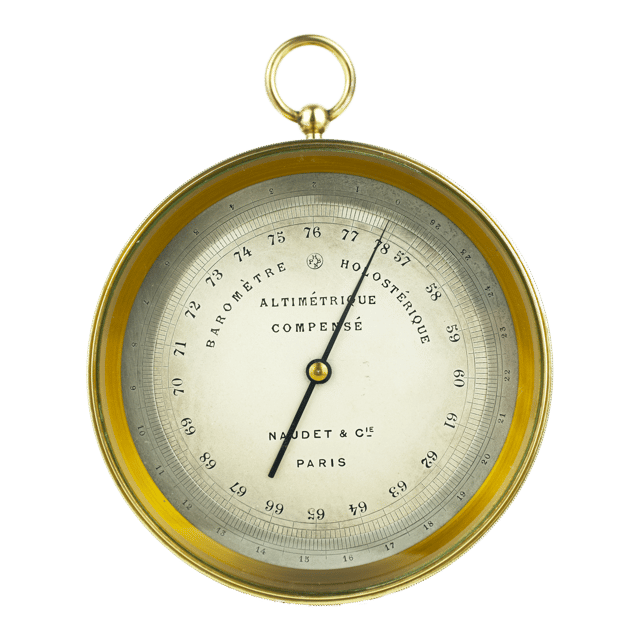
Holosteric barometer-altimeter
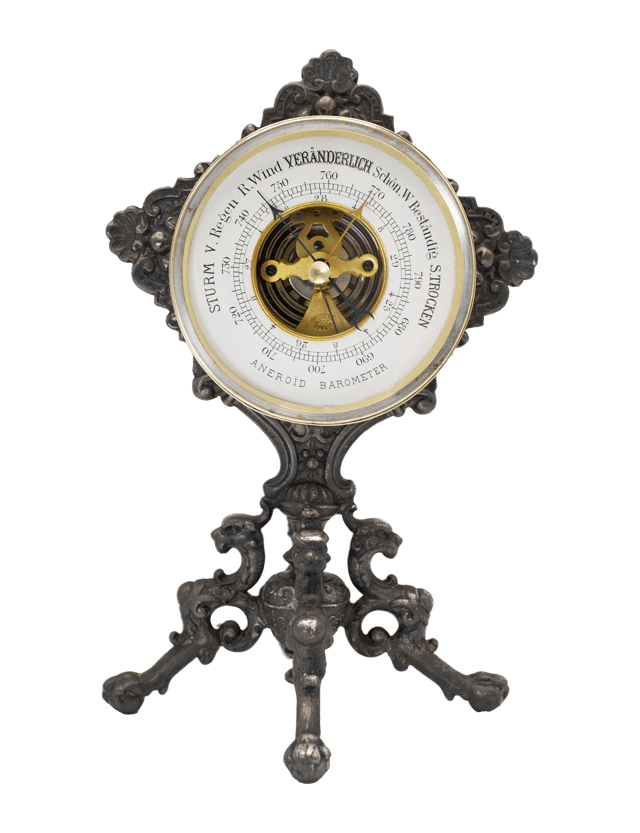
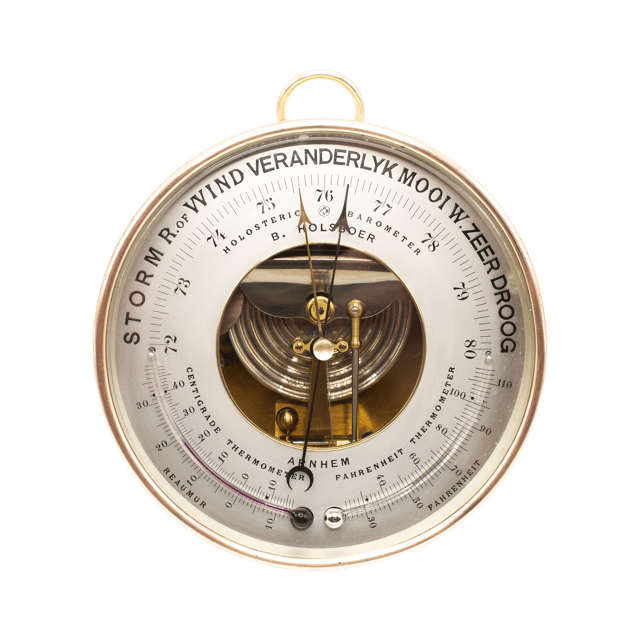
Large Brass Ship Aneroid
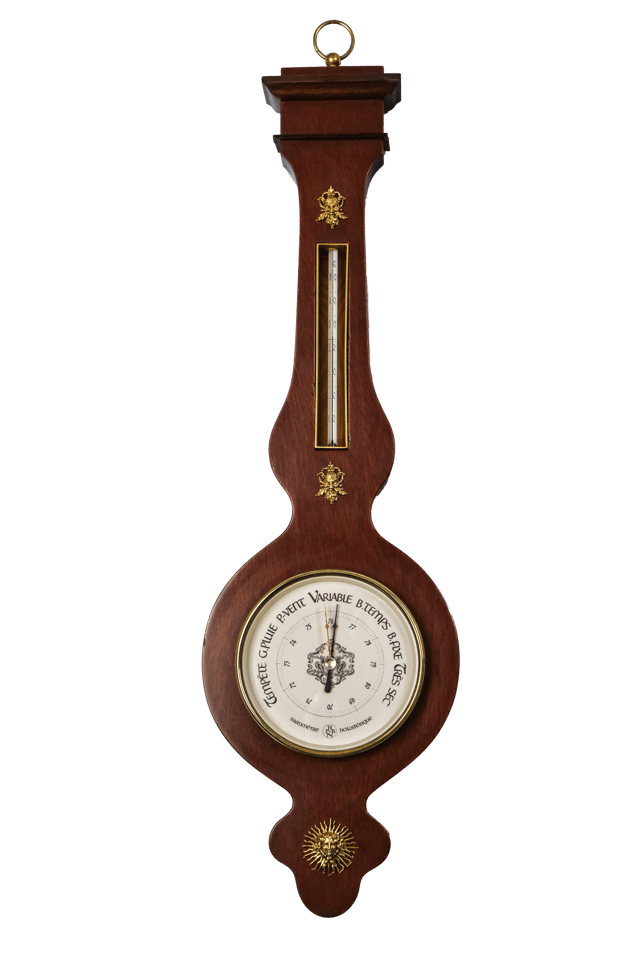
Mahogany case barograph