Loading
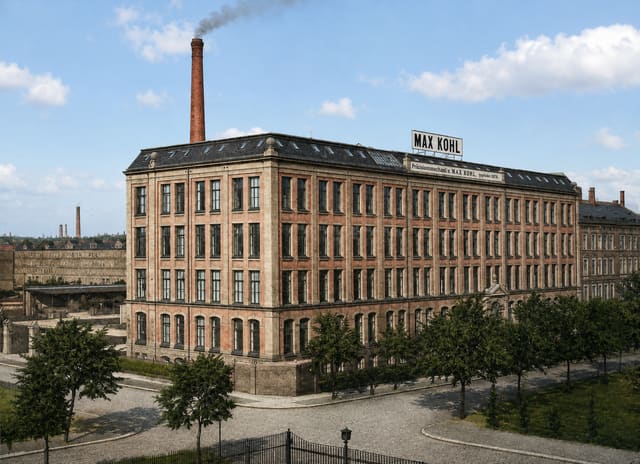
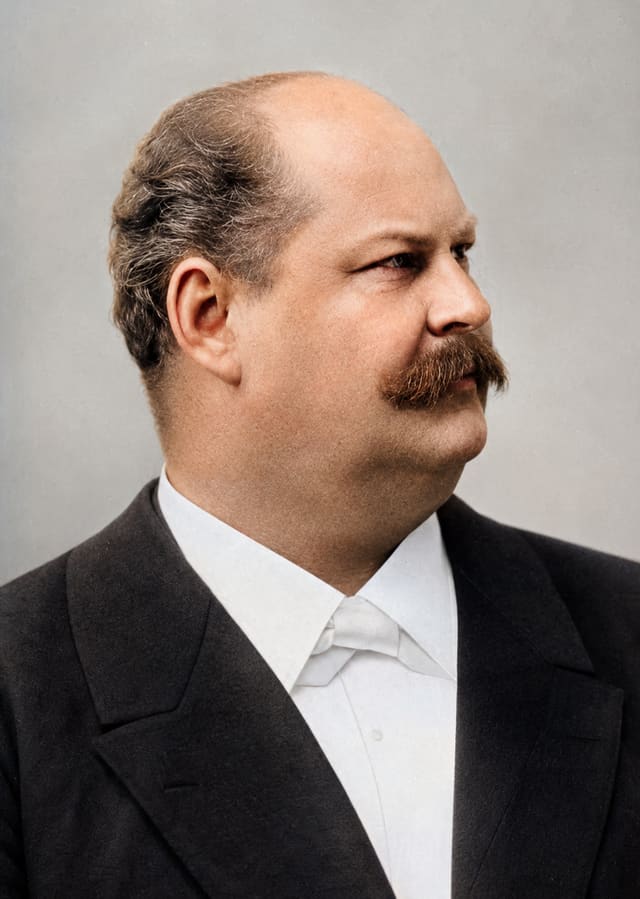
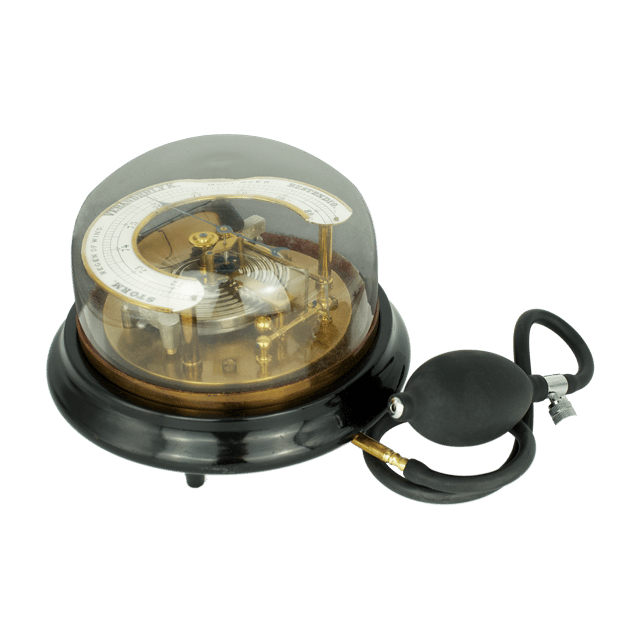
Max Kohl was a precision mechanics workshop founded on 14 March 1876 in the Saxon city of Chemnitz, which eventually grew into one of the world’s largest manufacturers of educational, demonstration, and laboratory scientific instruments, including apparatus for physics, optics, electrical engineering, and X-ray technology. Having survived both World Wars and the destruction of 1945, the company was ultimately expropriated and dismantled by the Soviet Military Administration, removed from the commercial register in 1948, absorbed into the East German VEB system of state-owned enterprises, and finally liquidated in 1991. Today, instruments produced by the firm are preserved in museums and university collections around the world — from Harvard to Cambridge.
Max Hans Robert Kohl was born on 4 October 1853 in Lauenstein, Saxony. He came from an educated Protestant family: his father, Robert Kohl (1813–1881), served from 1859 to 1880 as superintendent of the Chemnitz diocese and pastor of St. Nicholas Church, while also being active as a composer. It is particularly noteworthy that in 1861 Robert Kohl appointed the young Karl May — later to become the famous writer — to a teaching position at the factory school in Altchemnitz, and even inspected his lessons, describing him as “still a very inexperienced” teacher.
Max Kohl himself first attended the Höhere Realschule and later the Königliche Höhere Gewerbeschule in Chemnitz, although he left without obtaining a diploma. He subsequently apprenticed under a mechanic before establishing his own business. In 1877 he married the twenty-year-old Eveline Camilla, née Schwenke, whose dowry provided the young entrepreneur with his first modest capital. Camilla died on 21 November 1895 at the age of thirty-eight, shortly after the birth of their fifth child. In 1899 Kohl became engaged to Sara Meister, whom he later married as his second wife; this marriage remained childless.
Max Kohl belonged to that type of Saxon entrepreneur who emerged not from the university lecture hall, but from craftsmanship, urban technology, and the school laboratory. After studying at Chemnitz schools and incomplete education at the Königliche Höhere Gewerbeschule, he underwent mechanical training and in March 1876 founded his own precision mechanics workshops. Within three decades the small enterprise developed into a major factory on Adorfer Straße 20, serving schools, universities, laboratories, and industry. According to the Saxon biographical record, the product range expanded to approximately 4,000 instruments; by 1900 the new factory employed 30 office staff and 200 workers.
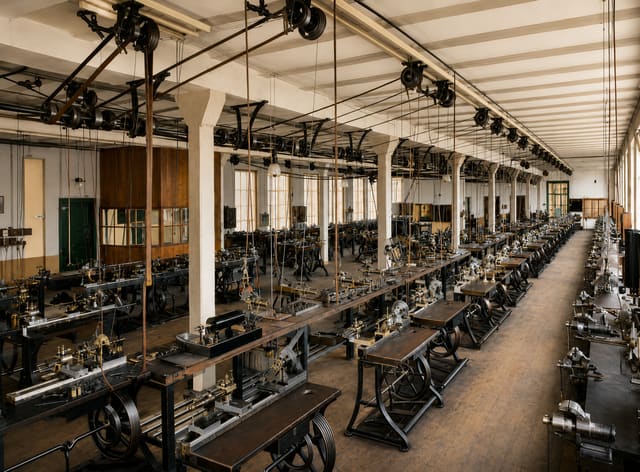
The history of Max Kohl is the story of a full-cycle manufacturing and supply company. Contemporary descriptions of the factory list its own mechanical workshops, machine-powered polishing and woodworking departments, varnishing shop, sheet-metal workshop, and winding department; catalogues and customer references explicitly speak of apparatus “constructed in your workshops.” The firm was not limited to selling individual instruments: it designed and equipped lecture halls and laboratories, supplied furniture, experimental tables, switching panels, projectors, chemical fume hoods, X-ray installations, and later also testing and measuring equipment for the textile industry. The available digital sources do not support the idea of large-scale systematic outsourcing; on the contrary, they portray a powerful in-house manufacturer with an advanced catalogue trade and installation-planning service.
After the founder’s death in 1908, the enterprise was transformed into a joint-stock company; the 1909 catalogue already appeared under the name Max Kohl A.G. Chemnitz and stated a fully paid share capital of £80,000. In the 1930s archival records document annual reports, reductions and increases of capital, revised statutes, a 1941 share prospectus, and procedures for renewed stock exchange admission in Dresden. After 1945 the company was expropriated and dismantled; its remains were absorbed into the East German chain of state-owned enterprises, culminating in VEB Polytechnik Karl-Marx-Stadt. In 1990 this successor was transformed into Polytechnik GmbH i. A., and in March 1991 it was liquidated.
From Max Kohl to the factory on Adorfer Straße
The founder’s biography is well documented in the Saxon scholarly biographical tradition. Max Hans Robert Kohl was born on 4 October 1853 in Lauenstein, the son of superintendent Robert Kohl. He attended the Höhere Bürgerschule, Realschule, and Gewerbeschule in Chemnitz, but did not complete his studies; afterwards he trained under a mechanic and entered independent business. In 1905 he became an unpaid city councillor of Chemnitz, and in 1908 he died from diabetes.
The most valuable source for the early history of the firm is a contemporary description of Chemnitz at the turn of the century. It states that the company was founded in March 1876, initially operated on Poststraße, moved in 1896 to Beckerstraße 17, and later constructed a completely new factory at Adorferstraße 20 near the Altchemnitz station. This 1899–1900 complex occupied an 8,000 m² site; the street frontage measured 65 metres, and the factory was designed for up to 400 workers with room for further expansion. By August 1900 the staff consisted of 30 office employees and 200 workers.
The same source allows one to see the company as a living industrial organism. On the ground floor were offices and technical testing rooms; above them the technical bureau and halls of the mechanical workshops; in the attic storage rooms for glass and hard rubber, a photographic studio, and copying room; on the lower level woodworking facilities; and in the basement the varnishing, sheet-metal, and winding departments. The machinery included a 75-horsepower steam engine and a 50 kW dynamo; the factory was illuminated by 900 incandescent lamps and 12 arc lamps. These details matter not as picturesque decoration, but as evidence: Max Kohl produced instruments not in the form of a shop-window intermediary, but as an industrially organised enterprise.
Already by 1900 the product range was extraordinarily broad. Contemporary descriptions list the manufacture of apparatus for physics teaching, equipment for physical and chemical lecture halls and laboratories, X-ray instruments, testing and control devices for the textile and paper industries, as well as electrical lighting, power, and telephone installations. Interestingly, the company’s X-ray laboratory was openly made available to local physicians; this demonstrates how closely demonstration apparatus, industrial instrumentation, and applied medicine were intertwined at the turn of the century.
Recognition of the company’s success came in the form of visits by the Kings of Saxony: King George on 11 September 1902 and King Frederick Augustus on 2 March 1905, during which Kohl personally demonstrated the factory’s production facilities and scientific experiments. In 1905, Kohl was appointed an unpaid member of the city council (Stadtrat) and also became known as a patron of the Chemnitz Kunsthütte. At international exhibitions and trade fairs, the firm’s instruments were repeatedly awarded medals and distinctions, bringing the company worldwide recognition.
The company’s products
Judging from the company catalogues, Max Kohl stood simultaneously on three pillars: manufacturing, interior laboratory planning, and international catalogue trade. Biographical descriptions of the firm list physical and chemical instruments, laboratory furniture, telephone, signalling, and clock installations, as well as measuring technology for the textile industry. The catalogue Preisliste Nr. 21 from around 1905/06 not only presents individual apparatus, but explicitly states the company’s readiness to supply all equipment for physical and chemical laboratories of universities, technical colleges, agricultural and forestry academies, and to undertake the furnishing of advanced laboratories, lecture halls, and factory laboratories.
The factory possessed its own mechanical workshops, administration buildings, and woodworking shops; the company emphasised its drying facilities for timber and its fully mechanised machine woodworking department, enabling rapid fulfilment even of the largest laboratory furnishing projects. The firm patented products under the label System Kohl, including air pumps with oil sealing and telescopic pistons. A 1937 Deutsche Arbeitsfront archive file records a dispute concerning licence payments for scales, in which Max Kohl AG referred to “independently developed scales.”
Max Kohl was not simply a factory, but a true catalogue house in the best early twentieth-century sense. The catalogues were multilingual and specified delivery terms, packaging, overseas shipping crates, telegraph addresses, codes, and payment systems. Already Price List No. 50 identifies the firm as a joint-stock company at Adorfer Strasse 20, while the volumes themselves divide production into major sections: physical and chemical classroom equipment, physical apparatus by categories of mechanics, optics, heat, meteorology, electricity, and so forth. Max Kohl was therefore simultaneously a factory, an engineering bureau, and an international distribution network for its own products.
Catalogues, schools, universities, and scientific cooperation
Max Kohl was deeply integrated into the university and school reforms of the turn of the century. The catalogue Preisliste Nr. 21 contains not merely a price list, but also sections of recommendations and lists of major installations. It is a rare case in which a company catalogue becomes almost a corporate archive. For example, it includes an official statement from Emil Beckmann, director of the Leipzig University laboratory of applied chemistry: Max Kohl supplied for the new lecture hall a modern experimental table with electrical switching panels, storage batteries, pneumatic and water systems, compressed air and gas lines, extraction systems, the rear lecture-hall wall, blackout devices, and an air-blowing installation — all recognised as executed “in a clean and solid manner” and entirely satisfactory. The same catalogue names other major projects: Emil Fischer’s First Chemical Institute in Berlin, the Technische Hochschule Darmstadt, the University of Breslau, Schimmel & Co. in Miltitz-Leipzig, and others.
No less expressive is the international contract with the École des Mines du Hainaut in Mons. There Max Kohl supplied didactic furnishings worth approximately 90,000 francs: complete equipment for chemical laboratories and large lecture halls for chemistry, physics, and electricity — working and experimental tables, large and small fume hoods, panels, water, gas, compressed and rarefied air systems, as well as electrical lines for direct and alternating current. In the catalogues of 1909/11 the company also published dozens of short testimonials from schools and institutes ranging from Sicily and Montreal to Los Angeles, Innsbruck, Essen, Tarnów, and Russia. This is not advertising rhetoric in a vacuum, but a map of the company’s real export presence.
The company’s connection with the academic world was not merely commercial, but also constructive. The Adolf Ferdinand Weinhold collection in the archive of the Technical University of Chemnitz contains a 1928 Max Kohl AG catalogue featuring “numerous instruments constructed according to Weinhold.” A publication by the Industriemuseum Chemnitz directly states that the company was inspired by Professor Weinhold, and that models produced according to his ideas entered serial production for school and university teaching cabinets. In the catalogue of the Joint Exhibition of German Mechanicians and Opticians in 1913, Max Kohl appears with a demonstration table by Weinhold, Ampère apparatus, a Ruhmkorff induction coil, a telephone model, Geissler tubes, and various other educational-scientific devices.
The traces left in pedagogical literature are equally important. In the journal Zeitschrift für den Physikalischen und Chemischen Unterricht, teachers and professors regularly describe new demonstration apparatus and immediately note that manufacture would be undertaken by the Max Kohl company in Chemnitz. In one case the firm “übernommen” the manufacture of a described instrument; in another it supplied a Doppelwellenmaschine; in a third a six-outlet apparatus for school chemical-physical experiments; in a fourth an earlier hydrostatic device; and in a fifth a finely executed apparatus from “precision mechanic Max Kohl in Chemnitz.” This reveals the business model with exceptional clarity: the company transformed educational-scientific constructions from journal articles and teaching practice into standardised serial products.
The catalogue policy reflected the same strategy. Holdings in the Saxon State Archive and the Deutsche Digitale Bibliothek demonstrate the existence of a sequence of Max Kohl catalogues: No. 50 (classroom equipment and physical apparatus, 1909), No. 68 (student exercises in physics, chemistry, and biology, after 1911), No. 100 (around 1926; educational furniture, experimental switching panels, chemical balances, school clocks, projectors), and a booklet on apparatus displayed at the 88th meeting of the Gesellschaft Deutscher Naturforscher und Ärzte in Innsbruck in 1924.
The joint-stock era, crises, wars, and post-war fate
After Max Kohl’s death the company rapidly assumed the form of a joint-stock corporation. A Chemnitz local-history resource, based on commercial register materials, dates the registration of Max Kohl Aktiengesellschaft to 10 February 1909; independently of this, the catalogue Price List No. 50 already clearly shows that the company operated as Max Kohl A.G., with a fully paid capital of £80,000. By the 1920s the company director was Ernst Burger, confirmed by the history of the Society of Friends of the Technical Academy in Chemnitz: as director of Max Kohl A.G., he became the first chairman of that society.
The economic history of the 1930s is traceable not through newspaper legend, but through archival records. Holdings of Dresdner Bank and Auto Union preserve files of Max Kohl AG containing annual reports for 1930–1935 and 1939/40–1940/41, materials concerning reductions of capital in 1932 and 1935, restoration of share capital in 1934, an increase of capital in 1940, revised statutes from 1938 and 1942, a 1941 share prospectus, and the procedure for renewed admission of the company’s shares to the Dresden Stock Exchange. In other words, this was not a decaying workshop, but a fully institutionalised joint-stock enterprise experiencing crises and restructuring within the German corporate economy of the interwar period.
Both world wars left traces on the company, though the sources differ in availability. For the First World War, freely accessible German digital primary sources reveal mainly indirect traces — continuing catalogues, exhibitions, and pedagogical publications; the detailed profile of wartime production remains unclear. For the late 1930s and the Second World War the picture is somewhat clearer: Deutsche Arbeitsfront archives document a 1937 dispute over scale licences in which the company referred to its own development work; an industrial directory lists Max Kohl AG among manufacturers of Festigkeitsprüfer; the online catalogue of the Deutsches Museum contains an instrument for research into the Zeeman phenomenon produced by the company in 1939; and Saxon archives preserve employee salary cards from 1943–1945. All this demonstrates the continuing technical activity of the company during the Nazi wartime economy.
The post-war fate of the company can be reconstructed from two layers of sources. The Saxon biography of Max Kohl states that the joint-stock company existed until its expropriation and dismantling by the Soviet occupation authorities after the Second World War and was eventually incorporated into VEB Polytechnik. A more detailed, though secondary, local reconstruction from Chemnitz speaks of the deletion of the company from the commercial register in 1948 and the transfer of its remains into VEB Labor- und Prüfgerätebau in 1949. The most reliable later reference is provided by the holdings of VEB Polytechnik Karl-Marx-Stadt: as of 1 January 1962, the Betriebsteil Labor- und Prüfgerätebau VEB Buchungsmaschinenwerk (formerly Max Kohl AG) was administratively merged with Präzisionsreißzeugwerk Richter into VEB (K) Polytechnik Karl-Marx-Stadt. There followed subordination to the Wirtschaftsrat des Bezirkes (1965), transfer to a branch ministry (1972), transformation into the Stammbetrieb of a combine (1981), conversion into Polytechnik GmbH i. A. from 1 July 1990, and liquidation on 31 March 1991.
In collector and popular literature the name Leybold sometimes appears alongside Max Kohl. German institutional sources, however, present them rather as separate firms operating in the same sector. A university collection in Freiberg, for example, lists instruments from Max Kohl, E. Leybold, and F. Ernecke together as neighbouring manufacturers of physical teaching equipment. It is therefore more accurate within the history of German technology to regard them as parallel competitors rather than a succession line “Kohl → Leybold.”
Archives, museums, and historical significance
From a researcher’s perspective, the legacy of Max Kohl survives in three kinds of institutions. First, in company and institutional archives: the Saxon State Archive preserves files relating to the company’s capital and financial reports, as well as extensive holdings of VEB Polytechnik documenting its later fate and references to catalogue collections and company publications. Second, in university archives and teaching collections: the TU Chemnitz archive records company catalogues with numerous “Weinhold” instruments, while the Freiberg collection of physical apparatus and other university collections demonstrate the enduring presence of Max Kohl products in pedagogical practice. Third, in technical museums: the Deutsches Museum and museum databases in Saxony preserve both actual objects and archival traces of the company’s manufacturing and design activities.
The historical significance of the company lies in its ability to unite four worlds that are usually described separately: precision mechanics craftsmanship, mass school physics education, university laboratory culture, and industrial metrology. Max Kohl did not merely manufacture instruments; it supplied the infrastructure of experimentation. Its history allows Chemnitz to be seen not only as a city of machinery and textiles, but also as a major centre for the production of scientific and didactic apparatus. After 1945 this line did not disappear abruptly, but was transformed into the VEB system and survived until the early 1990s in the form of Polytechnik. In this sense Max Kohl A.G. is one of the rare examples of a company whose “biography” passes through Imperial Germany, the Weimar Republic, the Third Reich, the Soviet occupation zone, the GDR, and post-socialist liquidation, while remaining recognisable through its fundamental purpose: producing the material instruments of knowledge.
Sources
Jasmin Mohammad, “Kohl, Max Hans Robert,” Sächsische Biografie. The biography of the founder, the company’s product range, the figure of approximately 4,000 instruments, Kohl’s death, his status as Stadtrat, and the post-war assessment of the company’s fate. Direct link: https://saebi.isgv.de/files/saebi/pdf/24736_Max_Kohl_%281853-1908%29.pdf
Chemnitz am Ende des XIX Jahrhunderts in Wort und Bild, Wikisource. The contemporary description of the factory around 1900, including addresses, the structure of the works, personnel, and product range. Direct link: https://de.wikisource.org/wiki/Chemnitz_am_Ende_des_XIX_Jahrhunderts_in_Wort_und_Bild/Zehnte_Gruppe
Physikalische Apparate. Preisliste Nr. 21 — full text, Internet Archive. System Kohl patents, university deliveries, references, woodworking facilities, and laboratory installations. Direct link: https://archive.org/stream/physikalischeapp00kohlrich/physikalischeapp00kohlrich_djvu.txt
Price List No. 50 — item page, Internet Archive. The structure of the three-volume 1909 catalogue. Direct link: https://archive.org/details/pricelistno5023kohlrich
Price List No. 50 — full text, Internet Archive. The company’s joint-stock status, share capital, awards, testimonials, and classroom equipment. Direct link: https://archive.org/stream/pricelistno5023kohlrich/pricelistno5023kohlrich_djvu.txt
Universitätsarchiv TU Chemnitz, Bestand 301 Findbuch. The 1928 catalogue containing instruments “nach Weinhold”. Direct link: https://www.tu-chemnitz.de/uni-archiv/bestaende/300/301/301-findbuch.pdf
TU Chemnitz, Geschichte der Gesellschaft der Freunde. Ernst Burger as director of Max Kohl A.G. and as a figure connected with the academic milieu. Direct link: https://www.tu-chemnitz.de/tu/freunde/geschichte.html
Industriemuseum Chemnitz, Max Kohl Werkstätten für Präzisionsmechanik und Elektrotechnik. The connection with Weinhold, the nature of the company’s production, and the post-war successor VEB Labor- und Prüfgeräte. Direct link: https://karte.industriemuseum-chemnitz.de/firmen/max-kohl-werkstatten-fur-prazisionsmechanik-und-elektrotechnik/
Sächsisches Staatsarchiv, 31518 Dresdner Bank, Filiale Chemnitz. Annual reports, reductions and increases of capital, company statutes, share prospectus, and renewed admission to the stock exchange. Direct link: https://www.archiv.sachsen.de/archiv/bestand.jsp?bestandid=31518&oid=09.21&syg_id=11430
Sächsisches Staatsarchiv, 31094 VEB Polytechnik Karl-Marx-Stadt. The post-1945 succession, the stages of 1962, 1981, 1990, and 1991, and the general fate of the successor enterprise. Direct link: https://www.archiv.sachsen.de/archiv/bestand.jsp?bestandid=31094&oid=09.11&syg_id=113360
Deutsche Digitale Bibliothek, Kataloge der Max Kohl AG, Chemnitz, Bd. 1–2. Catalogues Nos. 50, 68, and 100, and the booklet for the 1924 GDNÄ congress. Direct link: https://www.deutsche-digitale-bibliothek.de/item/7RKH26K5MN7WYSWW5K7PVDSEULVN4UY4
Deutsches Museum, FA 041 Deutsche Arbeitsfront / Abteilung Erfinder. The 1937 case concerning a licence for scales, including the company’s reference to its own development. Direct link: https://www.deutsches-museum.de/assets/Forschung/Archiv/Download/Findbuecher_PDF/FA_041_DAF.pdf
Deutsches Museum, Gitterspektroskop für das Zeemann’sche Phänomen. A Max Kohl AG object produced in 1939. Direct link: https://digital.deutsches-museum.de/de/digital-catalogue/collection-object/69564/
Universitaetssammlungen.de, Sammlung physikalischer Geräte, TU Bergakademie Freiberg. Max Kohl, Leybold, and Ernecke as parallel manufacturers represented in university collections. Direct link: https://www.universitaetssammlungen.de/sammlung/448
museum-digital Sachsen, Max Kohl, Werkstätten für Präzisionsmechanik, Chemnitz i.S.. Museum traces of the company and educational objects produced by it. Direct link: https://sachsen.museum-digital.de/people/42080
museum-digital Sachsen, Objects by manufacturer Max Kohl. Specific examples of educational and measuring instruments. Direct link: https://sachsen.museum-digital.de/objects?s=persinst%3A42080+time%3A9&style=browse
Special Catalogue of the Joint Exhibition of German Mechanicians and Opticians — full text, Internet Archive. Max Kohl’s participation in the 1913 exhibition and the list of exhibited objects. Direct link: https://archive.org/stream/specialcatalogue00unse/specialcatalogue00unse_djvu.txt
Zeitschrift für den Physikalischen und Chemischen Unterricht, issue mentioning instrument manufacture taken over by Max Kohl. The firm’s connection with instruments designed by teachers and professors. Direct link: https://pbc.gda.pl/Content/71399/H_03.pdf?handler=pdf
Zeitschrift für den Physikalischen und Chemischen Unterricht, issue on the Doppelwellenmaschine supplied by Max Kohl. The serial production of educational apparatus based on journal publications. Direct link: https://pbc.gda.pl/Content/71422/H_05.pdf
Zeitschrift für den Physikalischen und Chemischen Unterricht, issue on apparatus supplied by Max Kohl for school experiments. Further evidence of the firm’s role in school chemical and physical demonstrations. Direct link: https://pbc.gda.pl/Content/71474/H_04.pdf
Chemnitz local-history page, Max Kohl Chemnitz – mit Geschick und Sorgfalt zum Erfolg. The registration date of the joint-stock company in 1909 and the local reconstruction of the firm’s fate in 1948/49. Direct link: https://chemnitz-gestern-heute.de/max-kohl-chemnitz/
Industrie, ihre Hilfsindustrien und der Handel, issue listing “Festigkeitsprüfer: Max Kohl, Aktiengesellschaft, Chemnitz”. The company’s later industrial profile in the 1930s. Direct link: https://pbc.gda.pl/Content/90596/Nr_09.pdf