Loading
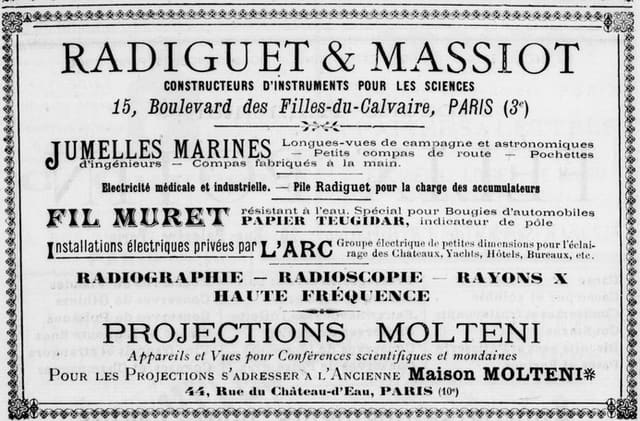
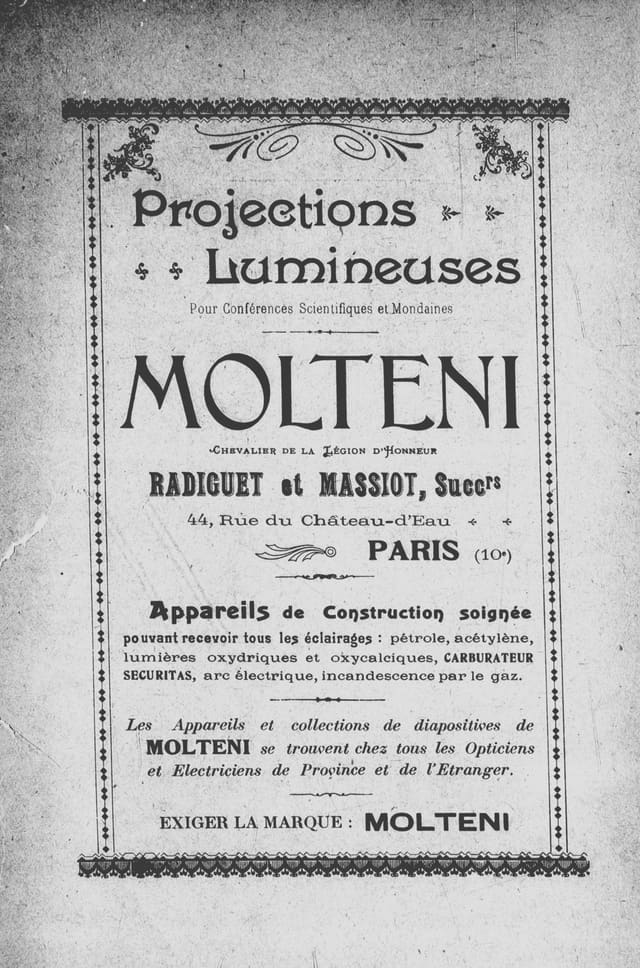
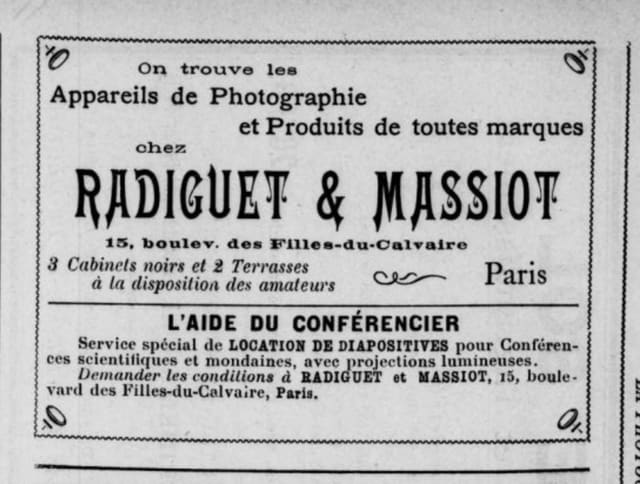
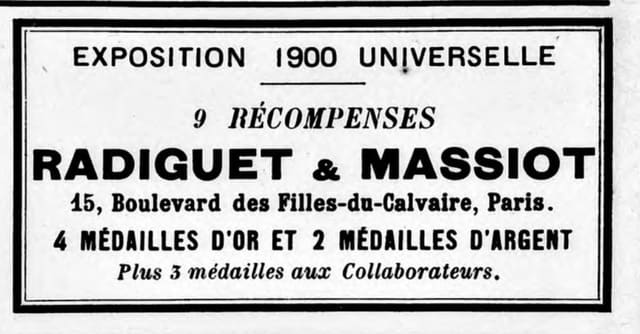
The company Radiguet & Massiot traces its origins to 1830, when optician Marie-Honoré Radiguet (1791–1867) acquired a Parisian workshop from his mentor Chevalier. Chevalier had opened his optics atelier back in 1805 on the site of former Benedictine gardens in the theatre district of Paris, and after 25 years, he handed the business over to the young Radiguet. By then, Marie-Honoré Radiguet was already well known among opticians, particularly for his manufacture of precision parallel glass plates. In 1830, he founded his own enterprise dedicated to the production and sale of optical instruments in Paris.
After the founder’s death in 1867, the business was continued by his son Honoré-Antoine Radiguet (1824–1887). Honoré-Antoine expanded the product range: in addition to traditional optical instruments, the family began manufacturing and selling meteorological devices such as barometers, thermometers, and others. Under his leadership, the Radiguet workshop gained international recognition, with medals awarded at the World Exhibitions of 1855, 1867, and 1878.
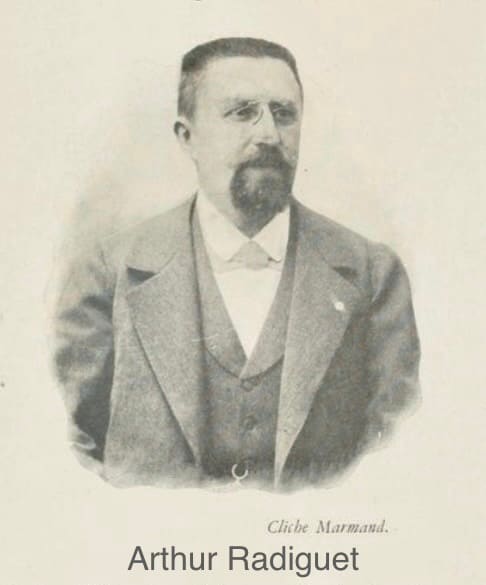
The third generation was headed by Arthur-Honoré Radiguet (1850–1905), the eldest son of Honoré-Antoine. Officially, father and son registered the partnership Radiguet & Fils on January 9, 1880, although Arthur had been working with his father even before that. After the Franco-Prussian War of 1870, Arthur became deeply involved in the business and aimed to expand its scope.
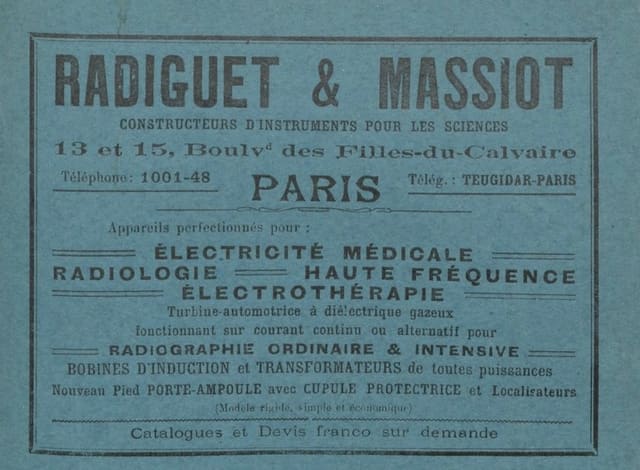
In the January 1905 issue of Les Parisiens de Paris, pages XV–XVII, there is an obituary and biographical sketch of Arthur Radiguet which states that Arthur Radiguet was born in Paris in 1850 into a family belonging to several generations of native Parisians. Throughout his life he remained deeply connected to the city and never left the house at 15 boulevard des Filles-du-Calvaire, where he had been born and where he would later die. This address subsequently became one of the centres of the Parisian trade in scientific, optical, and electrical instruments, known under the name Radiguet & Massiot.
Radiguet received his education at the École Turgot, one of the well-known Parisian institutions specialising in technical and applied studies. His education was interrupted by the Franco-Prussian War of 1870, which erupted during the severe crisis of the Second French Empire and culminated in the siege of Paris, the fall of Napoleon III’s regime, and the dramatic events of the Paris Commune. Barely twenty years old, Radiguet entered active military service in the 35th Infantry Regiment. During the campaign he quickly attained the rank of sergent-fourrier and took part in the battles of Champigny and Buzenval, among the most violent engagements of the siege of Paris.
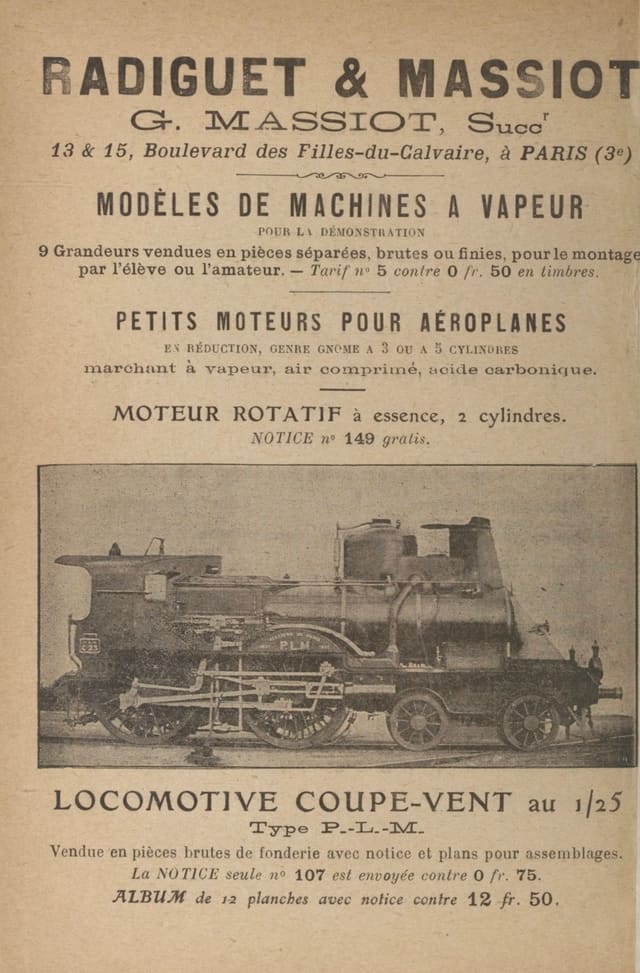
After the war he returned to work with great energy and soon acquired considerable renown as a talented mechanic and consultant. In the Parisian district of the Marais, the name Radiguet gradually became almost proverbial. His shop and workshops came to be associated with the popularisation of technology, electricity, and experimental science among the general public. The firm made a particularly strong impression on young people: many Parisian boys encountered electricity there for the first time while assembling their own primitive laboratories with miniature induction coils, Geissler tubes, and small demonstration steam engines. At a time when electricity still retained the aura of a scientific marvel, Radiguet effectively acted as a populariser of applied physics and technical education.
Arthur Radiguet’s principal passion gradually became electricity. His firm was involved in electrical installations, demonstration apparatus, radiographic equipment, induction coils, and scientific experimental devices. Following Wilhelm Röntgen’s discovery of X-rays in 1895, Radiguet devoted himself almost entirely to this new field. At the end of the nineteenth century, X-ray technology was regarded as one of the most revolutionary branches of modern science, and Paris became one of the European centres of early experimentation with radiographic apparatus. Radiguet actively participated in the development and installation of X-ray systems for civilian and military hospitals, as well as for French and foreign physicians.
His work quickly received official recognition. He served as a member of the ministerial commission responsible for organising the radiological congress of the 1900 Paris Universal Exposition, participated in the commissions for the technical installations of the exhibitions in Paris (1900), St. Louis (1904), and Liège (1905), and was also a member of the French committee for international exhibitions. In addition, Radiguet took part in the activities of numerous electrical societies, acting as founder, president, or treasurer. He was appointed officier d’Académie in 1892 and officier de l’Instruction publique in 1899. He was also expected shortly to receive the Legion of Honour.
Yet it was precisely his research into X-rays that ultimately caused his death. During the earliest years of radiography, the dangers of prolonged exposure to radiation were still scarcely understood. Radiguet worked constantly with Röntgen tubes and frequently conducted experiments upon himself. Over time he developed severe injuries to his hand: deep burns, tissue destruction, and progressive gangrene. Approximately six months before his death one of his fingers was amputated, yet the disease continued to advance rapidly. Despite terrible suffering, contemporaries remarked upon his exceptional courage and his conviction that even his death would serve science. For this reason, the Parisian press of the early twentieth century repeatedly referred to Arthur Radiguet as a “martyr of science.”
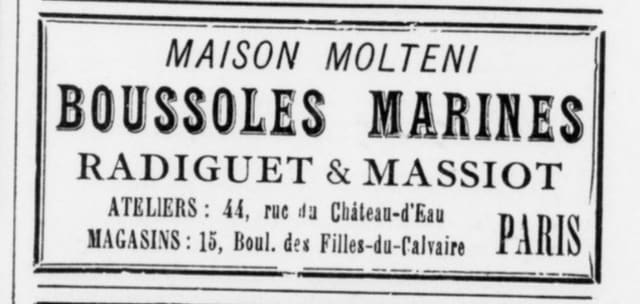
Arthur Radiguet was closely associated with the renowned projection apparatus manufacturer Molteni and eventually became his successor. By this period his partner was already Georges Massiot, Radiguet’s son-in-law, through whom the firm gradually evolved into the celebrated company Radiguet & Massiot, which became one of the largest French suppliers of scientific, projection, electrical, and X-ray instruments in the early twentieth century.
Throughout the 19th century, Radiguet & Massiot produced an exceptionally broad range of scientific and measuring instruments, spanning from classical optics to electrical devices. Their main product categories included:
Over the decades, Radiguet & Fils. introduced a number of technical innovations and patented several of their designs:
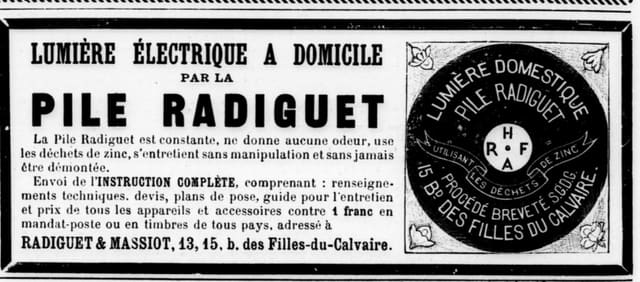
Like many firms of the era, Radiguet & Fils actively promoted their products through catalogues, advertisements, and exhibition participation. By the 1860s–1870s, they already featured in trade directories. They often appeared as “Radiguet & Fils – Opticien breveté S.G.D.G.” (patented optician), with the note “Maison fondée en 1830” (though sometimes mistakenly given as 1860), along with listed specialties. One directory described the company as a “factory of binoculars and physical instruments,” emphasizing their broad offerings.
Radiguet published commercial catalogues of their products. Surviving examples include a catalogue of scientific slides and projection equipment from the early 20th century (already under Radiguet & Massiot), as well as references to catalogues of physics instruments. In the 1890s, they likely distributed illustrated brochures featuring steam models and electrical devices. Scientific magazines such as La Nature regularly published reviews of Radiguet’s new products.
In addition to official exhibition catalogues, Radiguet’s instruments were often mentioned in scientific and popular journals and handbooks of the time. Annuals like L’Année Scientifique et Industrielle and journals such as La Nature or Le Génie Civil mentioned new releases by Parisian manufacturers – with Radiguet appearing alongside well-known firms like Ducretet, Gaiffe, Deyrolle, and others. Reviews in the 1880s noted that Maison Radiguet had become a major center for the popularization of science in France, thanks to its public demonstrations and technical clubs for enthusiasts.
Trade directories (Didot-Bottin, etc.) listed Radiguet among the leading opticians and scientific instrument makers in Paris. The address was typically given as Boulevard des Filles-du-Calvaire, with specialties in parentheses: “optics, physics instruments, precision measurement tools.” After 1890, entries expanded to include “electrical devices, medical electricity, photographic supplies.” For example, a 1895 directory might read: “Radiguet & Fils (A. Radiguet), 15 Bd des Filles-du-Calvaire – optician, manufacturer of physics and electrical apparatus, gold medal 1878” (approximate wording). These records show continuity: the firm name remained even as its leadership evolved.
Newspapers occasionally reported on Radiguet’s scientific demonstrations. Parisian press in the late 19th century described public lectures with X-ray sessions where equipment was provided by Radiguet. There may have also been press coverage of his “Radiographic Museum” – a collection of X-ray images illustrating scientific marvels. Moreover, obituaries published in 1905 remarked on Arthur Radiguet’s untimely death and underscored the risks of working with X-rays.
By the end of the 19th century, the company stood at a turning point. Gaston Massiot (1875–1962), Arthur Radiguet’s son-in-law, worked with him on projection devices. In 1899, Arthur decided to involve him in company leadership and future development. At the same time, an opportunity arose to merge with another prestigious firm – Maison Molteni, a leading producer of projection lanterns since 1782.
On October 15, 1899, an agreement was signed for Radiguet to acquire the assets of Molteni. At the same time, a partnership was formalized between Arthur Radiguet and Gaston Massiot – the new company was named Radiguet & Massiot. The legal registration of the firm Radiguet & Massiot is dated October 6, 1889, though the brand only became widely used around 1900. Possibly, 1889 reflects the beginning of business cooperation or a family engagement, but the name gained prominence following the 1900 World Exhibition.
The merger aimed to focus on projection devices and slides – a domain in which Maison Radiguet already excelled by 1900. The unified company inherited Molteni’s vast slide collection and established lantern production, complementing it with Radiguet’s innovations in cinema and radiography. Maison Radiguet had finally fulfilled Arthur’s vision – becoming a full-cycle enterprise in optics, electrical engineering, projection, and medical devices. Sadly, Arthur-Honoré enjoyed the results for only a short time: in 1904/1905, he died from complications of radiation exposure before reaching the age of 55. After his death, Georges (Georges-Jules) Massiot continued the business as sole director of Radiguet & Massiot.
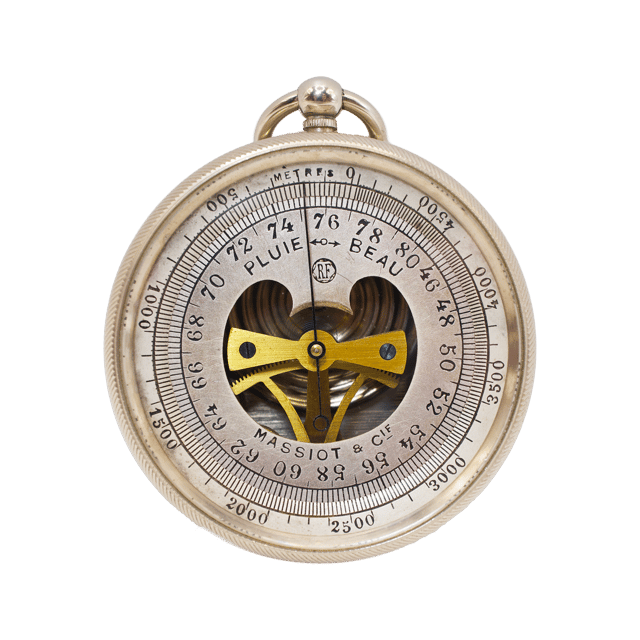
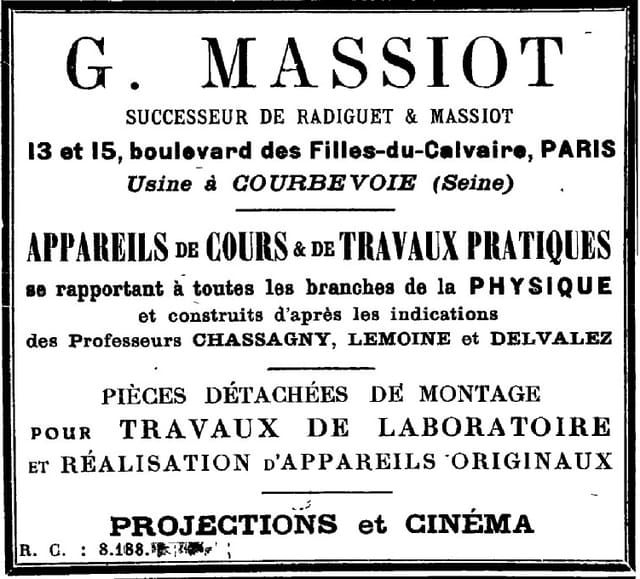
In 1910, the firm was renamed Massiot & Cie and relocated from Paris to Courbevoie, focusing on X-ray and medical equipment. Thus ended the Radiguet family’s era in the company’s history. Nevertheless, the legacy of Radiguet & Fils lives on: their instruments remain in museums and private collections, a testament to a brilliant chapter in 19th-century French scientific industry. Starting from a modest optics shop in 1830, the firm became a pillar of scientific instrumentation, contributing to the popularization of science, education, and the emergence of new technologies – electricity, radiology, cinema. As contemporaries once said: “Everyone knows the place that Maison Radiguet has held in the manufacture of radiological, high-frequency, and electrotherapeutic equipment” – and it all began on Boulevard des Filles-du-Calvaire.