Loading
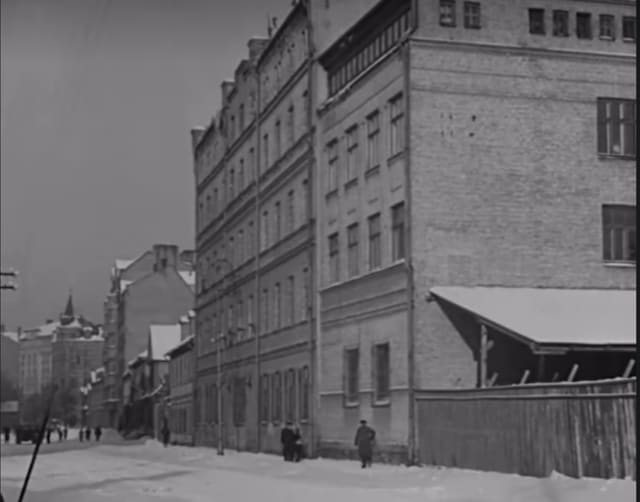
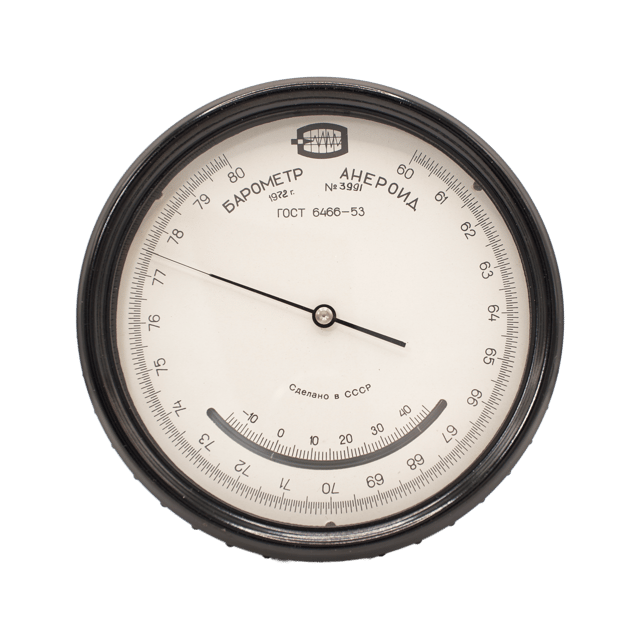
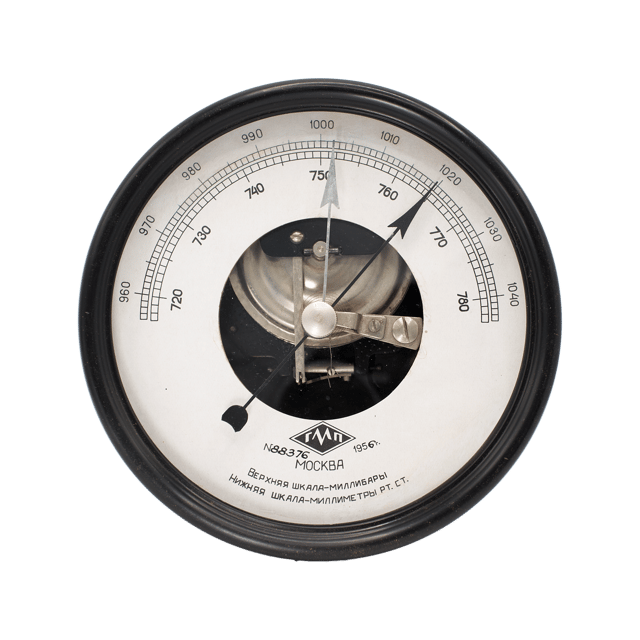
The Experimental Plant “Hydrometpribor” (GMP) was a Moscow-based instrument-making enterprise specializing in the development and manufacture of meteorological and geophysical instruments, first and foremost barometers. From its establishment during the years of the Great Patriotic War to the present day, the plant underwent a long and complex series of transformations.
The Moscow Plant “Hydrometpribor” traces its origins to the period of the Great Patriotic War. In 1942, in the eastern part of Moscow, on the premises of the former Experimental Plastics Plant No. 8 of the Mosplastmass Trust, Plant No. 304 of the People’s Commissariat of Defense (NKO) was established. During the war years, the enterprise operated under this numerical designation and fulfilled defense-related tasks. At that time, Plant No. 304 formed part of the Soviet military-industrial system and held the status of a Union-level state mechanical plant.
(It should be noted that the designation “304” was originally assigned to an evacuated cartridge plant, later repurposed in accordance with a resolution of the State Defense Committee (GKO) dated 25 April 1942. Thus, Plant No. 304 was initially associated with ammunition production, before its industrial profile was changed.)
The structure of the plant during the war years was determined by its subordination to the military authorities. The enterprise functioned as an NKO plant, executing urgent frontline orders. The exact wartime product range remains insufficiently documented; it is likely that the plant manufactured various instruments and components for military applications. By the end of the war, the production facilities had been preserved intact, allowing for a rapid transition to civilian output.
After Victory, in 1946, the plant’s profile changed fundamentally. Plant No. 304 of the NKO was transferred to the civilian sector and reorganized as the Moscow Plant of Meteorological Instruments. This decision was driven by the urgent need to equip the country’s recovering hydrometeorological service. The plant became the first major producer of meteorological instrumentation in the Russian Soviet Federative Socialist Republic (RSFSR), alongside the Leningrad plant Metpribor, founded in 1925 for similar purposes.
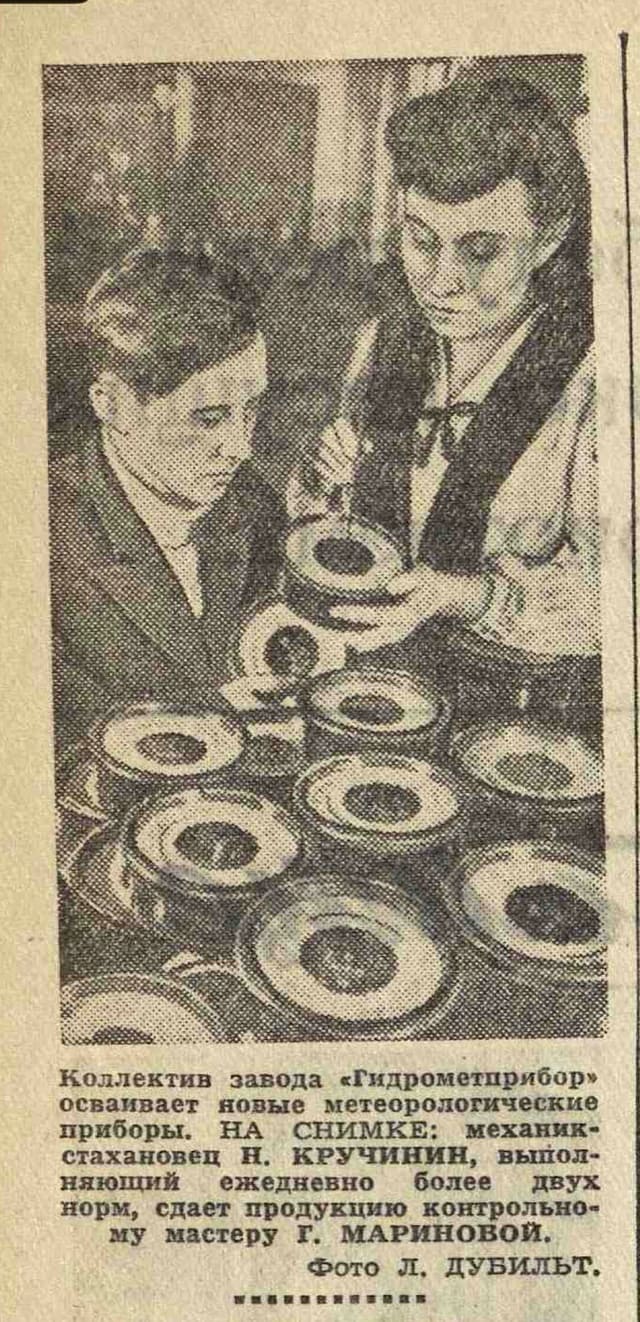
Already in the first postwar years, the enterprise mastered the production of various mechanical instruments for weather observation. Its core specialization became non-liquid aneroid barometers, as well as thermometers, hygrometers, and other meteorological instruments. It is known, for example, that in the 1950s the plant manufactured wall-mounted meteorological aneroid barometers with an integrated thermometer in a single case. By the mid-1950s, the enterprise was already commonly referred to as the Moscow plant “Hydrometpribor”, emphasizing its primary focus on hydrometeorological instrumentation.
During the 1940s–1950s, the plant established production of:
Its main customers were the Hydrometeorological Service, scientific institutions, and branches of the national economy requiring atmospheric monitoring. Already in the 1940s, groundwork was laid for the development of domestic reference instruments for pressure and other meteorological parameters.
In the course of further development, the enterprise acquired the status of the Experimental Plant “Hydrometpribor”, combining serial production with experimental design work. Formally, the renaming took place shortly after 1946, and by the early 1960s the name “Hydrometpribor” had become officially established.
In 1960, in order to increase production capacity, a branch facility was created — the Safonovo Plant “Hydrometpribor”, located in the town of Safonovo, Smolensk Region. The Moscow Experimental Plant “Hydrometpribor” became the head organization responsible for the development of new equipment and the manufacture of pilot batches, while the Safonovo plant specialized in mass production of hydrometeorological instruments. Until 1990, the Safonovo enterprise remained part of the Moscow объединение (industrial association). This division of labor significantly expanded the product range.
By the 1960s–1970s, the Moscow plant had established production of a comprehensive range of meteorological instruments and devices for related fields. During this period, the enterprise operated within the system of the Ministry of Instrument-Making of the USSR and maintained its own Special Design Bureau (SKB) “Hydrometpribor”. The SKB developed new instrument models, including those intended for military applications (for example, meteorological complexes for aviation and missile forces).
The plants within the Hydrometpribor system produced a broad spectrum of hydrometeorological equipment, ranging from meteorological stations and recording instruments to handheld devices. Among the products manufactured were:
By the mid-1980s, highly qualified design engineers worked at the Moscow experimental plant, producing instruments comparable to leading international standards. The enterprise manufactured more than 80 types of instruments for the Hydrometeorological Service and the armed forces, with part of the output exported abroad, following the example of the Riga plant, which supplied products to dozens of countries.
In the 1980s, the enterprise acquired the status of a Scientific-Production Association (NPO). In 1989, pursuant to a resolution of the Council of Ministers of the USSR, the Moscow experimental plant, together with its SKB and the Safonovo branch, was consolidated into NPO “Hydrometpribor”, transferred from the Ministry of Instrument-Making to the system of the State Committee for Hydrometeorology (Goskomgidromet). On the eve of the dissolution of the USSR, the Moscow NPO “Hydrometpribor” thus became the head organization responsible for all domestic production of hydrometeorological equipment.
However, organizational changes in the late 1980s were rapid: already in January 1990, the NPO was removed from Goskomgidromet’s jurisdiction and subordinated to another ministry, and soon thereafter the process of privatization began.
Post-Soviet Period and the Present Day
Following the dissolution of the USSR in 1991–1992, the Hydrometpribor system of enterprises underwent further restructuring. The Moscow experimental plant was corporatized: in 1992 it was transformed from a state enterprise into OJSC “Hydrometpribor” (the Moscow Plant “Hydrometpribor” — MZ GMP — becoming a private company). During the 1990s and 2000s, the company was headed by A. E. Golod, who ensured continuity of management.
At the same time, the Safonovo plant became an independent enterprise and later entered the state corporation Rostec (today it operates as JSC “Safonovo Plant of Hydrometeorological Instruments”, part of the High-Precision Systems holding).
In the post-Soviet period, production volumes declined; nevertheless, Moscow-based OJSC (now JSC) “Hydrometpribor” retained its profile as a scientific-production organization. As of the 2020s, the company is classified as a small enterprise, specializing in the manufacture and servicing of navigational, meteorological, and geophysical instruments and measurement systems. The enterprise continues to fulfill orders in the field of hydrometeorology and maintains service support for previously manufactured instruments.
Today, JSC “Hydrometpribor” (Moscow) effectively functions as a design and service center. The main serial deliveries of hydrometeorological equipment in Russia are carried out by the Safonovo plant, while the Moscow company participates in development work, experimental projects, and limited-batch production. Both enterprises are historically connected, and their products continue to be marketed under the common brand “Hydrometpribor”. According to industrial catalogs, barometers and meteorological stations are still labeled “Hydrometpribor (Russia)”, reflecting the continuity of the Moscow plant.
Products and Specialization: Barometers and Instruments
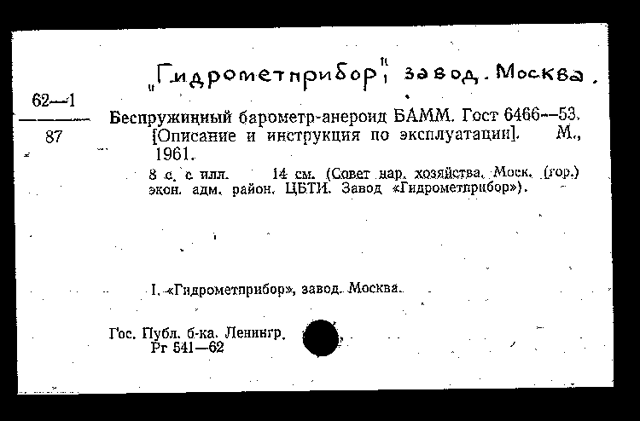
Throughout its history, Hydrometpribor’s principal products were mechanical aneroid barometers and related meteorological instruments. The plant stood at the origins of domestic standard barometer production for meteorological services. Key areas of specialization and representative models include:
Conclusion
Taken together, Hydrometpribor left a substantial imprint on the history of Soviet and Russian instrument-making. It established a national industrial base for hydrometeorological equipment, ensuring the USSR’s technological independence in this field. For decades, barometers and other instruments bearing the Hydrometpribor mark served meteorologists, military specialists, researchers, and industry. Today, the traditions of the Moscow Plant “Hydrometpribor” continue through its successors — JSC “Hydrometpribor” (Moscow) in scientific and design roles, and the Safonovo plant in serial production — preserving a unique specialization in instruments for measuring the atmosphere and the environment.
Sources