Loading
Joseph-Antoine Tremeschini — Engineer, Astronomer, Constructor of Scientific Instruments, Member of the Pantheon in Rome, and Investigator of Spiritualist Phenomena
Joseph-Antoine Tremeschini, also known by his Italian name Giuseppe-Antonio Tremeschini, represents one of the most unusual and versatile figures in French engineering culture of the second half of the nineteenth century. In documents of the period, his name most often appears in the Frenchified form Joseph-Antoine Tremeschini, or simply Joseph Tremeschini. Tremeschini came from northern Italy, from the town of Schio in the Venetian States, but spent most of his professional life in France.
In the sources, Tremeschini appears as a mechanical engineer, a maker of precision instruments, an astronomer, a populariser of science, and a developer of telegraphic systems, chronometric regulators, thermometers, pyrometers, and aneroid barometers. His work covered an exceptionally wide range of fields: textile manufacture, petroleum lighting, aeronautics, meteorology, cosmography, and even investigations into spirit photography.
For many years the address passage Feuillet, 13, rue des Écluses-Saint-Martin, Paris, regularly appeared in publications, exhibition catalogues, and patents connected with Tremeschini. This address effectively became his engineering calling card in Paris.
Italian Origins and the Beginning of His Activity in France
One of the most important documents for Tremeschini’s early biography is a publication in the Gazette des Tribunaux of 22 March 1857. It reported the establishment of the general partnership Tremeschini et Cie between Giuseppe-Antonio Tremeschini, then temporarily residing in Paris at the Hôtel de la Marine on rue Croix-des-Petits-Champs, and the Parisian Louis De Clerico.
The document is especially important because it directly states the engineer’s origin: Schio, États Vénitiens. In the mid-nineteenth century, Veneto had not yet become part of unified Italy and was still under Austrian influence. The town of Schio itself was one of the major textile centres of northern Italy, which explains Tremeschini’s early engineering interests very well.
The document also shows a model of technical migration typical of the period: a young engineer arriving in Paris — a world centre of industry, patent activity, and exhibitions — in order to commercialise his invention.
Tremeschini et Cie was created for the exploitation and sale of patents for a loom invented by Tremeschini himself. Already here, he appears as an independent engineer-inventor attempting to commercialise his own developments through the French industrial environment of the Second Empire.
It is especially characteristic that the notice appeared specifically in the Gazette des Tribunaux, an official legal and judicial publication. Such notices served as public announcements and legal records of a company’s existence. This is why the text is so detailed and includes addresses, the duration of the company, rules of signature, and information on registration duties.
Weaving, cartonnino, and Early Patents
One of the most unexpected early records concerning Tremeschini appeared in the Bulletin des lois de l’Empire Français, where an 1858 patent is mentioned for the “application du tissage façonné du carton mince (cartonnino) à bandes économiquement arrangées.”
At first glance, such a patent may seem almost surprising to a researcher accustomed to associating Tremeschini primarily with meteorological instruments, pyrometers, and telegraphy. Yet it is precisely such documents that reveal the real engineering biography of the nineteenth century — one not yet “edited” by later scientific reputation.
The term cartonnino is particularly curious. It is clearly of Italian origin and apparently referred to a special thin moulded cardboard or composite material reinforced with bands. Judging from the wording, this was a durable industrial material that could have been used in packaging, technical gaskets, decorative panels, and various structures for industrial purposes.
Such early patents show Tremeschini not as a narrow designer of a single instrument, but as a typical universal engineer of the Second Empire.
This early activity is unexpectedly confirmed by another source — the journal L’Exposition photographiée. Revue hebdomadaire des exposants de 1867. In the publication listing the exhibitors at the Universal Exhibition, the name Joseph-Antoine Tremeschini appears among the participants in Classes 55–56, devoted to spinning, rope-making, and weaving.
Thus, the engineer’s early activity was closely connected with the mechanisation of textile production and industrial materials. It was this broad engineering foundation that later allowed him to move freely from textile mechanics to telegraphy, thermometry, and instrument making.
Telegraphy and Early Engineering
One of Tremeschini’s first genuinely significant successes was in telegraphy. In 1856, the Franco-Italian journal Revue Franco-Italienne published a long article entitled “Télégraphe contrôleur de M. Tremeschini.” The very context of the publication is highly important: the journal was devoted to Franco-Italian cultural and industrial relations, which perfectly explains the presence in its pages of a northern Italian engineer working in France.
The authors of the article emphasised that Tremeschini was a “modest inventor,” yet in their opinion his system was far more valuable than many of the loudly advertised discoveries of the time. Tremeschini’s control telegraph was intended primarily for railways and represented an unusual combination of a lettered needle telegraph and Morse’s writing telegraph.
The system could simultaneously transmit signals on a lettered dial, record them on a paper strip, or use both methods at once.
The possibility of checking errors was considered especially important. The instrument automatically marked control points after every thirteen signals, making it possible to verify the accuracy of dispatched messages. The authors also emphasised its low power consumption, the absence of a need for complex relays, its lower cost compared with Wheatstone instruments, its compactness, and its suitability for field use.
The most important part of the publication is the mention of Louis-Clément Breguet. The article states directly that Breguet immediately understood the value of Tremeschini’s system and acquired it for use on railway lines. For a young engineer, such cooperation meant effective recognition of his professional competence.
Chronometry, Gear Trains, and Sidereal Time
By the mid-1860s, Tremeschini was increasingly active in precision mechanics and chronometry. In 1863, he obtained patent no. 60853 for a system of gear trains and wheels for machines and chronometers.
In the section *Brevets d’invention récemment accordés en France, classés par ordre d’industries *of the journal La Propagation Industrielle, a patent by Antoine Tremeschini is mentioned under number 76342:
“Régulateur chronométrique stellaire ou méridienne sidérale, donnant à tout moment de la nuit l’heure en temps sidéral et en temps moyen.”
This may be translated as:
“Stellar chronometric regulator, or sidereal meridian, giving at any moment of the night the time in sidereal time and mean time.”
The patent concerned an astronomical and chronometric instrument intended to determine time from stellar observations. It involved a system connected with sidereal time — a special astronomical time scale based on the movement of the stars relative to the meridian. Such instruments were used in astronomy, navigation, and precise time synchronisation.
In the official catalogue of the International Maritime Exhibition in Le Havre in 1868 (Catalogue officiel de l’Exposition Maritime Internationale du Havre, 1868), Tremeschini already appears as the maker of an horloge stellaire — a stellar clock. This is especially important because the exhibition was devoted to seafaring and navigation, and precise sidereal time was one of the foundations of nineteenth-century astronomical navigation.
This is an extremely interesting mention, because the term horloge stellaire (“stellar clock” or “sidereal clock”) does not refer to a decorative object, but to a specialised astronomical instrument displaying sidereal time — that is, time relative to the starry sky rather than to the solar day.
Such clocks were used in astronomical observations, for directing telescopes, for determining the passage of stars across the meridian, in navigation and precision chronometry, and in observatories and scientific cabinets.
It is especially important that this entry is directly connected with Tremeschini’s earlier patents, where the following was mentioned:
“Régulateur chronométrique stellaire, ou méridienne sidérale donnant à tout moment de la nuit l’heure en temps sidéral et en temps moyen.” (Stellar chronometric regulator, or sidereal meridian, showing at any moment of the night the time in sidereal and mean time.)
Thus, the Le Havre exhibition of 1868 demonstrates an already fully formed direction in Tremeschini’s work: he was not merely engaged in domestic or experimental mechanics, but was creating complex instruments at the intersection of astronomy, navigation, and precise timekeeping.
In 1874–1875, the specialised French journal Revue Chronométrique, published under the direction of the well-known watchmaker, engineer, and technical writer Claude Saunier, carried a small but highly interesting note entitled:
“Perfectionnement apporté aux pendules de cheminée. Nouveau balancier compensateur” — “Improvement Applied to Mantel Clocks. A New Compensating Balance.”
The Revue Chronométrique, published in Paris at Rue Saint-Honoré, 154, was one of the most important French professional journals devoted to horology and precision mechanics in the second half of the nineteenth century. Unlike the general press, it published material intended primarily for watchmakers, chronometer makers, engineers, and specialists in measuring instruments. The very fact that Tremeschini’s name appeared in this journal shows that by the 1870s he was perceived as an engineer whose developments were of interest to the professional community.
The article concerned a temperature-compensated regulator for mantel clocks and was signed as follows:
“De M. Tremeschini et Cie, ingénieur breveté à Paris, et de M. Lecocq, constructeur de chronomètres à Argenteuil.” (Mr. Tremeschini et Cie, patented engineer in Paris, and M. Lecocq, chronometer maker in Argenteuil.)
The text then stated:
“Mr. Tremeschini is the inventor of a unimetallic thermometer, whose sensitivity and regularity are among its most remarkable qualities.
It is free from the defects of earlier instruments, since its sensitive plate consists of a single metal arranged in a straight line, and therefore does not introduce into its operation those inevitable errors characteristic of curved bi- and trimetallic plates; certain features of its construction require only a certain precision of manufacture.
The inventor entrusted us with the manufacture of a fairly considerable number of such instruments, and we believe that it is perhaps the only instrument which, up to the present, satisfies the strict requirements imposed by science.”
What is particularly noteworthy here is that we learn of new people directly involved in working with Tremeschini’s mechanisms, and also that his name appears in the professional technical press as that of a recognised developer of complex instruments operating at the intersection of chronometry, thermometry, and precision mechanics.
Astronomy and the Popularisation of Science
In numerous French sources from the 1870s to the 1890s, Tremeschini appears not only as a constructor of instruments, but also as a very active populariser of astronomy and participant in scientific observations. His name regularly appears in publications devoted to meteor showers, sunspots, cosmography, and aeronautics, allowing us to view him as a figure situated at the intersection of engineering, observational astronomy, and scientific pedagogy.
One of the most notable areas of his activity was the observation of meteor showers. In the report of the meeting of the Academy of Sciences of 19 August 1872, Tremeschini’s participation in studies of the August Perseids is mentioned. In Paris, he observed that a significant proportion of the meteors did not originate from the traditionally accepted radiant point in the constellation Perseus. This observation was important for the contemporary scientific discussion of multiple radiants — the question of whether meteors belonging to the same shower could have several points of origin on the celestial sphere. The text states directly that Tremeschini, together with other observers, recorded the number of meteors and noted the trajectories of particularly bright fireballs, some of which described unusual curved paths. Such observations at the time formed part of a serious astronomical debate connected with the work of Le Verrier, Faye, and Schiaparelli on the nature of meteor swarms and their connection with comets.
No less characteristic was Tremeschini’s participation in the observation of sunspots. In March 1870, the newspaper Le Petit Journal published his report of a giant sunspot visible to the naked eye. The note emphasised that the spot was “much larger than the Earth” and that such large formations had not been observed for a long time. Later, a similar report addressed to the astronomer Camille Flammarion was reprinted in a number of regional French newspapers. The very fact that Tremeschini’s telegrams were sent directly to Flammarion and then disseminated through the press shows his inclusion in the scientific and astronomical network of France at that time.
Tremeschini’s interest in cosmography and scientific popularisation is also reflected in his book La Cosmographie vulgarisée, par la méthode plastique de l’ingénieur Tremeschini, chez Picard, Bernheim et Cie, Paris (“Popularised Cosmography, Presented by the Plastic Method of the Engineer Tremeschini,” published by Picard, Bernheim et Cie, Paris). In later texts of the late nineteenth century, this work is mentioned as an authoritative source on the history of Indian astronomy and ancient cosmological ideas. His book is described as being presented by a “plastic method” — a characteristic approach of Tremeschini, who sought to explain complex scientific ideas through visual models, mechanical demonstrations, and visual instruction. This is why his instruments and teaching charts often appeared at school exhibitions and in pedagogical reviews.
In Le Courrier de la Lozère of 2 May 1869, a comet of 1819 and 1858 is mentioned as having been seen on Sunday evening in Paris at one minute past nine. Monsieur Tremeschini, who observed it from the heights of Belleville, wrote the following in L’Opinion nationale:
“This comet, invisible to the naked eye, requires a magnification of at least 70 times in order to be sufficiently clearly distinguished. For this reason I had great difficulty in determining its position, since my meridian instrument is equipped with a comparatively weak telescope, while my large telescope was separate; I had to combine these two instruments in order to make use of the scientific data published in the latest bulletin of the Scientific Association of France, according to information from M. Winnecke of Karlsruhe. The comet is extremely faint; it resembles a small nebula, very slightly elongated, about seven or eight arcminutes in diameter.”
In L’Union Nationale of 20 April 1870, the following note appeared:
“On 5 April,” reports M. Le Verrier, “an aurora borealis illuminated the sky; a letter from M. Tremeschini contains some details about this magnificent phenomenon. M. Delaunay received at the Observatory several letters concerning this aurora. It was observed in Rouen and Le Havre; it also appeared in Germany, particularly in Bonn and Cologne. In these two cities the phenomenon was extremely bright. One lady fainted; less impressionable people mistook the aurora for a great fire, and the bell-ringers sounded the alarm. This was indeed an aurora that made an impression!”
Tremeschini’s Geo-Selenograph — Mechanical Cosmography for Nineteenth-Century Schools
One of the most unusual and, at the same time, most revealing inventions of Joseph-Antoine Tremeschini was his geo-selenograph — an educational astronomical apparatus designed to provide a visual explanation of celestial mechanics. This instrument shows Tremeschini especially clearly not merely as a maker of individual technical devices, but as an engineer-educator of the age of mass scientific instruction in the second half of the nineteenth century.
The official report of the International Congress of Geographical, Cosmographical, and Commercial Sciences, held in Antwerp in 1871, contains an extremely important mention of Tremeschini’s apparatus. The text states that the competition programme included mechanical instruments intended to facilitate the teaching of geography and cosmography. The authors of the report emphasised that the movement of the Earth, the change of seasons, celestial mechanics, and astronomical phenomena were extremely difficult to explain solely by means of flat tables and drawings. For this reason, attempts had long been made to create three-dimensional mechanical models capable of explaining the structure of the world “at a glance.”
The report specifically notes that Tremeschini’s instrument proved to be the most suitable for actual school teaching. This is an extremely important detail. In the second half of the nineteenth century there were many planetaria, telluria, and demonstrational astronomical apparatuses, but a significant number of them were too complex, expensive, cumbersome, or intended more for exhibitions and physics cabinets than for ordinary schools.
Tremeschini’s geo-selenograph, by contrast, was created precisely as a mass educational instrument. The commission emphasised its simplicity of construction, practicality, accessibility, and suitability for children’s use. In effect, this was already something close to a modern educational technology.
A particularly interesting detailed description of the instrument was published in the Annuaire encyclopédique 1869–1871 (Paris, 1872). There, the geo-selenograph is described as an apparatus intended to demonstrate the seasons, the unequal length of day and night, the phases of the Moon, solar and lunar eclipses, the changing altitude of the Sun, and the varying distance between the Earth and the Sun.
The authors of the article begin with a very characteristic observation: “Spatial vision is one of the greatest difficulties in the study of the principles of celestial geometry.”
The text then states directly that ordinary flat diagrams and tables tend to confuse the pupil rather than help him understand the movement of the heavenly bodies. This is why astronomy often lacks the clear visual foundation necessary for a genuine understanding of cosmography.
This was a very typical problem in nineteenth-century science. Cosmography was already being taught widely, yet most people lacked the spatial imagination required to understand the inclination of the Earth’s axis, elliptical motion, eclipses, sidereal movement, and the mutual arrangement of the Earth, the Moon, and the Sun. This was precisely the problem Tremeschini attempted to solve.
The article stresses that earlier planetaria had a fundamental shortcoming: they reproduced the actual movements of the heavenly bodies poorly. It was especially difficult to show elliptical motion and the preservation of the spatial orientation of the Earth’s axis. According to the authors, it was precisely here that Tremeschini’s ingenious solution became apparent.
The construction of the instrument was indeed unusual. At the centre of the apparatus was a candle or lamp representing the Sun. Around it moved a terrestrial globe fixed on a special curved axis. A small sphere representing the Moon revolved around the Earth on a separate curved rod. Thanks to this arrangement, the instrument reproduced the revolution of the Earth around the Sun, the revolution of the Moon around the Earth, the inclination of the Earth’s axis, and the preservation of the axis’s parallelism during orbital motion.
It was considered especially important that the instrument demonstrated the causes of the seasons, the changing altitude of the Sun, the difference in the duration of day and night, and the mechanism of eclipses. The authors emphasised that the geo-selenograph created an “almost perfect model of the phenomena of celestial mechanics.” For a school instrument of the 1870s, this was an exceptionally high assessment.
The most technically interesting part of the construction was the system of two pulleys and double circular motion, which made it possible to preserve the correct position of the Earth’s axis relative to the ecliptic. The text specifically states that Tremeschini had managed to adapt “to a rigid and at the same time circular motion a system of two pulleys completing one full revolution during the full revolution of the rod.”
In effect, the engineer was attempting to reproduce mechanically one of the most difficult astronomical principles to explain — the preservation of the orientation of the Earth’s axis as the Earth moves around the Sun. For school cosmography in the nineteenth century, this was a very serious task.
No less important was the fact that the apparatus showed the eccentricity of the Earth’s orbit. The article states that the difference in the distances between the Earth and the Sun was produced by the “double circular motion of the system.”
Thus the geo-selenograph was not a simple decorative model, but a fairly complex kinematic apparatus. The reaction of the educational community to Tremeschini’s instrument is especially interesting.
In L’École des Communes — Revue administrative mensuelle for December 1885, the geo-selenograph was already being advertised as officially recommended school equipment. The notice states:
“Several schools already possess Tremeschini’s apparatus, which, of all such instruments, is the simplest and the most practical for the teaching of cosmography.”
The same notice emphasises its simplicity of use, the absence of any need for prior preparation, and especially its low price. The price of the instrument, together with its case and explanatory booklet, was 20 francs. The booklet alone cost 1 franc.
This is an exceptionally important detail. Most complex mechanical models of the nineteenth century were very expensive cabinet instruments. Tremeschini’s geo-selenograph, by contrast, was designed as a mass educational apparatus for municipal schools.
The source states directly that the instrument had been “adopted for the schools of Paris, Le Havre, etc.” In other words, this was no longer a single experimental device, but a commercially distributed pedagogical instrument integrated into the educational system of France under the Third Republic.
The placement of the advertisement is also highly characteristic. On the same page as Tremeschini’s geo-selenograph were advertised school inkwells, metric sets, counting devices, and other educational supplies. In other words, Tremeschini’s apparatus was regarded as a standard element of school equipment. This changes our understanding of the engineer quite significantly.
Usually Tremeschini appears in the sources as a designer of telegraphs, the author of thermometers, the creator of pyrometers, the developer of aneroid barometers, or an astronomical observer.
The geo-selenograph, however, reveals another side of his activity — his participation in the vast educational industry of scientific visualisation in the nineteenth century.
In effect, Tremeschini was attempting to solve one of the main pedagogical problems of his age: how to transform abstract celestial mechanics into physically observable motion.
This is why the geo-selenograph should be understood not as a curious school gadget, but as part of a much broader process: the mechanisation of education, the visualisation of science, and the transformation of cosmography into a mass school subject.
Petroleum Lighting and Lamps
Petroleum lighting in the nineteenth century became one of the most important technological revolutions of everyday life, although today it is often perceived merely as an intermediate stage between the candle and the electric light bulb. In reality, the appearance of inexpensive mineral oils radically changed domestic life, industry, transport, and even the rhythm of urban existence. Until the middle of the nineteenth century, the principal sources of light remained candles, whale oil, vegetable oils — above all rapeseed oil — and various kinds of animal lamp oil. All these materials had serious disadvantages: they were expensive, produced a weak flame, smoked, had an unpleasant smell, or required complicated maintenance.
The situation changed after the beginning of industrial petroleum refining in the 1850s and 1860s. From crude oil, kerosene and other light fractions suitable for lighting began to be obtained. The chief advantage of petroleum fuel lay in its enormous energy efficiency: it produced a much brighter light at a significantly lower cost. This is why the article calls petroleum a “true gold mine” for the countries in which it was extracted. For the first time, inexpensive mass lighting became possible not only for homes, but also for factories, workshops, railway stations, railway carriages, and farms.
However, petroleum lighting also brought new problems. Unlike thick vegetable oils, light petroleum fractions were highly volatile and easily ignited. This is why lamp explosions were a very real domestic danger in the nineteenth century. Cheap or poorly refined petroleum mixtures containing too many light hydrocarbons were considered especially dangerous. When heated, vapours formed inside the reservoir and could ignite on contact with the flame of the wick. Many fires in the second half of the nineteenth century were directly connected with lamp kerosene.
The construction of lighting devices of the period centred on several key elements: a fuel reservoir, a wick, and a system for supplying air. The wick, usually made of cotton, drew the liquid upward by capillary action. The better the evaporation of the fuel and the mixing of vapours with oxygen, the brighter and cleaner the flame. Most improvements to petroleum lamps revolved precisely around this task — proper aeration.
In early lamps, air reached the flame poorly, and combustion was therefore incomplete: soot, smoke, and the heavy smell of unburnt hydrocarbons were produced. Metal bodies also overheated the reservoir, increasing the risk of ignition. The article explicitly mentions that glass lamps were considered safer than metal ones precisely because they heated up less.
By the middle of the century, engineers began to develop more complex burners with internal and external air supply. Circular wicks, glass chimneys, systems for preheating the air, and adjustable draught channels appeared. In essence, the petroleum lamp gradually became a rather complex thermotechnical instrument.
Against this background, the invention of Antoine Tremeschini is especially interesting, as described in the article “Revue Scientifique” in L’Illustration, Journal universel, Paris. The article describes his device as a system solving two principal problems of petroleum lamps at once: ensuring intense and complete combustion, and preventing the explosion of the reservoir.
Tremeschini developed a special system of air circulation around the wick and flame. Judging from the description, his construction intensified aeration in the combustion zone, so that the hydrocarbons evaporated and burned more completely. This made it possible to obtain a bright flame without smoke or smell. The author of the article emphasises that the lamp could operate for fifty to sixty hours continuously before the wick required replacement, and that the wick itself did not have time to char — an important indicator of combustion quality in the nineteenth century.
In the Catalogue général publié par la Commission impériale, 2nd edition, Paris, 1867 — the official catalogue of the Universal Exhibition of 1867 in Paris — there appears a brief but highly interesting entry concerning J.-A. Tremeschini. In the catalogue he is listed as follows:
“Tremeschini (J.-A.), à Paris, passage Feuillet, 13, rue des Écluses-Saint-Martin. — Lampes à pétrole et à schiste.”
That is: “Tremeschini (J.-A.), Paris, passage Feuillet, 13, rue des Écluses-Saint-Martin. — Lamps for petroleum and shale oil.”
The most remarkable feature of Tremeschini’s system, however, was its safety. He isolated the flame from the fuel reservoir, eliminating direct contact between the combustion zone and petroleum vapours. This made it possible even to refill the lamp while it was burning without risk of explosion — an almost revolutionary feature for the time. The danger of igniting petroleum vapours was the chief fear of users of early kerosene lamps.
It is interesting that the article connects this invention with railway lighting. Railway companies had already begun to use petroleum lamps in moving carriages, but vibration, heat, and poor ventilation made the safety problem especially serious. Such systems were therefore regarded not merely as a domestic convenience, but as an important engineering problem of the industrial age.
In the end, nineteenth-century petroleum lighting was a transitional technology of enormous importance. It gave the world cheap, bright light long before mass electrification, but at the same time required the emergence of a new engineering culture of safety, ventilation, and combustion control. Inventors such as Tremeschini stood precisely at this boundary between chemistry, mechanics, and domestic technology, trying to turn a dangerous and unstable fuel into a reliable source of everyday light.
Metallic Thermometer and Pyrometer
Tremeschini achieved his most significant successes in the field of thermometry and meteorological instruments. In the 1870s, he effectively attempted to reconsider the very principle of temperature measurement.
Joseph Tremeschini’s presentation concerning his unimetallic thermometer, delivered on 28 August 1878, represents an exceptionally characteristic document of the scientific culture of the late nineteenth century — an era when the practical engineer was beginning to enter into open dispute with academic physics, relying not on theoretical reasoning but on the results of instrumental observation. The text was published in the official report: Association Française pour l’Avancement des Sciences. Compte rendu de la 7e session. Paris, 1878. Paris: Au secrétariat de l’Association, 76 rue de Rennes, 1879.
The venue of the presentation itself is highly revealing. The French Association for the Advancement of Science was one of the principal scientific forums of the Third Republic — a kind of French equivalent of the British Association for the Advancement of Science. It brought together academic physicists, engineers, astronomers, meteorologists, instrument makers, military engineers, and representatives of industry.
It was in this environment that Tremeschini appeared not as a craftsman or factory owner, but as a man attempting to reconsider the very foundations of practical thermometry. The central problem of his presentation was the discrepancy between the demands of meteorology and the real capabilities of existing thermometers. Tremeschini began almost with an accusation directed at the scientific community. He pointed to a contradiction: the greatest physicists, such as John Tyndall and Wells, maintained that an ordinary glass thermometer suspended in the air did not in fact show the true temperature of the air, yet official meteorological services simultaneously demanded measurement accuracy to tenths of a degree.
This contradiction became the starting point of his entire argument. Tremeschini maintained that the traditional glass thermometer possessed excessively high thermal inertia. It did not react quickly enough to rapid changes in environmental temperature and therefore inevitably displayed the “residual” temperature of the previous state of the air. The problem became especially serious in agricultural meteorology, during rapid weather changes, and above all in aeronautics.
He specifically mentioned the sling thermometer — a hand-rotated instrument used to ventilate the sensitive element. Such a method did indeed reduce measurement errors, but it was inconvenient and practically unsuitable for most nineteenth-century observers.
In response to this problem, Tremeschini proposed his own system — a “unimetallic platinum thermometer.” He suggested using a single metallic strip as the sensitive element. He spoke of a straight metallic plate of hard-rolled yellow copper or platinum possessing minimal thermal inertia. What he was describing was an extremely light and sensitive mechanical temperature sensor, in which the slightest thermal expansion was transmitted to an indicating mechanism.
Moreover, Tremeschini asserted something almost heretical for the physics of his time: he claimed that one of the accepted laws of thermal expansion of metals was “incomplete.” Contemporary physics maintained that a metal plate, after heating, did not return with absolute precision to its original dimensions. This rendered unimetallic thermometers unreliable and essentially excluded the possibility of accurate operation.
Tremeschini claimed the opposite: at temperatures around 100°C, especially in the case of rolled copper, this effect was practically absent, meaning that a metallic element could indeed be used as a highly precise thermometer.
An especially important part of the presentation was the transition from thermometry to barometry. Tremeschini declared that, thanks to his research, he had succeeded, together with the firm Clerget et Soyer, in creating aneroid barometers “worthy of the name of barometer.” This formulation is highly characteristic and reveals his critical attitude toward most existing aneroids, which in the nineteenth century were often criticised for instability, temperature dependence, and poor repeatability of readings.
He referred to tests carried out at Montsouris and to a report by the well-known French meteorologist Henri Marié-Davy, according to which his aneroid withstood heating to 90°C, sudden artificial pressure changes, and nevertheless retained full functionality. For aneroid barometers of the 1870s, this was indeed a serious achievement.
The most impressive part of the presentation, however, was the description of the pyrometer. Tremeschini transferred the principle of his instantaneous thermometer into the domain of high temperatures and claimed that he had succeeded in creating a precise pyrometer for measuring incandescent bodies.
His solution was unusual: the sensitive strip was not placed directly into the hot environment. Instead, a metallic ingot of platinum or copper received the thermal radiation, while the measurement itself was performed at a pre-calculated distance.
He emphasised that the sensitive element remained at a temperature not exceeding 80°C even when the heat source itself exceeded 1000°C. In other words, the engineer was attempting to solve the problem of measuring extreme temperatures without destroying the sensitive element.
Finally, the presentation returned once again to aeronautics — a field in which Tremeschini was particularly well known. He maintained that the absence of “instantaneity” in traditional thermometers was precisely what caused enormous errors during balloon ascents. During the rapid passage of a balloon through atmospheric layers, an ordinary thermometer did not have time to adapt to the new temperature.
It was for this reason that Tremeschini uttered the highly expressive phrase that the instrument displayed only “the remnants of temperatures from several minutes earlier.”
Thus, what we have here is not merely a report on a new thermometer, but an attempt at a complete re-evaluation of measurement physics at the end of the nineteenth century. Tremeschini appears not as a narrow inventor of a single instrument, but as an engineer-theorist striving to reconstruct the very principles of temperature and pressure measurement in the scientific practice of his time.
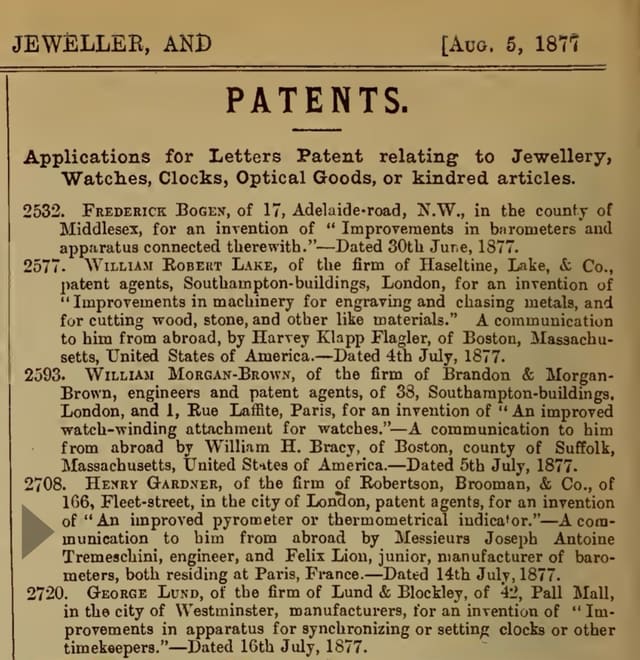
In 1877 and 1879, patents and publications appeared under the title: “Pyromètres à indications thermométriques.”
In Annales industrielles, neuvième année, 1877 (tome deuxième), Paris, 1877, there appears the following note:
“— 27 April 1877. — Tremeschini and Lion fils, represented by Armengaud jeune, Paris, boulevard Strasbourg,
This concerns the registration or publication of Tremeschini’s industrial invention — a pyrometer that not only recorded relative temperature changes but gave readings on a thermometric scale approximating ordinary temperature measurement, a highly important problem for nineteenth-century metallurgy and industry. The wording indicates joint applicants, co-authors of the design, or commercial partners connected with the invention.
The mention of Armengaud jeune is also noteworthy — this was the well-known engineer and technical publisher Jacques-Eugène Armengaud the Younger, through whom numerous French technical patents and descriptions of inventions passed during the second half of the nineteenth century.
Logo
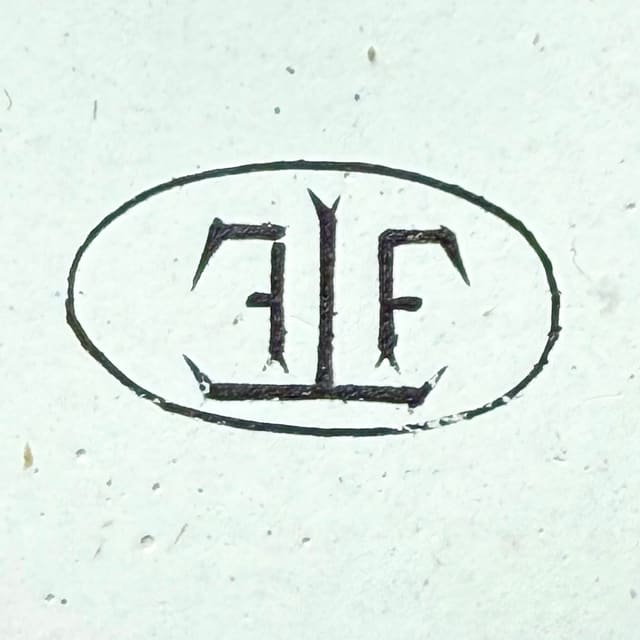
It is known that Lion et Guichard, successors to Lucien Vidie and manufacturers of aneroid barometers, ceased trading in 1876. Thereafter, Simon Guichard continued independently under the name S. Guichard & Cie. The same occurred on the Lion side of the partnership: the company Lion fils (or Félix Lion fils) represented the continuation of Félix Lion's business after the dissolution of Lion et Guichard.
Felix Lion fils is listed in the 1877 edition of the Annuaire-almanach du commerce, de l'industrie, de la magistrature et de l'administration Didot-Bottin. It is this directory that reveals the company's distinctive trademark—a monogram long associated by collectors with the engineer Joseph-Antoine Tremeschini. The mark consists of a thin oval cartouche enclosing a highly stylised geometric composition of three elements: two mirrored F letters flanking a slightly lower L. The monogram is easily deciphered as F = Félix, L = Lion, F = fils ("son"), that is, Félix Lion & Son.
Barometers bearing this monogram are generally attributed by collectors to Tremeschini, which is, in essence, correct, as he was the designer of the instrument's mechanism. However, the actual manufacture of these barometers was carried out by Félix Lion fils.
Tremeschini could therefore continue his patent and engineering activity through partners and manufacturing houses. This was entirely typical of the nineteenth century: an engineer ceased maintaining his own workshop, but continued to patent, design, license, and collaborate with manufacturers.
Aneroid Barometers
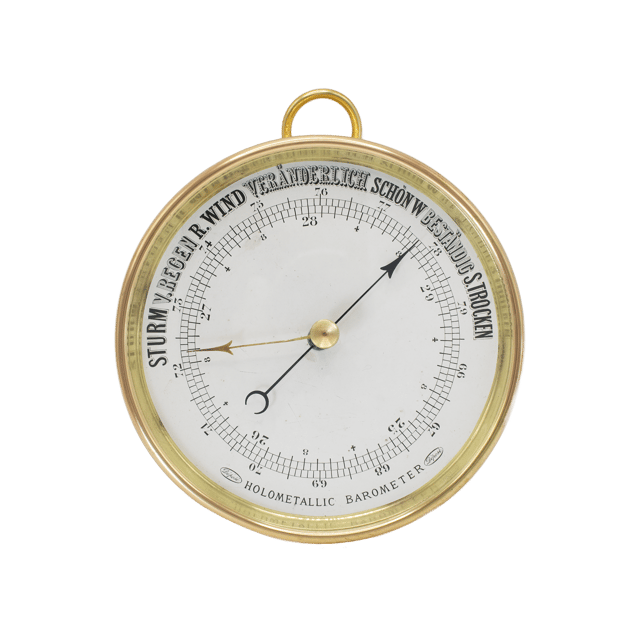
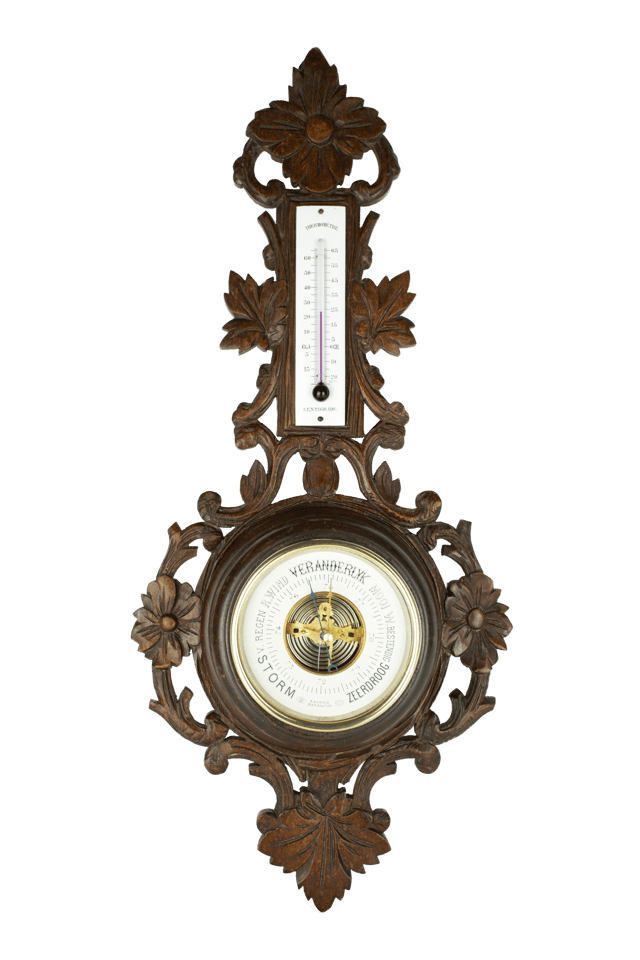
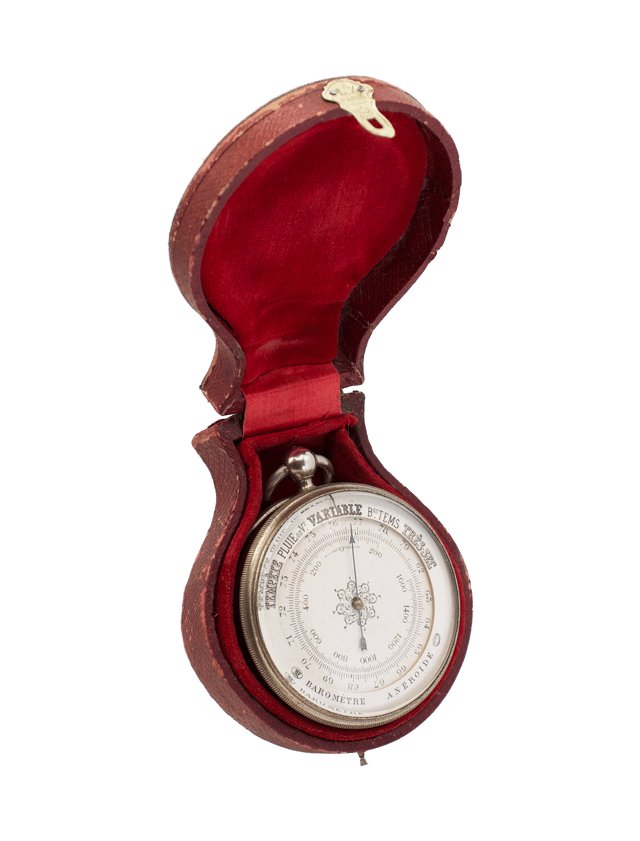
The most interesting part of Tremeschini’s engineering legacy was his aneroid barometers. He specialised specifically in liquidless mechanical barometers and developed numerous types of movements for them.
Under the name Tremeschini were produced pocket aneroids, wall-mounted barometers, and experimental meteorological instruments.
The inventor developed many different movements for aneroid barometers. One of the best known was a construction with a radically simplified mechanism. This mechanism eliminated several standard components, including the rack-and-pinion transmission, the traditional fusee chain, and the spiral spring. Tremeschini employed an unusual pointer-driving mechanism similar to that used in his metallic thermometer. In standard aneroids, the slight movements of the capsule walls are transmitted to the pointer through a toothed sector and rack (or through a chain and spiral spring), which complicates the mechanism and creates additional friction.
In Tremeschini’s construction, by contrast, the sensitive aneroid chamber with its internal spring transmitted movement through a push rod soldered to the upper membrane. This push rod acted upon a primary lever, which in turn activated an angular forked lever with a central roller between its ends. Upon this roller was mounted a thin movable strip, and at its outer end was horizontally fixed an unusual V-shaped steel element (where in traditional barometers the fusee chain wound around the pointer shaft would normally be found).
This V-shaped element connected with the pointer shaft, which was provided with two helical grooves into which the ends of the element engaged. The two diverging arms of the V-shaped lever interacted with parallel helical tracks engraved on the pointer shaft. At the slightest displacement of the capsule, the V-lever alternately contracted and expanded, causing the shaft to rotate in such a way that its arms continually remained aligned with the grooves. In this manner, the linear movement of the capsule was transformed directly into the rotation of the pointer without intermediate gear transmissions.
Such a barometer possessed a simpler and more “direct” mechanism: the absence of unnecessary components was intended to reduce friction and inertia, thereby increasing the sensitivity of the instrument.
Tremeschini did not own a factory for the mass production of barometers and therefore commissioned their manufacture from the leading French scientific instrument makers of his time. Several firms participated in this process, each playing a specific role:
Dubois et Casse was one of the first Parisian firms to begin industrial production of aneroid barometers after the expiration of Lucien Vidie’s patent monopoly in 1859. By the early 1860s, Dubois et Casse had established the manufacture of pocket and wall-mounted aneroids and became one of the principal suppliers of such mechanisms in France. It is likely that Tremeschini ordered the manufacture of his own movements from Dubois et Casse during the 1860s. This firm supplied him with high-quality serial barometric mechanisms, which he could then market under his own name.
Lion et Guichard was a Parisian firm formed around 1870 after Guichard and Lion acquired the barometric division of Louis-Clément Breguet. Lion & Guichard positioned themselves as successors to Lucien Vidie and produced thousands of barometers during the 1870s. They played a crucial role in transforming Tremeschini’s inventions into real products, handling assembly, calibration, and commercial promotion. Following the dissolution of Lion et Guichard, as mentioned earlier, Tremeschini continued to work closely with both Félix Lion fils and Simon Guichard independently.
Clerget (and Soyer) was a Parisian workshop that also participated in the realisation of Tremeschini’s projects, especially in the creation of the “rackless” aneroid prototype. At the Universal Exhibition of 1878, an aneroid barometer of Tremeschini’s design was exhibited, manufactured by “Messrs. Clerget and Soyer under the direction of Monsieur Tremeschini.” This indicates that Clerget & Soyer were responsible for the practical realisation of Tremeschini’s barometric system without rack, chain, or spiral spring. The company carried out the delicate mechanical work, including the precise cutting of the helical grooves on the pointer shaft and the adjustment of the V-shaped lever. The result was a fully operational exhibition instrument presented to the public. In La Nature, the editors directly recommended Tremeschini’s thermometers, sold by Clerget et Soyer on the Faubourg-Saint-Denis.
In 1882, Tremeschini’s instruments were included in the Catalogue des collections du Conservatoire national des arts et métiers — the official catalogue of the National Conservatory of Arts and Crafts of France. The catalogue lists a Tremeschini medical thermometer and a Tremeschini instantaneous metallic thermometer.
It is especially important that his instruments were placed alongside those of:
This effectively constituted official recognition of his instruments as part of the French scientific and technical heritage.
Aeronautics and Atmospheric Research
In L’Aéronaute. Bulletin mensuel illustré de la navigation aérienne, 23rd year, no. 1, January 1890, Paris, p. 22, there appears an interesting fragment that shows Joseph Tremeschini no longer merely as a designer of telegraphs or educational apparatuses, but as a participant in early scientific aeronautics — the milieu in which, during the 1860s–1880s, practical meteorology of the upper atmosphere was being formed.
The discussion concerns a meeting devoted to problems of aeronautics and scientific observations carried out from balloons. Mention is made of the famous French aeronauts Joseph Crocé-Spinelli and Théodore Sivel, who undertook prolonged ascents in balloons for the study of the atmosphere. It was precisely during such flights that Tremeschini’s thermometer was used, and the participants in the discussion emphasised that the instrument provided exceptionally rapid and precise readings.
This is especially important in the context of nineteenth-century aeronautics. Unlike ordinary terrestrial measurements, a balloon ascended through several atmospheric layers within a short period of time. Temperature could change sharply within mere minutes. Ordinary thermometers possessed excessive thermal inertia: the glass tube, mercury, and massive body reacted slowly to changes in air temperature. As a result, the instrument effectively displayed an already “outdated” temperature. It was precisely this problem that Tremeschini sought to solve.
In his presentation, he explained that seventeen or eighteen years earlier he had created a “very sensitive thermometer” intended specifically for aeronauts. The central idea of his construction lay in reducing the mass of the sensitive element. He stated directly that previous instruments used a “large mass,” whereas he sought to create a system almost unaffected by atmospheric inertia.
Judging from the description, the basis of the instrument was a thin platinum strip. This was an extremely unusual solution for the time. Platinum was already employed in scientific instruments because of:
Tremeschini was effectively attempting to create a highly sensitive instantaneous-action metallic thermometer — something intermediate between the classical mechanical thermometer and the later precision atmospheric sensors.
Particularly characteristic is his statement: “My instrument is so sensitive that, at the slightest change in temperature, one can hear the noise produced by the operation of the gear mechanism.”
This means that the thermal change was sufficient immediately to set the instrument’s mechanical transmission in motion. In other words, this was not merely a scale thermometer, but a very delicate mechanical device amplifying the movement of the sensitive element through a geared mechanism.
In effect, Tremeschini was describing a thermometer with extremely low thermal inertia, high response speed, mechanical amplification of readings, and sensitivity sufficient for scientific balloon observations.
Another point is equally interesting: the participants in the meeting mention that Tremeschini’s instruments had already been used in well-known scientific flights and had received favourable reports from aeronauts. This demonstrates that his developments had genuinely moved beyond the experimental workshop and were being employed in real scientific expeditions.
The Dissolution of Tremeschini & Cie
In Sociétés de Paris et de la Seine publiées dans les journaux judiciaires de Paris du 7 au 11 novembre 1876 (Première Partie), a compilation of legal notices concerning companies in Paris and the Department of the Seine, printed from the Parisian judicial newspapers (journaux judiciaires), there appears an entry relating to Tremeschini et Cie, connected with the official dissolution of the firm published in November 1876.
The notice reads:
“Paris. — Dissolution, effective from 25 October 1876, of the company Tremeschini et Cie, mechanical engineers, passage Feuillet,
The cessation of the firm, however, did not at all signify the end of the inventor’s engineering career. On the contrary, after this period he continued actively to collaborate with various manufacturers, patent instruments, and participate in scientific meetings.
Religion, Philosophy, Spirit Photography, and the Exposure of Mediums
By the end of his life, Tremeschini can hardly be regarded solely as an engineer or maker of scientific instruments. Behind him already stood decades of work in a wide variety of fields: thermometry, pyrometry, chronometry, telegraphy, astronomical observations, mechanical regulating systems, and scientific instruments. Yet the sources of the 1880s reveal another side of his personality — participation in the philosophical and intellectual debates of the age. An especially curious testimony to this is provided by the published proceedings of the International Spiritist and Spiritualist Congress held in Paris in September 1889.
The mere appearance of Tremeschini’s name in such a publication may provoke a smile today. We are dealing with a gathering highly characteristic of the fin de siècle, where mediumship, spiritual practices, Eastern religions, “psychic forces,” and other subjects were discussed — matters that a modern reader would probably classify without hesitation as belonging to the realm of occultism. Yet for the late nineteenth century, such an intellectual environment was not considered entirely marginal. On the contrary, it attracted doctors, engineers, astronomers, physicists, writers, and even certain academicians. The era simultaneously produced both electrical engineering and mass fascination with spiritualism; the telegraph coexisted with attempts at “communication with the other world,” while discussions of the ether easily turned into conversations about mediums.
In the published report of the congress, Tremeschini appears not as a mystical preacher, but rather as an engineer-intellectual attempting to discover a historical and even scientific justification for the origins of humanity’s spiritual ideas. In his speech, he turned to ancient Indian texts, above all the astronomical treatise Surya Siddhanta, which he described as a work of unquestionable scientific value. Tremeschini then discussed the Vedas, yogis, the inspiration of Brahma, and mediumship, attempting to present ancient Indian tradition as an early form of spiritual communication.
The source for this unusual episode is the publication Compte rendu du Congrès spirite et spiritualiste international tenu à Paris du 9 au 16 septembre 1889, issued in Paris in 1890 by the Librairie Spirite. The very existence of such a document serves as a reminder of how astonishingly intertwined engineering, science, philosophy, and the search for “hidden forces of nature” had become by the end of the nineteenth century.
What is especially striking in the history of Joseph Tremeschini is that this man, known to us above all as an engineer, astronomer, and creator of precision instruments, became involved during the 1870s in one of the most scandalous and mysterious subjects of the age — so-called “spirit photography.” Moreover, he appeared not as a supporter of mysticism, but precisely as a technical expert and potential exposer of fraud.
During the second half of the nineteenth century, Europe experienced a genuine boom in spiritualism. After the invention of photography, many mediums and photographers began claiming that the camera could capture “spirits of the dead.” On photographs, translucent silhouettes, misty faces, and ghostly figures appeared beside living people. To the general public, this looked almost like scientific proof of the existence of an afterlife. Cases in which relatives recognised deceased family members among the “ghosts” produced an especially strong impression.
One of the most famous French “spirit photographers” was Édouard Buguet. It was around him that the episode involving Tremeschini unfolded, as described in the article “Le photographe des fantômes,” published in the journal Lectures pour Tous.
By the time of these events, Tremeschini already possessed a reputation as a serious engineer and maker of scientific instruments. In the text he is described as: an engineer, constructor of precision instruments, astronomer, and member of the Pantheon in Rome.
For a man with such a background, participation in spiritist séances was not entertainment, but a form of technical expertise. The article states directly that Tremeschini “undertook to uncover the true nature of spiritualist phenomena.” In other words, he came to Paris specifically with the intention of determining whether ordinary fraud lay behind the “spirits.”
This is highly characteristic of the age. In the nineteenth century, the boundary between science, popular physics, optics, electricity, and occult theories was far less rigid than it is today. Many scientists considered it their duty personally to investigate such phenomena. Some genuinely became fascinated with spiritualism, others sought to expose it, while still others adopted a cautious observer’s position. Tremeschini belonged precisely to this last group — the technical sceptics.
It is especially important that the organisers of the séance themselves invited him as an independent specialist. Leymarie told him directly that the presence of scientists was necessary, since only they were capable of evaluating the proceedings professionally. For the spiritualists, this was an attempt to lend scientific legitimacy to their experiments.
During the séance, Tremeschini did not merely attend as a spectator. He carefully observed every action of the photographer Buguet, personally examined the process, and even participated in arranging the photograph. More than that, he was invited to select the photographic plate himself — thereby excluding the possibility of a prepared trick.
When the photograph was developed, a vague figure appeared between two living persons. And here begins the most interesting part. After the experiment, Leymarie asked Tremeschini directly:
— had he detected fraud?
Tremeschini’s reply is remarkably cautious and genuinely scientific in tone: “I made every possible effort to detect deception… And yet I must declare: I discovered nothing.”
It is important to understand that he does not say he accepted the existence of spirits. He merely states that, in the particular observable process, he was unable to identify a technical trick. Perhaps this is precisely what makes the episode so historically fascinating. Before us stands not a naïve mystic, but an engineer-instrument maker accustomed to precise measurements, mechanisms, and experiments. A man occupied with thermometers, pyrometers, telegraphy, and meteorological instruments suddenly finds himself at the centre of an almost theatrical scene involving photography, psychology, commerce, and belief in the supernatural.
Subsequent history demonstrated that Buguet did indeed employ fraudulent methods. He was soon exposed: the “ghosts” had been created through double exposure, hidden negatives, mannequins, and pre-prepared images. Yet at the time of the séances, photographic technology remained far too complex and mysterious for the public easily to recognise such tricks.
For this reason, Tremeschini’s participation is especially valuable as testimony to the age. It demonstrates how seriously even engineers and scientists regarded such phenomena, and how closely experimental science, popular technology, photography, and occult culture were intertwined during the nineteenth century.
In a sense, Tremeschini appears here as a symbol of a transitional era: a man of precision instruments confronted face to face with one of the most famous technological mirages of the nineteenth century.
Conclusion
Joseph-Antoine Tremeschini died on 23 September 1889. Today his name is far less well known than those of the great instrument makers of the nineteenth century, yet his biography itself is of exceptional interest precisely because of its multifaceted nature.
He belonged to that rare type of nineteenth-century engineer who moved freely between:
In this sense, Tremeschini represents a highly characteristic figure of the technical culture of the Second Empire and the early Third Republic — an age when the engineer was not yet a narrow specialist, but rather a universal inventor of the industrial world.
The name Joseph-Antoine Tremeschini is today far less known than those of Torricelli, Vidie, or Breguet, yet the figure of Tremeschini constitutes one of the most characteristic and at the same time unusual examples of engineering culture in the second half of the nineteenth century. Before us stands not the narrow designer of a single successful instrument, nor a кабинетный учёный devoted to one discipline alone, but rather a typical universal engineer of the Second Empire and the early Third Republic — a man who moved freely from textile mechanisms to telegraphy, from chronometry to astronomy, from petroleum lighting to thermometry, and from meteorological instruments to aeronautics.
Sources: