Loading
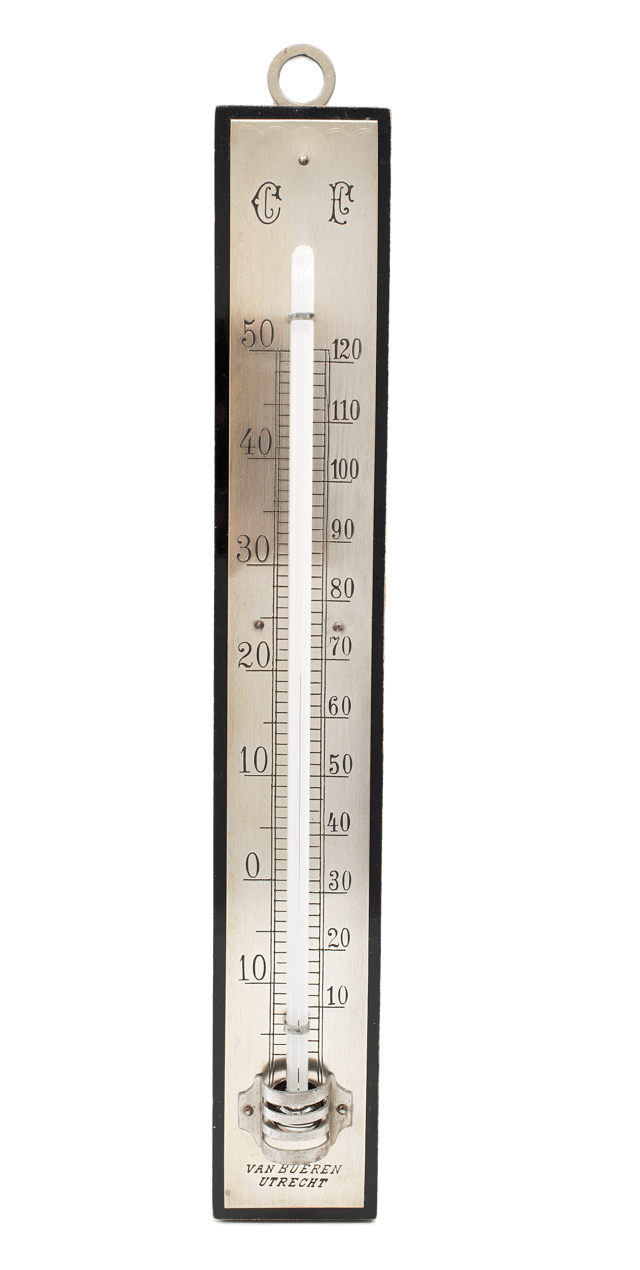
Hermanus Gisbertus Lammerts van Bueren (1848–1929) began his professional activity in 1875 in the city of Utrecht. He opened a workshop at Zadelstraat 33 and engaged in the making of optical and meteorological instruments. In the early years, Lammerts van Bueren personally produced barometers, thermometers, spyglasses (binoculars), as well as magnifying glasses for reading and prescription eyeglasses. Since eyeglasses were still relatively new in the Netherlands at that time, he received specialized training abroad and established connections with leading Utrecht ophthalmologists — Professor Franciscus Cornelis Donders and his successor Herman Snellen. Alongside optical work, he initially also crafted steel goods such as knives and scissors.
Over time, Lammerts van Bueren steadily expanded the assortment of his business. According to archival sources and surviving objects, the workshop produced and offered:
By the 1920s, the firm actively promoted cameras, film and slide projectors, and their accessories, using the slogan: “Even the eye of your camera deserves the best.”
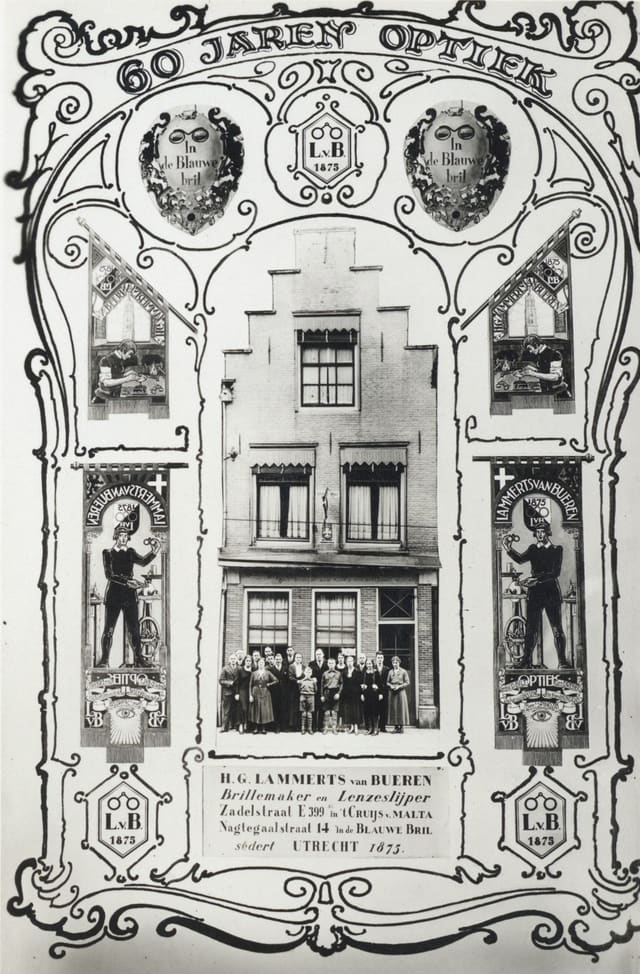
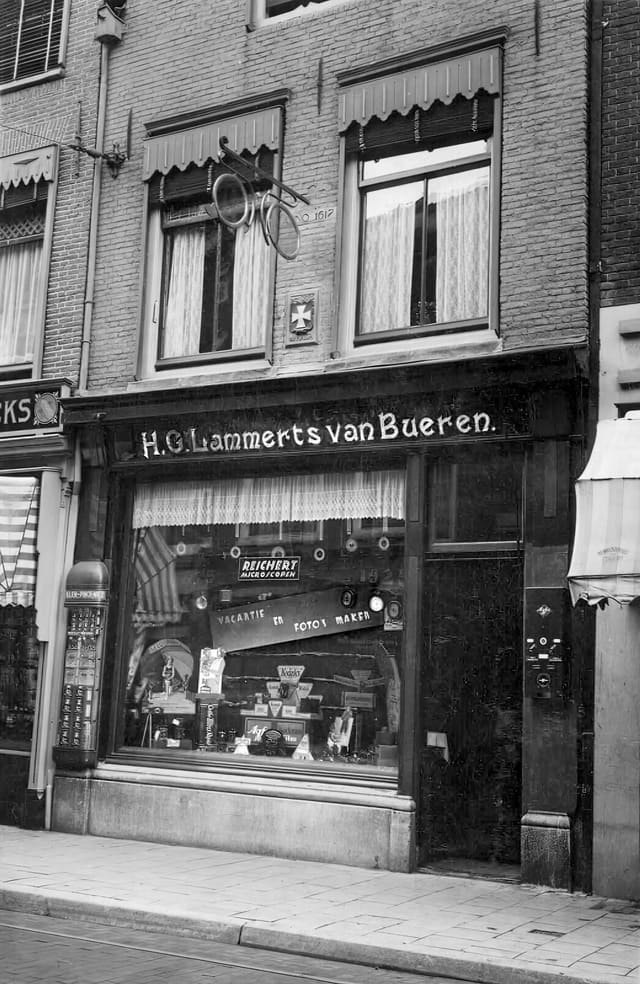
The main shop and workshop remained at Zadelstraat 33 (Utrecht) for many decades. The building, historically known as In ’t Cruis van Malta, had a 17th-century stepped gable façade. In 1933, on the occasion of the firm’s 60th anniversary, a decorative commemorative plaque bearing this historic house name was installed on the façade. Inside, the shop featured dark teak cabinets with glass doors displaying a wide selection of goods. According to a 1930 newspaper description, the newly expanded branch was furnished “solidly and respectably; the cabinets display various instruments, such as photographic accessories, steel goods, barometers and thermometers, projectors, microscopes, magnifiers and reading lenses.” This indicates that the shop served both everyday needs (eyeglasses, binoculars) and professional/scientific use (precision measuring devices and laboratory tools).
Patients were referred to Lammerts van Bueren by leading ophthalmologists, which broadened the clientele. Scientific institutions were among his customers as well. By the 1930s, the name Lammerts van Bueren had gained strong trust. Contemporary advertising proudly stated: “Optician Lammerts van Bueren… descended from a family of ‘lens-grinders’, is Utrecht’s modern optician — a name that has stood for reliability since 1875.”
The business remained family-run for nearly a century. Around 1920, it passed to the founder’s son, also named Hermanus G. Lammerts van Bueren (1889–1965). The elder continued to live above the shop, but the younger owner expanded the enterprise and shifted its emphasis toward modern optics and photography. In the interwar period, the firm opened a branch at Nachtegaalstraat 14 and celebrated its 60th anniversary in 1935 with an exhibition on the history of eyewear and photographic technology in Utrecht.
After World War II, a third generation joined: Herman Gisbertus Lammerts van Bueren (1923–2020). The firm experienced renewed growth, celebrated its 75th anniversary in 1950, and opened new locations, including branches in post-war shopping districts. In 1953 the business acquired the long-established photographic shop De Bussy & Voorduin in Utrecht, and later several other shops, including four branches of the Manheim Optiek chain in Amsterdam (1968).
However, expansion brought financial strain. In 1964 the company became a public limited company (N.V.), and in 1971 Lammerts van Bueren was purchased entirely by the Rotterdam firm Rinck (a chain of optical and photographic shops). In 1972, Rinck itself was acquired by the British retailer Dixons, and the Lammerts van Bueren shops gradually changed their signage. The historic shop on Zadelstraat 33 eventually closed, and the brand name disappeared from use by the end of the 20th century.
Thus, the enterprise of H.G. Lammerts van Bueren existed for nearly 100 years, beginning as a small optical workshop in 1875 and concluding in the early 1970s. The business successfully passed from father to son to grandson, but after its sale, no direct continuation of the family brand remained. Today, the name survives in Utrecht’s commercial history and on surviving antique instruments that testify to the craftsmanship and reputation of this notable optician and instrument maker.